It seems like the music industry in Australia is in complete free fall. The Australian Recording Industry Association (ARIA) has reported that recording sales dropped 13.9 percent in 2010 by value (complete PDF here). Physical unit sales tanked by 19.5 percent.
The downside to the numbers is that ARIA reports in the same way as Nielsen Soundscan and RIAA, that is counting any transaction as one – album, download, ringtone, whatever.
However, on the upside “Australians are consuming more music than ever before,” ARIA chief executive Dan Rosen declared.
Limewire, one of the internets most popular file-sharing websites, has finally been shut down after along dispute with the RIAA.
The US district court has issued an injunction which effectively ends a four-year dispute between Lime Group and the Recording Industry Association of America.
Strictly, its complete closure isn’t quite true, but the company has been told to disable its search, download and upload functions, which for a file-sharing site, is certain doom.
On top of this, the company has finally admitted what we were all thinking and confessed to being illegal. A message on Limewire.com states: “This is an official notice that LimeWire is under a court ordered injunction to stop distributing and supporting its file-sharing software. Downloading or sharing copyrighted content without authorisation is illegal.”
A Lime Group spokeswoman acknowledged that the company was now “out” of the file-sharing business. But she added that they were working on alternative ideas that adhere to copyright laws.
The RIAA have loosed another volley against the filesharing contingent that they believe are bleeding the profitability out of the music industry. The arguments are pretty solid: those who choose to download music illegally instead of paying for it through legal physical and digital channels are not enjoying the fruits of the people working in the industry without contributing to their livelihood. Bad people, right? Not proper music fans, right? Theft is insupportable, but there are questions of degree to be considered… From the RIAA’s press release:
According to SoundScan, the top 10 albums in 2009 sold a total of 21 million copies, and the top 10 tracks totaled 36 million paid downloads. But the top 10 albums in 1999 totaled 55 million in sales. Even with digital track sales factored in, those top sellers fell by more than 50%. In the last 10 years, the major record labels’ direct employment in the United States fell from about 25,000 people in 1999 to less than 10,000 today – a drastic reduction of over 60% in people who enable the creation and development of new music.
In the music industry, it takes the investment of many peoples’ money, effort, and time to create the songs and albums we all get to choose from and enjoy. Since most acts never even reach the breakeven point in sales, music labels need to operate like venture capitalists and count on the successes to subsidize the continued development of many artists and releases that may never break out of the red. And it’s easy to ignore the harm being done when you’re only stealing one copy.
Stealing music is wrong. This is undeniable, but there is something about what the RIAA say – it’s easy for a punter to ignore the criminality of nicking one album at a time ‘just to hear it’, and so the solution to the problem has to be slightly more nuanced than cutting off the consumer’s internet connection, or suing individuals for vast damages in high profile cases. Legal, profitable channels of consumption have got to compete directly with the illegal, risky, but free-to-consume-unless-you-get-caught methods like filesharing and illegal streaming.
Picking on individuals makes the recording industry look like the aggressor rather than the victim, which they are not; they’re just trying to safeguard their sources of income, and their jobs. It’s hard to think of Edgar Bronfman’s kids going hungry, or Puff Daddy having to sell his jet to make the mortgage payments, but there are real people doing good work whose livelihoods are on the line. That said, progress is inevitable (see the video at the tail of the post), and the music industry has got to roll with the punches and capitalise on the massive innovation that’s happening in the digital sector if it is to thrive as it has in the past.
Another thing to consider is how much this piracy actually costs the industry. If the pirates couldn’t get hold of the music easily and for free, would they bother getting hold of it at all? Does the money not spent on records all get spent on eyepatches, stuffed parrots and WOW subscriptions, or does some of it come back to the music industry in other ways? Concert revenues are certainly up over the last few years, and some artists are making money against the trend of decline by using clever andnon-traditionalmarketing methods, selling coolphysicalproducts, and using new outlets like Spotify and eMusic (to whom RouteNote will happily distribute your music, by the way) to boost waning physical revenues. Is it better then, for the industry to put a death-grip on sometime pirates who may also be gig-goers and box-set-buyers, and look backwards at the fantastic success they had with physical formats, or to look forward to an era when everything is digital and try to maximise it’s readiness and thus it’s profitability? Perhaps we’ll see things go full circle, and recorded music sales will tail off completely as we all go back to being regular concert goers, just like in the 1800′s…
Jammie Thomas-Rasset may have caught a break, depending on whether the US courts can agree with one another on the amount of damages appropriate to each breach of music copyright. Originally, the consortium of record labels was awarded damages of $80,000 per track involved in their case (the plaintiffs only sought damages for 24 out of an alleged 1,702 tracks – $136,160,000, before you get your calculator out), but this was redacted by a certain Chief Judge Davis to a mere $2,250, reducing the total damage payment from $1.92 million to $54,000.
Despite the fact that this reduction is at odds with a statute that imposes a much higher limit of $150,000, it seems that this isn’t good enough for the defending legal team, and they’ve moved for a new trial. This exposes them to a new award for damages, which in turn would be subject to the same sort of adjustment… This repeating, ‘Wheel Of Fortune’ style allocation is bound to go on for a while, depending on the pressure from the recording industry, who have equal determination to, and presumably deeper pockets than the defendant, but whatever sum the clicker stops on, it will have very far reaching repercussions for the future of the fight against piracy in the States.
Some news that might not seem immediately edifying, but might have far reaching implications. The Intellectual Property Office in the UK has issued a ‘Scoping Document‘ attempting to assess the potential role of a Digital Rights Agency. Given what’s currently happening between the PRS and Google, the rights of artists to benefit from the exploitation of their music online is quite a hot topic at the moment.
More rumblings in the same region of the law are sounding in New Zealand, where Google has deposited it’s two cents in a discussion being held by the Telecommunication Carrier’s Forum – a think-tank organised by the TeleComms and ISP comapnies in that region to decide how to monitor and deal with digital copyright violations. Google has come in on the side of the consumer, saying that the idea of banning users who are caught infringing three times from using the ISP’s services – in effect cutting them off access to the internet as a whole – was too heavy a penalty. They also chime in with approval of measures designed to protect ISP’s from the consequences of copyright infringement perpetrated by their customers. Google is in a pretty unique position to provide a balanced opinion, given that they are operating a service across every nation in the world, but their ultimate position is always going to be pro-internet and pro-traffic of information, including music, because that is essentially pro-Google. More pageviews, more ad revenue.
How then, to deal with copyright violation on the net? The RIAA is abandoning it’s programme of coming down heavy on individuals in the hope that it will act as a deterrent to other pirates, as sending threatening letters and scaring little old ladies seems to be generating more negative publicity for them than deterrent effect on the pirates. Perhaps prosecuting people like middle-aged Mavis from New Hampshire in their fearful absence is not quite the shining moralistic proof that pinching a devious little ferret of a computer scientist with a server-filled basement of porn and Michael Jackson albums might be, but then he’d have used proxies and covered his tracks, and would be much harder to catch.
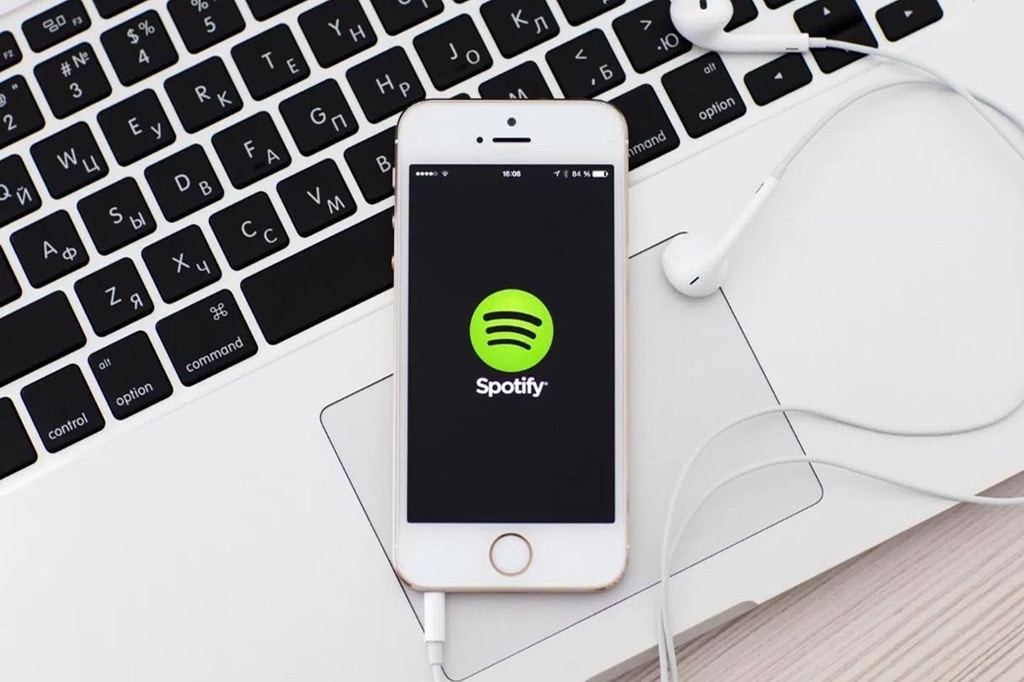
Ultimately this blogger just hopes all the legislation and discussion and arguing and imprisoning of housewives helps us home in on the inevitable. It is inevitable that consumers on the net will find a way of quickly and conveniently getting hold of the music they want, through filesharing, paid downloads, ad supported models or whatever other method they can. It is inevitable that artists must profit from the consumption of their music, directly or indirectly, because otherwise they won’t be able to afford to make music, and we’ll all have to listen to U2 and the Beatles for evermore, and no-one wants that… So we must, eventually, inevitably arrive at a solution that bridges that gap; that provides a way for music consumers to get what they want cheaply, quickly and conveniently, and for artists to profit from it. Some sort of commercial, digital radio… I’m going to go and listen to Spotify while I think about what that perfect solution might be.
Perversely, focussing on digital music sales can make the physical products you release more desireable. Think about Radiohead: In Rainbows. They put it out basically free over the net, and sold lush, limited edition vinyl and cd box sets, which sold 100,000 copies, and is currently changing hands for about $200 on ebay.
CD sales have taken a nosedive since music went digital, but LP and EP sales on vinyl have levelled out: according to the RIAA they even increased by 46% between 2006 and 2007, to 1.3 million units in 2007. The industry opinion is that this is because the real fans want a piece of their favourite band; a lovely artefact to hold and stroke and show off… Make the most of it! If your digital sales are good, that means there’s an opportunity to make a premium on really well produced physical material. If you can give your fans something special, that also has a premium because of its scarcity, then they’ll happily pay you for it.