
YouTube upgrades its AI labels as realistic AI videos become harder to spot
YouTube is introducing clearer AI labels and automatic AI detection tools as generative content becomes increasingly realistic.
YouTube is tightening its approach to AI-generated content with a major update to its disclosure system.
The platform has announced more visible AI labels alongside new automatic detection tools designed to identify realistic AI-generated videos, as AI content becomes harder to distinguish from real footage. The goal? To improve transparency for both creators and viewers.
The update arrives as AI-generated music, visuals, and synthetic artist content continue becoming more common across the music industry.
YouTube is making AI labels harder to miss
Since 2024, YouTube has required creators to disclose when realistic AI tools were used to create or significantly alter content. However, those labels were previously fairly easy to overlook.
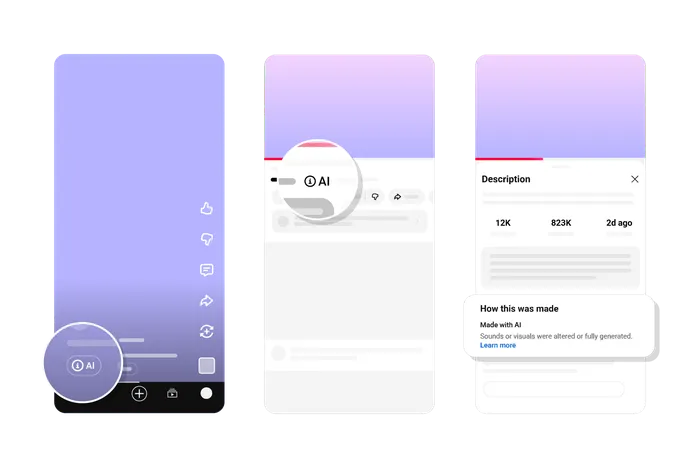
Now, AI labels are being moved into far more prominent positions across the platform.
For long-form videos, labels will appear directly underneath the video player above the description. On Shorts, they’ll appear as overlays on the video itself.
YouTube says these disclosures apply to “photorealistic and meaningfully AI altered or generated content,” while less realistic or lightly edited content may still only show disclosures in expanded descriptions.
The move reflects growing pressure on platforms to help audiences identify realistic AI-generated media more easily.
Automatic AI detection is the biggest change
Alongside the updated labels, YouTube is also rolling out automatic AI detection.
The platform still requires creators to self-report when they use realistic AI. But as generative AI tools rapidly improve, YouTube is now introducing “internal signals” that can automatically identify significant AI-generated content to make the process more seamless.
The company hasn’t revealed exactly how the system works, but confirmed that certain indicators can trigger permanent AI labels, including:
- Content made using YouTube AI tools like Veo or Dream Screen
- Videos containing C2PA metadata showing fully generative AI creation
If YouTube detects significant AI usage that wasn’t disclosed, the platform can now apply a label automatically.
Creators can appeal some decisions through YouTube Studio if they believe content was incorrectly flagged, although some labels will remain permanent depending on the source of the content.
What this means for artists and creators
For independent artists, AI tools are quickly becoming part of modern music marketing and content creation.
From lyric videos and visualisers to promotional clips and artwork, AI can help artists create more content without huge budgets. Just take a look at YouTube’s recent push into AI-powered remix tools for Shorts. But now, YouTube’s latest update shows that transparency is becoming increasingly important as AI-generated media grows more realistic.
Importantly, YouTube says AI disclosure labels will not affect monetisation or recommendations. Creators are not being punished for using AI tools, they’re simply being asked to disclose it more clearly.
That’s significant. Rather than restricting AI content entirely, platforms appear focused on making disclosure a standard part of the creator process.
The bigger picture for the music industry
YouTube’s update reflects a wider shift happening across the music industry. Streaming platforms, labels, tech companies, and distributors are all increasingly focused on AI transparency, creator consent, metadata standards, and content authenticity.
At the same time, AI-generated content is becoming more accessible than ever. New video generation tools are making it easier for creators to produce realistic visuals at scale, which could reshape how artists approach promotion and audience engagement moving forward.
For independent artists, that likely means balancing experimentation with authenticity.
AI tools can help speed up content creation, but genuine artist identity and audience trust still matter most when building long-term fan relationships. As AI continues evolving across music and video platforms, staying transparent and adaptable will become increasingly important for creators.
With free music distribution through RouteNote, independent artists can continue building their presence across YouTube, Spotify, TikTok, and many more major streaming platforms while adapting to the changing digital landscape.