
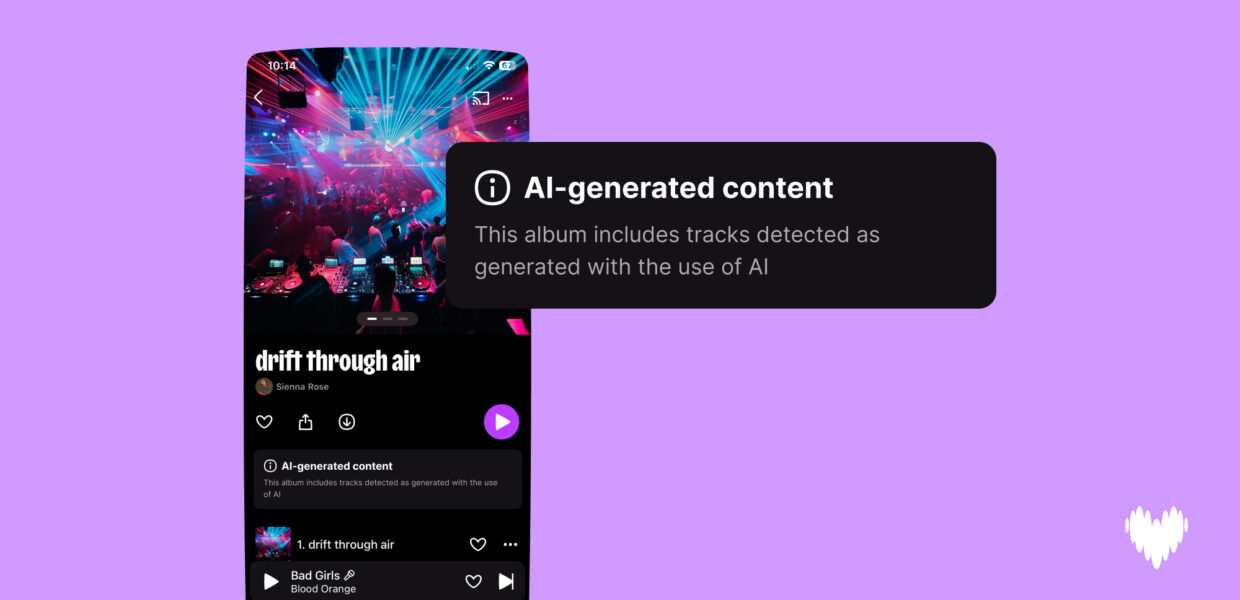
44% of new music uploads on Deezer are AI-generated
75,000 AI tracks are uploaded to Deezer every day, but the platform has managed to keep consumption of these tracks low.
Yesterday, Deezer shared another update on the number of AI-generated tracks that are uploaded to the platform. This announcement revealed that around 75,000 AI tracks are uploaded to Deezer on a daily basis. This equated to nearly 44% of all new uploads, or more than 2 million AI-created tracks being delivered each month.
This marks a huge increase compared to recent figures. Just weeks ago, Deezer reported that uploads were closer to 60,000 per day, and before that even lower. If you look back at last April, the platform was reporting around 20,000 AI tracks per day. Evidently, growth since then has been aggressive and shows no signs of slowing down.
Despite this surge in uploads, listening behaviour tells a slightly different story. Deezer reports that AI-generated music accounts for only between 1% and 3% of total streams on the platform. The company attributes this low share in part to its detection, tagging, and moderation efforts, including removing AI tracks from recommendations and demonetising fraudulent streams.
In fact, Deezer found that around 85% of streams linked to fully AI-generated tracks are considered fraudulent. When this kind of activity is detected, those streams are excluded from royalty payments. This means they do not generate income, helping to protect the overall royalty pool.
To manage the growing volume of AI content, Deezer has introduced several measures across its platform. As previously mentioned, tracks identified as fully AI-generated are removed from algorithmic recommendations and editorial playlists. Additionally, the company has also confirmed that it no longer stores high-resolution versions of AI-generated tracks.
As Music Business Worldwide notes, at the centre of these efforts is Deezer’s AI detection technology, which launched in early 2025. The tool is designed to identify music created using popular generative models such as Suno and Udio, while also being adaptable to detect new tools as they emerge. Deezer has stated that it can even detect AI-generated content without needing a specific dataset to train on.
The platform has also begun extending its AI detection work beyond its own service. Earlier this year, Deezer started licensing its detection technology to other organisations in the music industry, allowing wider use of its transparency tools.
Alongside this, Deezer has shared research into public attitudes towards AI-generated music. In a global Ipsos study involving 9,000 participants across multiple countries, the company found that 97% of respondents could not distinguish between AI-generated and human-made music in a blind test. The same study showed that 80% believe fully AI-generated tracks should be clearly labelled, while 73% want clarity when AI music is used in recommendations. More than half of respondents also said AI-generated songs should not appear alongside human-made tracks in official charts.
Industry concerns are also increasing around the financial impact of AI on creators. Research from CISAC and PMP Strategy suggests that nearly 25% of creators’ revenues could be at risk by 2028, with potential losses reaching up to €4 billion.
Commenting on the broader situation, Deezer CEO Alexis Lanternier said, “AI-generated music is now far from a marginal phenomenon and as daily deliveries keep increasing, we hope the whole music ecosystem will join us in taking action to help safeguard artists’ rights and promote transparency for fans.”
He added, “Thanks to our technology and the proactive measures we put in place more than a year ago, we have shown that it’s possible to reduce AI-related fraud and payment dilution in streaming to a minimum.”