
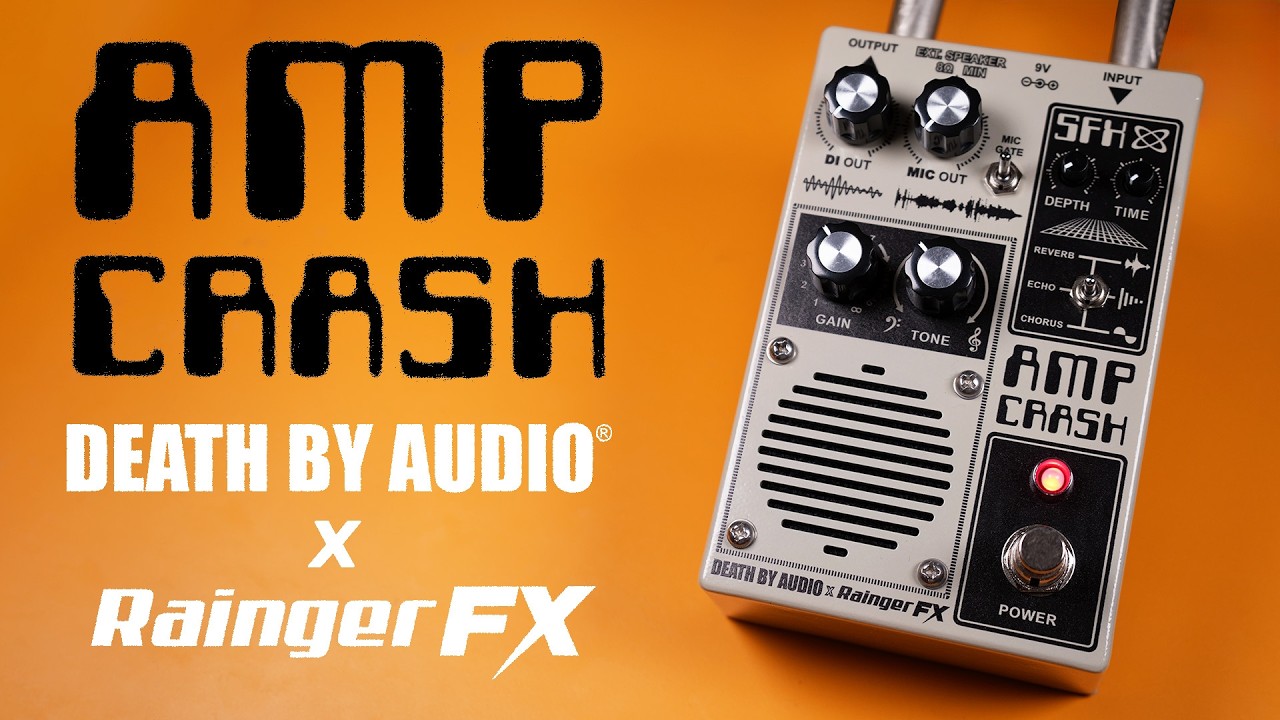
Death By Audio and Rainger FX put a real amp inside a pedal
Death By Audio and Rainger FX’s Amp Crash combines a 3-watt amplifier, 2-inch speaker, microphone and effects in one unusual stompbox designed for recording, practice and experimental sounds.
Amp Crash is more than a distortion pedal
Death By Audio and Rainger FX have teamed up on a pedal that takes a decidedly unusual approach to guitar effects.
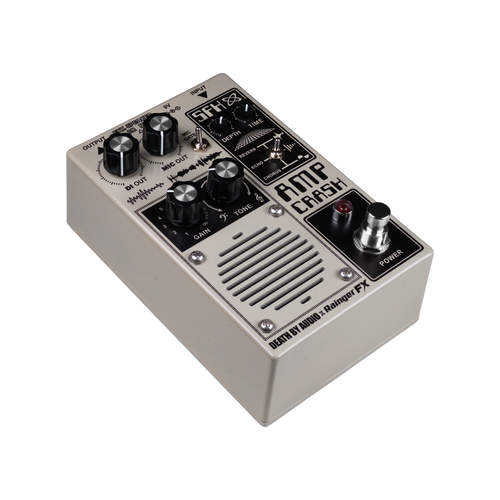
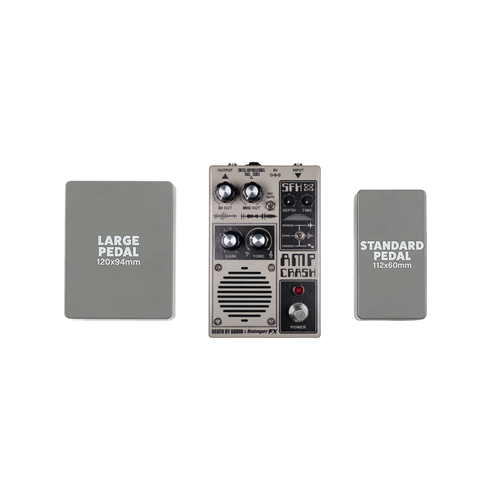
The Amp Crash contains a real 3-watt amplifier, 2-inch speaker and microphone inside its pedal enclosure. Rather than digitally recreating the sound of an amplifier, the design uses a physical speaker and microphone to generate and capture its sound.
The idea came from Rainger FX’s David Rainger, who originally explored putting a microphone inside a pedal to capture ambient sound and blend it with an instrument signal. Death By Audio then took the concept further by adding a speaker for the microphone to capture.
The result is a pedal designed to function as an amplifier, fuzz and effects unit, while also offering a way to record the sound of its tiny speaker.
How does the Amp Crash work?
The key to Amp Crash is the interaction between its amplifier, speaker and microphone.
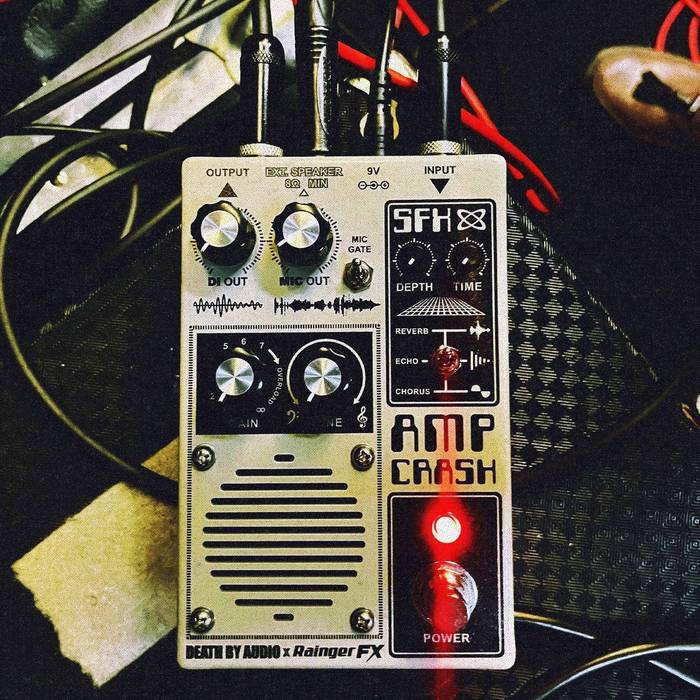
The internal 3-watt amplifier drives the 2-inch speaker, while the microphone captures the resulting sound. Players can then blend the direct amplifier signal with the mic’d signal using the DI Out and MIC Out controls.
This physical interaction is intended to create harmonics, compression, feedback and other unpredictable textures that aren’t produced in quite the same way by conventional distortion or amp simulation pedals.
That could make the Amp Crash particularly interesting for recording. Instead of adding another software amp or distortion effect inside a DAW, musicians can capture the sound of a real speaker being pushed inside the pedal.
From overdrive to extreme fuzz
The Amp Crash’s gain control is designed to take the amplifier from almost-clean sounds through to heavy analogue fuzz.
The gain can be pushed into an OVERLOAD setting for more extreme distortion and oscillation, while the Tone control moves the amplifier’s character from deeper, bass-heavy sounds towards brighter, more focused tones.
Those aren’t necessarily unwanted side effects. For musicians working with noise, experimental music or more abrasive guitar sounds, the physical limitations of the speaker can become part of the sound itself.
Reverb, echo and chorus are built in
Amp Crash isn’t limited to its amplifier and fuzz section. It also includes reverb, echo and chorus, with depth and time controls used to shape the effects.
The reverb is described as ranging from smaller spaces to much larger environments, while the echo can move towards feedback-heavy delay sounds. The chorus can also stretch from subtle modulation into metallic, flanging-style effects.
The effects are placed before the gain and fuzz section, meaning the amplifier can distort the processed signal. This opens up more extreme possibilities than simply adding a clean digital effect after the amplifier stage.
It can also drive an external speaker
Despite fitting into a pedal enclosure, Amp Crash can operate as a genuine small amplifier.
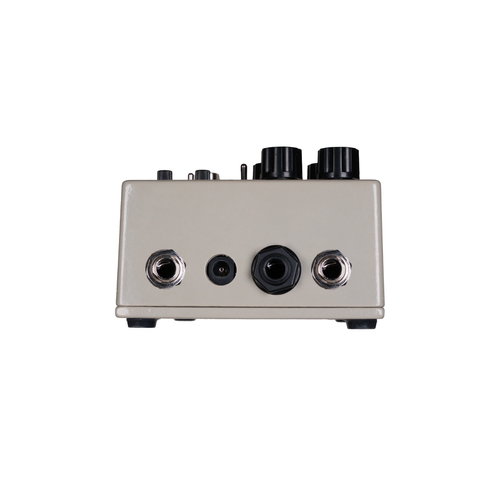
An 8Ω minimum external speaker output allows it to be connected to a larger speaker cabinet. When an external speaker is connected, the internal 2-inch speaker is automatically disabled.
That opens up several potential uses for the pedal. It could be used with its built-in speaker for practice or experimentation, connected to a larger cabinet as a compact amplifier, or used as a recording tool with its direct and mic’d signals.
The manufacturers also suggest using it as an additional amp on a pedalboard or as a compact monitoring solution.
A recording tool for unusual textures
For producers, one of the more interesting aspects of Amp Crash is its potential as a hardware sound source.
The internal microphone means the pedal can capture the physical response of its speaker, while the DI output provides the direct amplifier signal. These can be blended to alter how much of the speaker’s character is present in the recorded sound.
That could be useful for guitarists who want something different from conventional amp modelling, but the possibilities aren’t necessarily limited to guitar.
Death By Audio’s own product page includes sound examples using guitar, bass and synth, suggesting that the Amp Crash can be treated more broadly as an experimental effects processor rather than simply a guitar amp.
For producers, that makes it potentially useful for adding unusual distortion, feedback and lo-fi character to different instruments.
Amp Crash price and availability
Amp Crash is available directly from Death By Audio, Rainger FX and other participating retailers for $395. At the time of writing, the pedal is currently sold out, but you can still place a preorder for when it’s next available.