
Spotify removes over 50 million AI spam tracks from recommendations
Spotify has shared its progress on a year of measures to tackle AI spam and protect artists.
Spotify has taken more than 50 million tracks identified as “AI slop and spam” out of its recommendations in 2026, as the streaming platform steps up efforts to protect artists and listeners from unwanted content.
Spotify revealed this figure in a recent update, marking one year since the company announced new measures against spam, impersonation and deception.
Importantly, these 50 million tracks have been removed from recommendations, not necessarily deleted from Spotify. The company has also previously removed more than 75 million spammy tracks entirely for serious or repeated violations of its rules, according to Music Business Worldwide.
How is Spotify tackling AI music spam?
Spotify explains that it combines listener feedback, engagement, upload patterns, metadata and information from third-party AI detection tools to identify suspicious content. It also monitors tactics such as mass uploads, duplicate tracks, search optimisation manipulation, spammy playlist networks and artificially short recordings.
The company acknowledges that AI detection has limitations, so no single signal determines whether music is spam. Spotify says its recommendation updates have already led to a marked decrease in listener complaints about unwanted content.
The scale of the issue is becoming clearer across the industry. Deezer recently reported receiving around 90,000 fully AI-generated tracks every day, accounting for more than half of new uploads on peak days in June.
New protections for artists on Spotify
Alongside its recommendation changes, Spotify has introduced several tools designed to improve transparency and protect artist identities.
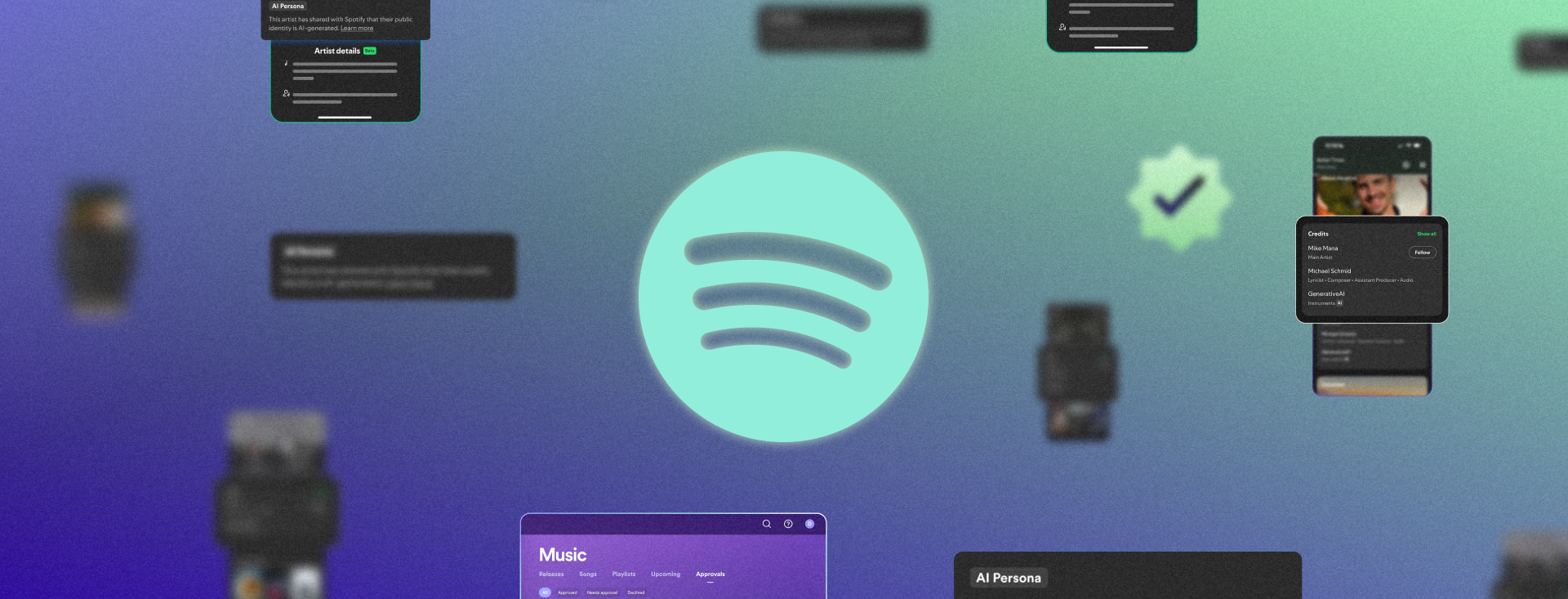
- AI Credits: Artists can disclose which roles and instruments involved AI in a track’s creation. Spotify says tens of thousands of these credits are submitted daily.
- Verified by Spotify: More than 300,000 artists are verified, over 70% of whom are independent.
- AI Persona badges: Thousands of profiles now identify artists whose identities Spotify believes are AI-generated. These profiles are excluded from recommendations by default, with some exceptions.
- Artist Profile Protection: Currently in beta, this tool lets artists review releases listing them as an artist before they appear on their profile. Spotify plans to make it available to everyone by the end of 2026.
Spotify also says tracks flagged as highly likely to be AI-generated are ten times more likely to fall below its 1,000-stream royalty threshold. Introduced in 2024, the rule requires tracks to reach 1,000 streams and a minimum number of unique listeners within 12 months to qualify for recording royalties.
What does this mean for independent artists?
Spotify’s announcement comes amid wider concerns about impersonation and streaming manipulation. In March, we reported that Sony Music had requested the removal of more than 135,000 AI deepfake tracks, including recordings falsely claiming to feature established artists.
For independent musicians, the distinction between AI-generated music and spam matters. Using AI doesn’t automatically make a release fraudulent, but misleading metadata, impersonation and artificial streaming can put music and royalties at risk.
Accurate release information, legitimate promotion and genuine audience growth remain important. As streaming platforms refine their detection systems, artists also have a growing interest in making their identities and creative contributions clear.
Spotify says its work will continue as the technology evolves. The challenge is keeping spam out of recommendations without losing sight of the independent artists who rely on streaming services to reach new listeners.