

YouTube Music starts labelling AI-generated tracks
YouTube Music is introducing labels for music created primarily with generative AI, joining a growing industry effort to make AI-generated content easier to identify.
YouTube Music is rolling out new labels for tracks created primarily using generative AI, giving listeners more transparency about the music they hear. Announced on the 14th of October, the update will identify AI-generated music directly on the platform’s player pages, with plans to bring the labels to the main YouTube app in the future.
The move comes as streaming services respond to a surge in AI-generated uploads, with platforms exploring different ways to identify this content and give listeners more control over their listening experience.
How will YouTube Music label AI-generated music?
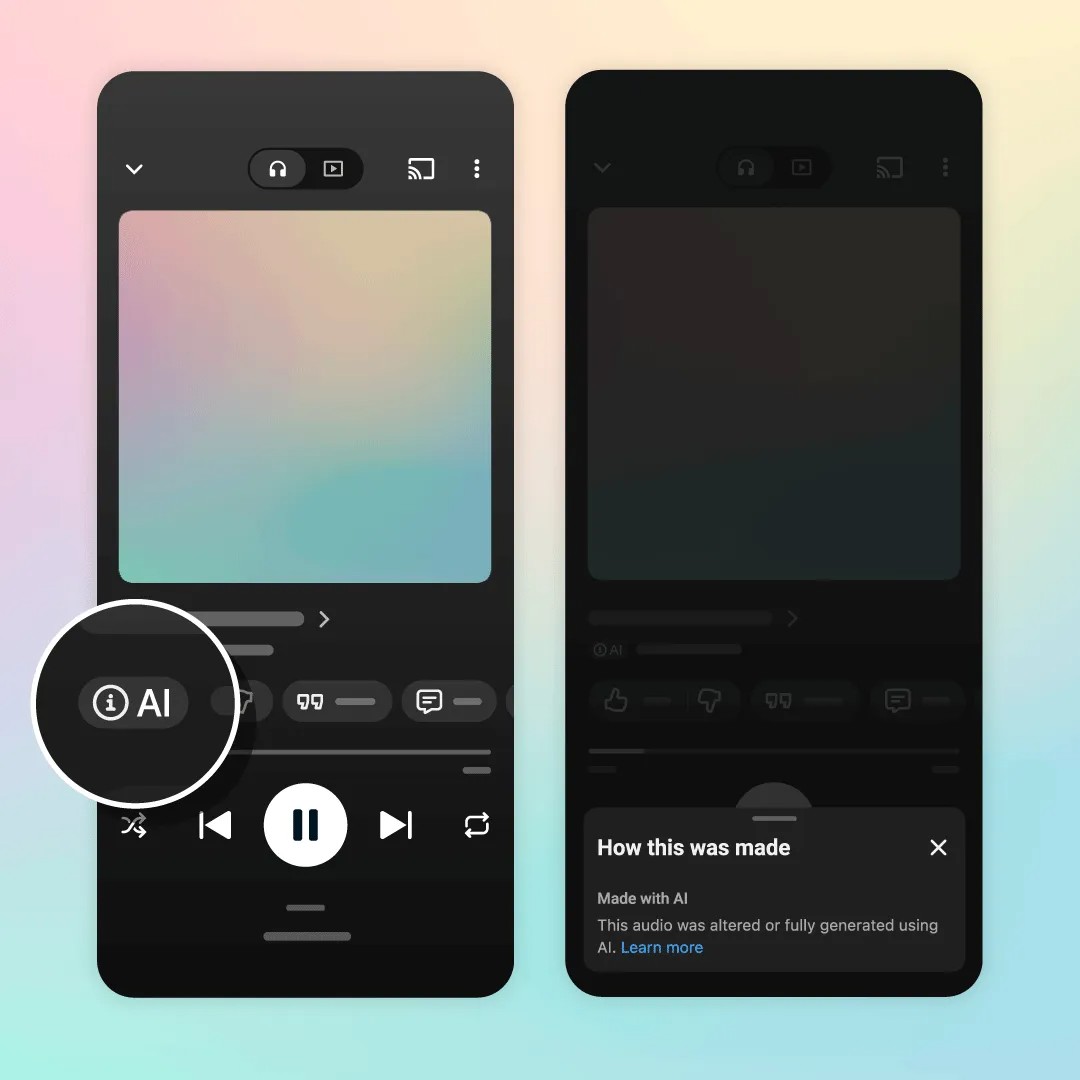
When listening to a track where AI played a significant role in its creation, users will see a label on the player page. Tapping it will open a menu providing further information about the track.
YouTube will use its own detection tools alongside information supplied by music industry partners to identify AI-generated music. The company says the decision follows listener feedback, explaining that “our listeners have told us they want transparency when they’re hearing an AI-generated track.”
How does YouTube classify AI-generated music?
According to Music Business Worldwide, YouTube’s guidance for music partners includes three classifications: “Fully Gen AI”, “Partly Gen AI” and “No Gen AI”. Partners can declare AI use when delivering music through DDEX or CSV delivery templates.
The categories distinguish between fully AI-generated recordings, music combining AI-generated elements with human performances, and content that does not fall under YouTube’s definition of generative AI. For example, a track created using AI-generated vocals and composition could be classified as fully AI-generated, while using AI to produce a bassline before adding live instrumentation could count as partly AI-generated.
Everyday production tools such as Auto-Tune and automated AI mastering fall under “No Gen AI” in YouTube’s guidance.
YouTube may also use its own detection signals when partners have not provided AI information. However, the company has not clarified whether these labels will affect how music is recommended or how royalties are paid.
YouTube joins Deezer and Spotify in AI music labelling
YouTube Music’s announcement follows a series of updates from streaming platforms looking to improve transparency around AI-generated music.
Deezer has been labelling AI-generated music since June 2025, using its own detection technology to identify fully AI-generated tracks. It is now taking things further with a new AI music filter that will let listeners exclude fully AI-generated tracks, albums and associated artists from search results.
Spotify has also been testing AI disclosures in song credits, while Apple Music plans to introduce visible “Made With AI” labels. Each platform is taking a slightly different approach, with some focusing on identifying AI-generated content and others giving listeners more control over whether they encounter it.
An important distinction is how platforms define AI-generated music in the first place. AI tools can support everything from mixing and mastering to generating individual musical elements, without necessarily creating an entire track. Understanding the difference between AI-assisted and AI-generated music is therefore becoming increasingly relevant as streaming services develop their labelling policies.
What’s next?
With YouTube Music introducing its own labels, and plans to extend them to the main YouTube app, more of the platforms people use to discover music are making AI involvement visible.
How consistently these systems identify and classify AI-generated content remains to be seen.