
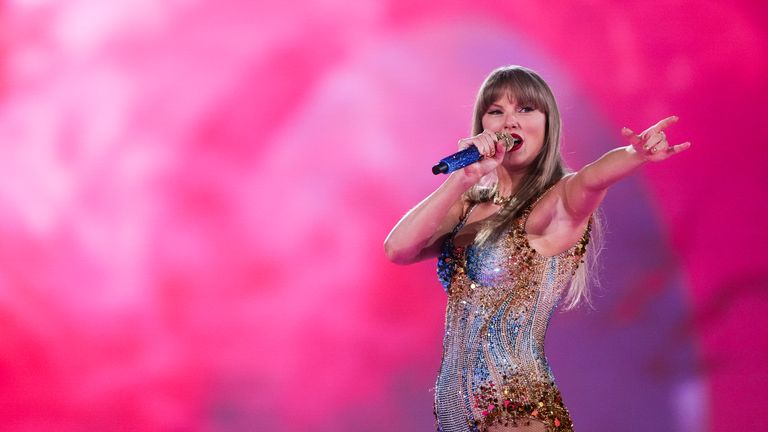
Taylor Swift steps up to protect her voice from AI replicas
Taylor Swift is taking a bold new step in the growing battle between artists and artificial intelligence, and it could have major implications for the entire music industry.
In April 2026, Swift filed a series of trademark applications aimed at protecting her voice and image from being replicated by AI. The move comes as deepfake technology and AI-generated content become increasingly sophisticated, making it easier than ever to imitate artists without their consent.
At the centre of her legal strategy are three trademarks submitted through her company, TAS Rights Management. Two of these focus on distinctive audio phrases, “Hey, it’s Taylor Swift” and “Hey, it’s Taylor”, while the third covers a specific visual image of the artist. These filings might seem simple on the surface, but they represent a much bigger attempt to close a gap in current copyright law.
The issue is that traditional copyright protections don’t fully cover AI-generated imitations. While a song recording can be protected, a newly generated voice that sounds like an artist often exists in a legal grey area. That’s where trademarks come in. By legally protecting recognisable elements of her identity, Swift may be able to challenge AI-generated content that mimics her voice or likeness in misleading ways.
And the timing isn’t accidental. AI-generated deepfakes have already been used to create fake endorsements, misleading ads, and even manipulated political content involving major celebrities. In some cases, these clips are convincing enough to blur the line between real and fake, raising serious concerns about consent, identity, and misinformation.
Swift’s move highlights just how quickly the conversation around AI in music is evolving. While the technology offers creative opportunities, it also introduces new risks, especially for artists whose voices and images are central to their identity and brand. Without clear regulation, many are left relying on creative legal workarounds like this.
Not everyone is convinced the approach will fully solve the problem. Legal experts are divided on whether short phrases or specific images will qualify strongly enough as trademarks to hold up in court.
More broadly, this could set a precedent. As AI-generated music and deepfakes continue to grow, other artists may follow suit, looking for new ways to protect their identity in a digital landscape that’s changing faster than regulations can keep up.
In many ways, this isn’t just about Taylor Swift, it’s about the future of ownership in music. Who controls a voice? Who owns a likeness? And how do you protect something that can now be recreated with a few clicks?