

Majority of Gen Z and millennials are listening to AI music, new report finds
Morgan Stanley’s annual survey of audio habits reveals how much AI music is being listened to, by whom, and where.
AI music has been a constant talking point across the music industry in recent times. From heated debates about copyright and creativity to platforms scrambling to define what’s allowed, the topic isn’t going away.
Now, a new report suggests young listeners are already tuning in. Every year, Morgan Stanley conducts a survey of Americans’ audio habits. This year marked the first time they asked respondents directly about their AI-generated music listening habits. The results? A significant number of people are listening to AI music already.
Young listeners lead the AI music charge
According to the survey, younger people are the ones listening to AI music the most. The data was led by Morgan Stanley analyst Benjamin Swinburne, who described the findings as surprising.
Between 50% and 60% of listeners aged 18-44 reported listening to around 2.5 to 3 hours of AI music per week.
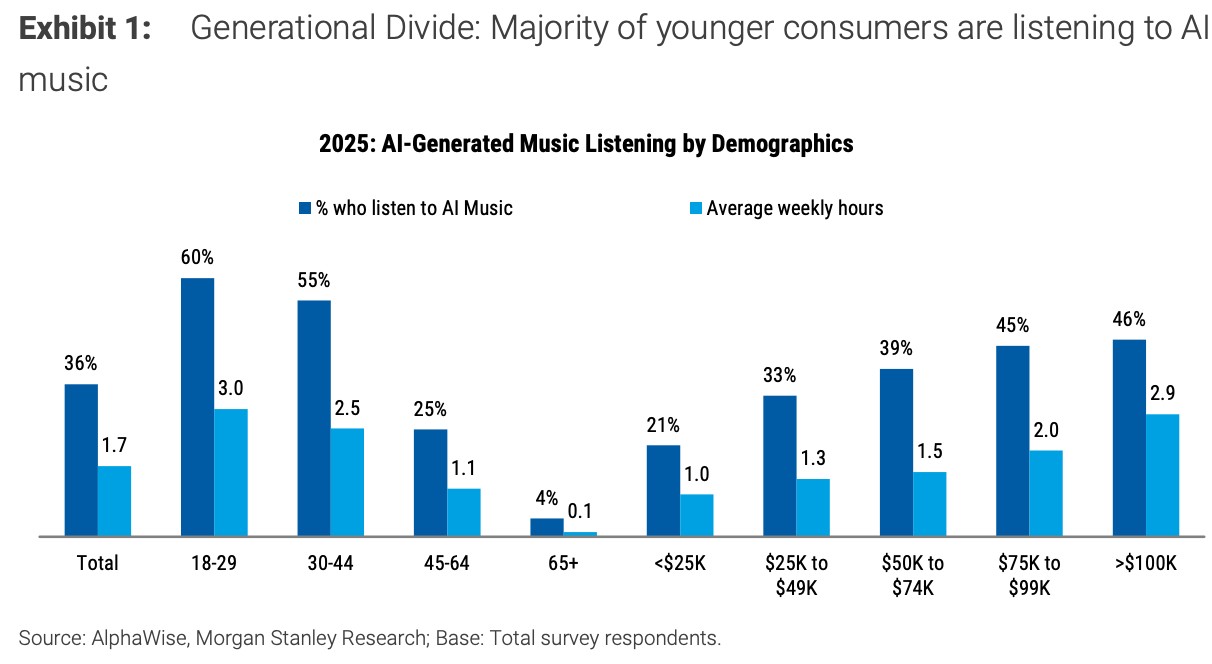
Breaking it down further:
- 60% of people aged 18-29 listen to AI music, averaging 3 hours of listening per week
- 55% of people aged 30-44 listen to AI music, averaging 2.5 hours of listening per week
- 25% of people aged 45-64 listen to AI music, averaging 1.1 hours of listening per week
- 4% of people aged 65+ listen to AI music, averaging 0.1 hours of listening per week
So where are people listening to AI music?
One of the more interesting questions raised by the report is where the listening is happening.
Back in June, Deezer revealed that AI-generated tracks accounted for only 0.5% of total streams on the platform, despite AI music making up around 30% of daily uploads. If those numbers are the same across all music streaming platforms, it suggests people are listening elsewhere.
That’s where Morgan Stanley’s survey helps fill in the gaps. YouTube and TikTok were the most popular destinations for AI music listening, which makes sense considering the flood of AI content on these platforms.
What this could mean for streaming platforms
As AI music tools become more accessible, more AI-generated content will be available, and so listening time is only likely to keep growing. If a significant chunk of that listening continues to happen outside traditional streaming services, some may worry about the long-term harm this may have on streaming platforms.
Yet, Morgan Stanley believes that AI will only help push streaming platforms forward. Instead, the firm points to Spotify’s innovative approach that will adopt AI in ways that help to grow the company. Just today, Spotify’s new co-CEOs reiterated that their focus is on using AI to give listeners more control and better personalization, not to replace human taste or automate creativity.
For the music industry, the takeaway is clear. AI music isn’t a distant future problem. It’s already here and people are listening, and with it presents both opportunities and challenges.
Whatever lies ahead, get your music onto streaming platforms for free with RouteNote today!