
Beyerdynamic AVENTHO 100 review – the best on-ear headphones in 2025
With their on-ear design, Beyerdynamic’s new AVENTHO 100 headphones win on sound and style, but lack the comfort of over-ear headphones.
When talking of wireless ANC headphones, some popular models frequently crop up, such as the the Sony WH-1000XM6, Nothing Headphone (1), Bose QuietComfort Ultra Headphones and Apple AirPods Max. All of these are over-ear headphones, with the ear cup going around the ear, rather than sitting on top. While their smaller size can lead to a reduction in sound quality, noise isolation and comfort, the compact size makes on-ear headphones great for travel. While there are options from the likes of Beats, Sony, JBL, Skullcandy and Soundcore, there are currently no stand-out go to recommendations for on-ear headphones. Beyerdynamic’s latest headphones may well change that.
Announced earlier this month, the AVENTHO 100 are the long-awaited sequel to the original AVENTHO headphones launched in 2017. While they keep a similar style and drivers, Beyerdynamic’s update brings ANC, increased battery life and a revamped design.
Unboxing
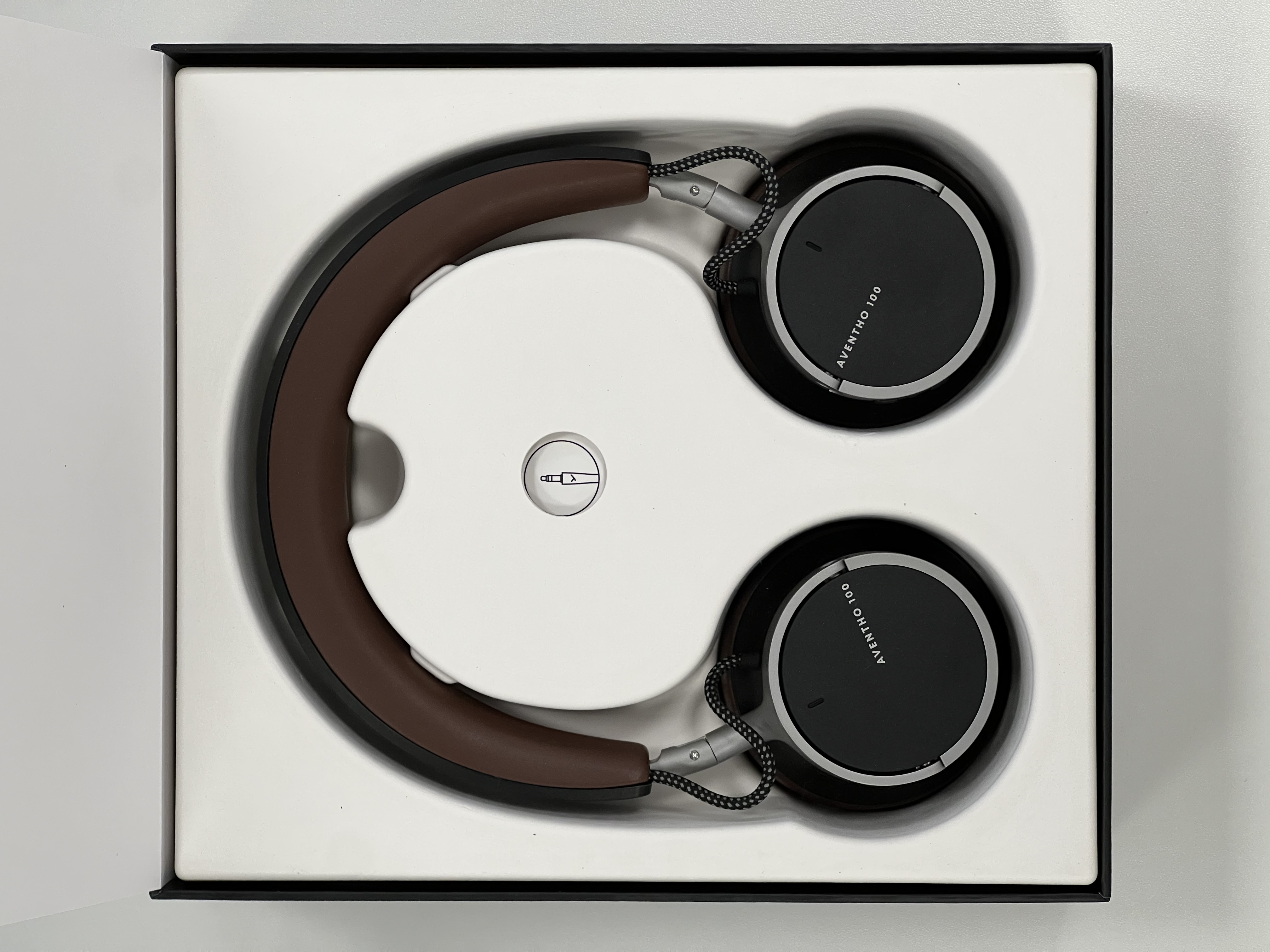
Opening up the box, the headphones are presented front and center. Underneath, in a small box, you’ll find the soft carry bag housing the 3.5mm aux cable and USB-C to USB-A charging cable. There’s also a quick start guide and compliance booklet.


Design
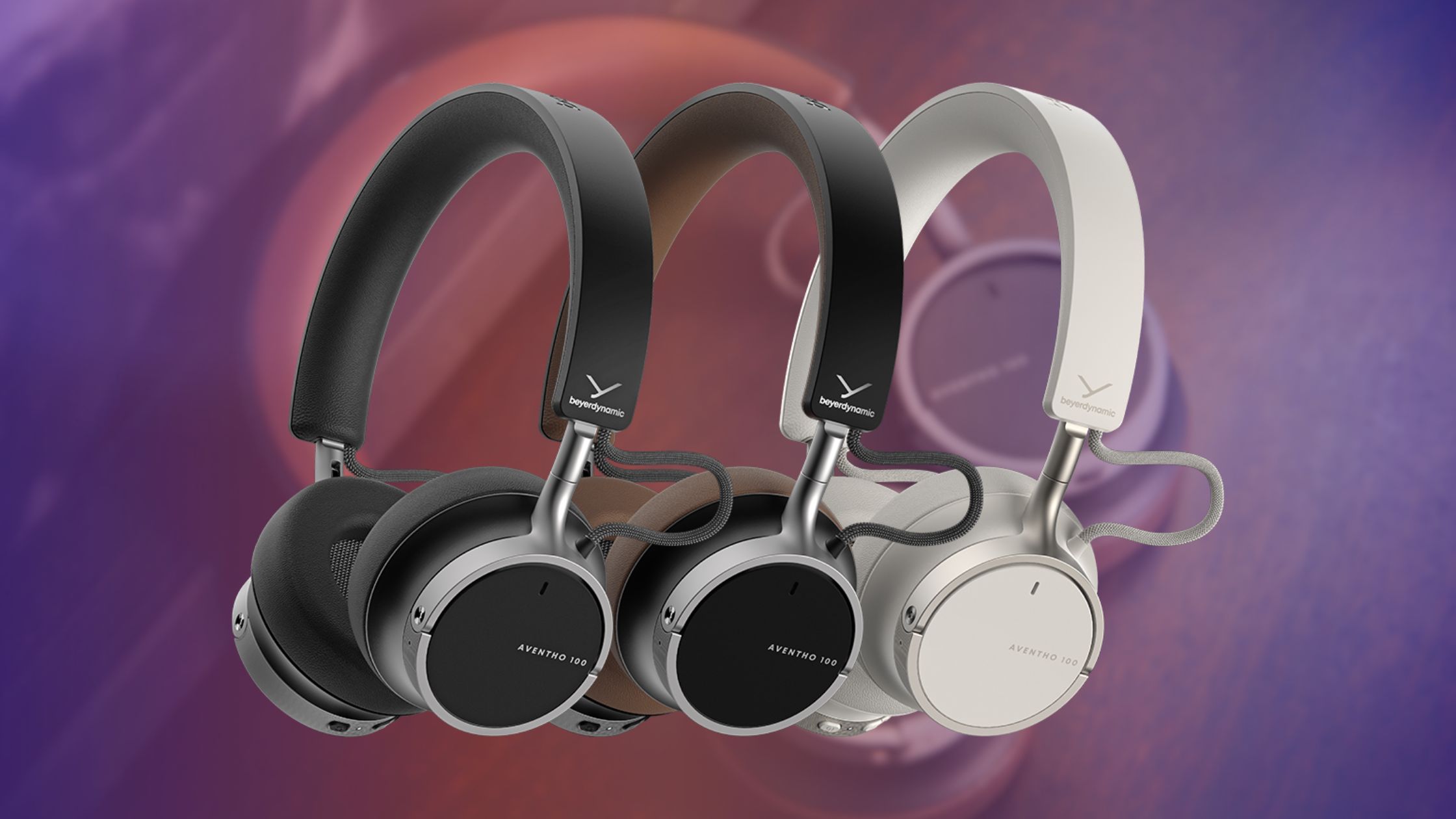
The AVENTHO 100 won the 2025 Red Dot Design Award, and I can see why. The headphones look as great in person as the photos make out. They come in black, brown and cream. All three options feature an aluminum frame stucture and textile cables. Both the black and brown options have black plastic, while the cream has a lighter overall look. The synthetic leather covering the memory foam headband and earpads is color matched to the product. We got them in brown for that classic leather and authentic vintage styling.

The earcups rotate and fold for compact storage, however they rotate flat what I consider to be the wrong way. When hung around your neck, they rotate to face outwards. The earpads are easily replaceable, with a counterclockwise twist unlocking them. They take a little bit of force, but as a result are sturdy when in place. There’s a little arrow which helps align the pad when twisting it back on. The ability to switch pads allows you to keep the headphones looking fresh or customize them with non-standard colors.

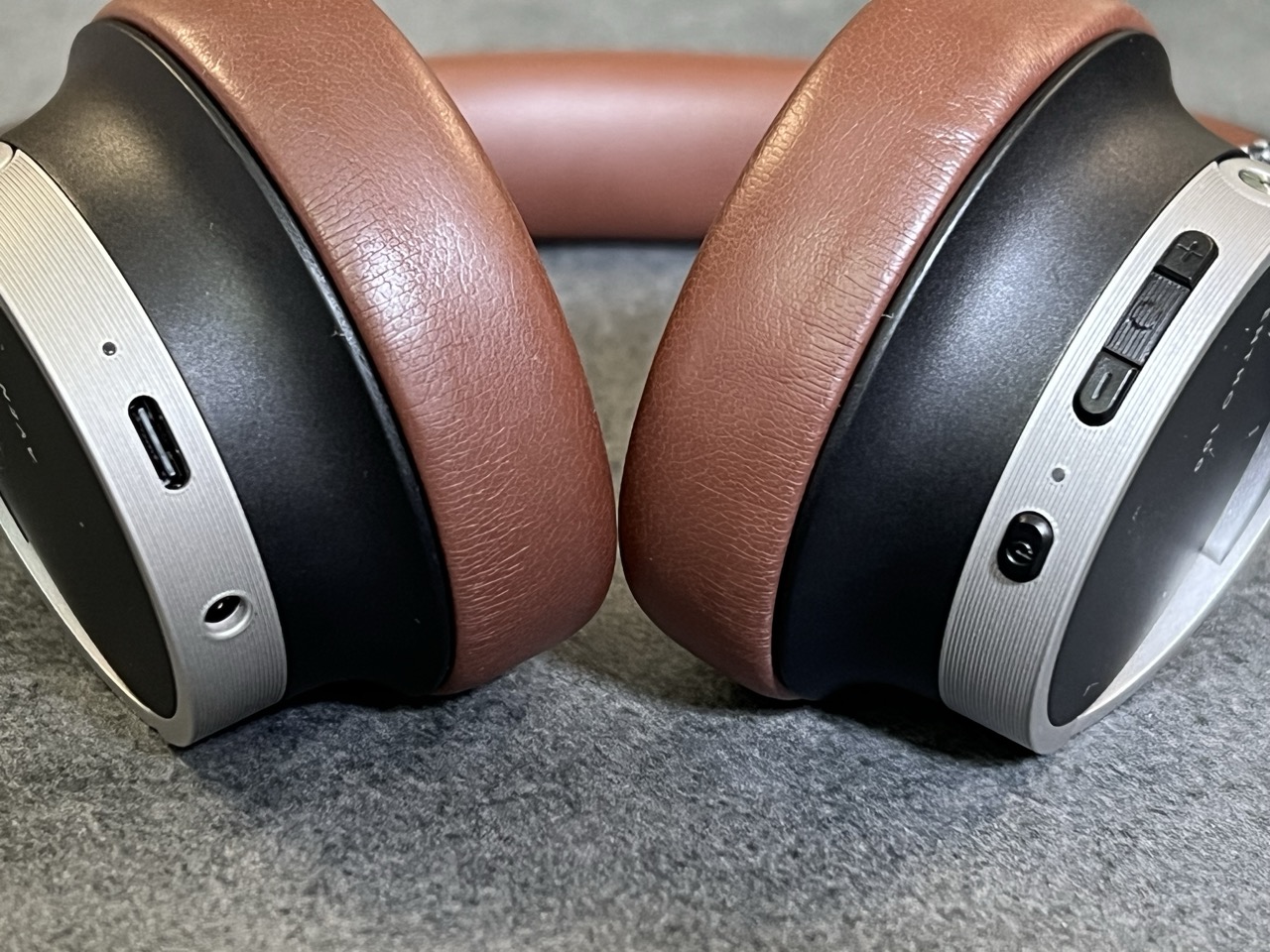
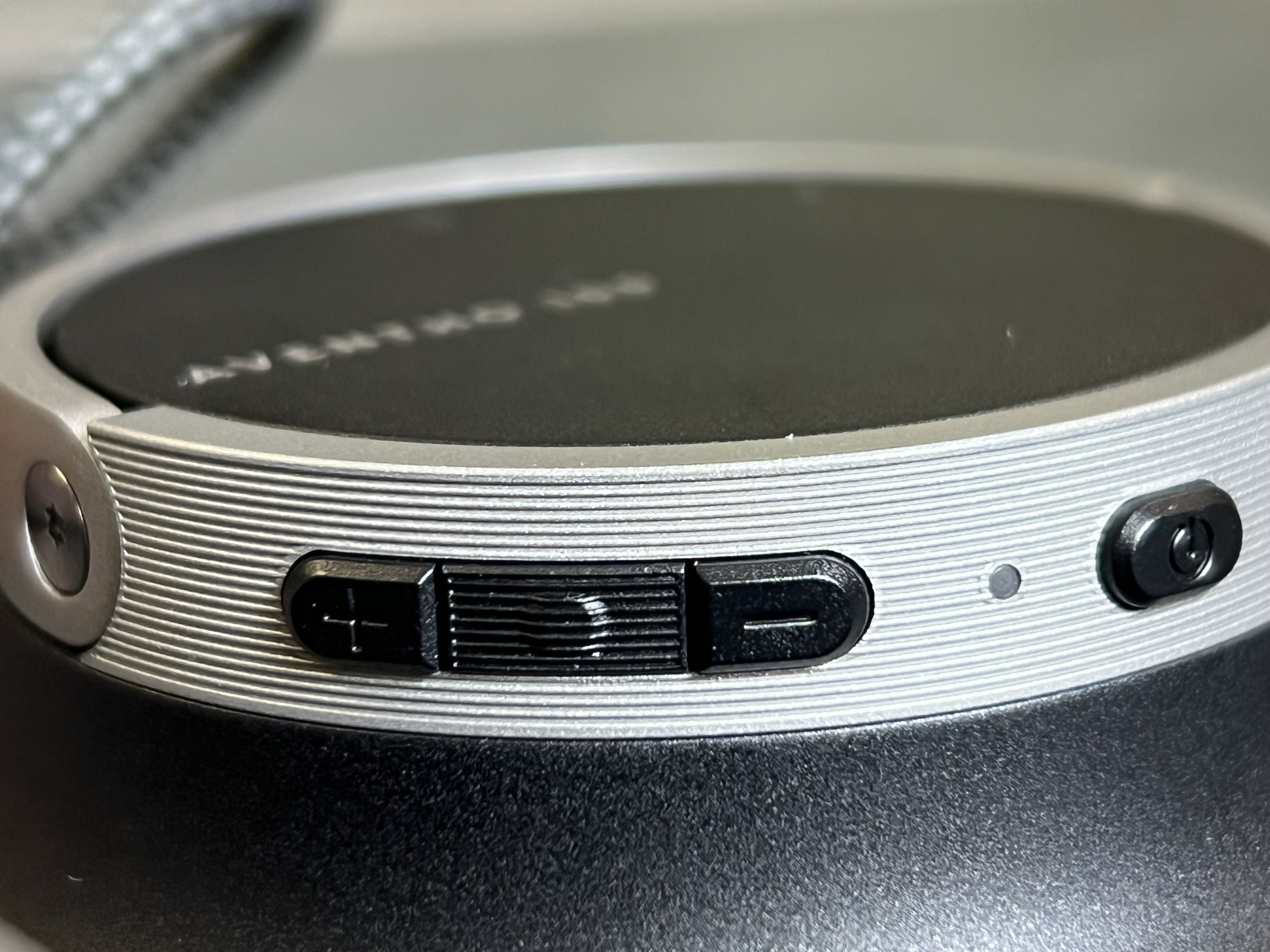
There are four buttons and a Bluetooth LED on the right earcup. The left earcup has a USB-C port, 3.5mm audio jack and charging LED.
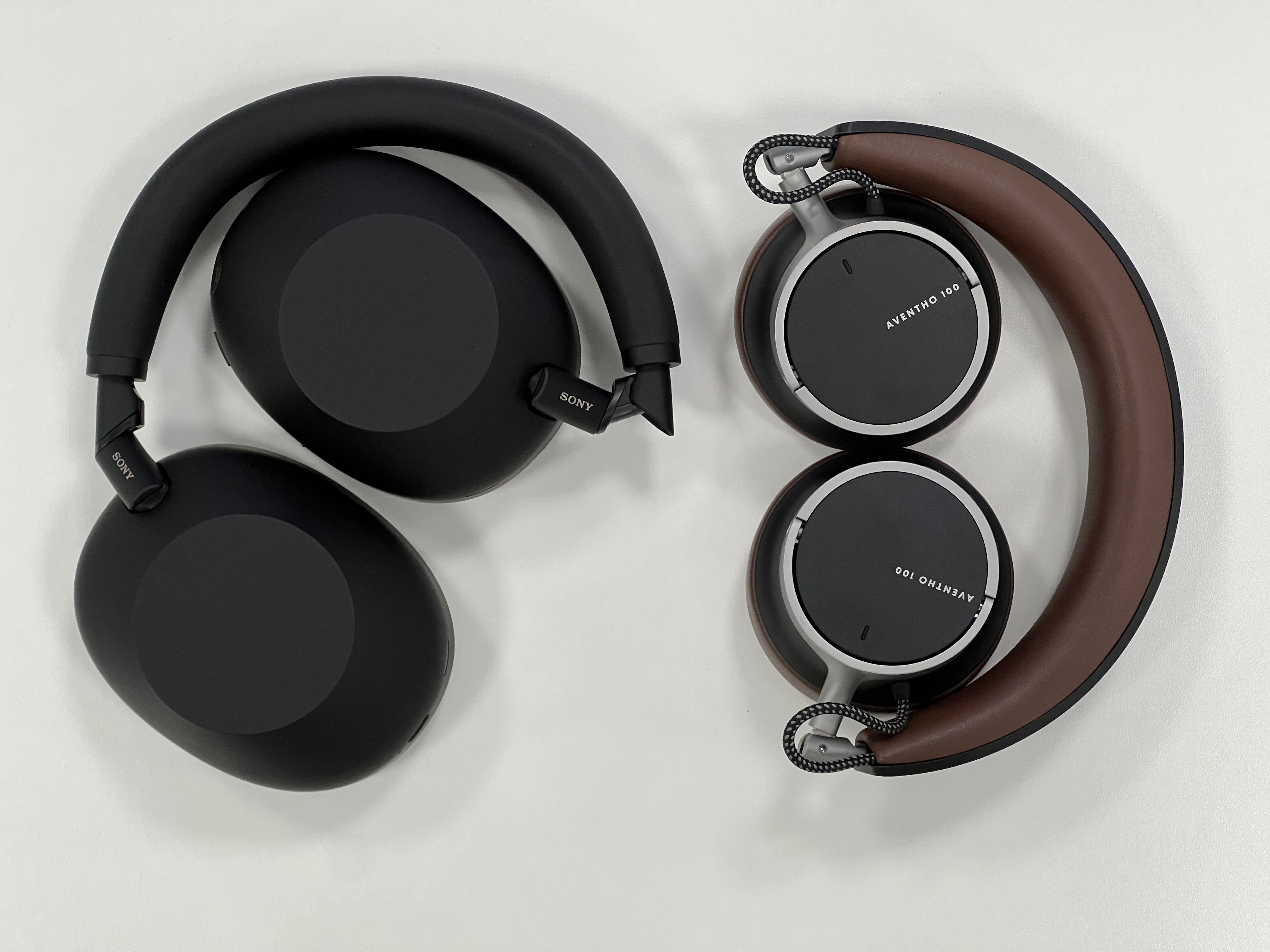
Despite the aluminum elements, the smaller size gives them a slightly lighter weight than most popular over-ear headphones. The AVENTHO 100 weigh around 220 grams, while the Sony WH-1000XM6 and Bose QuietComfort Ultra both weigh around 250 grams.

The headphones come with a soft carry bag, which has a small pouch on the inside for cables. This is good for keeping scratches off the headphones, but won’t fully protect them like a hard case would.

Personally, I love the way they look. I’ve already received a “fancy headphones” compliment, that my all-plastic Sony headphones can only dream of. There is a good amount of soft padding on the headband and earpads. That being said, they aren’t as comfortable as over-ear headphones, as they push my ears down rather going around the outside. The arms extend to fit my large head at the maximum length. If you have an extra large head, you may struggle with the fit of these headphones.
Setup
The AVENTHO 100 feature Bluetooth 5.4, with support for multipoint. There’s Google Fast Pair, for one-touch pairing with Android devices. They support AAC and SBC codecs, as well as aptX Adaptive and aptX Lossless on compatible devices.
To set them up, a single press on the power button turned them on. Voice prompts told me I was in pairing mode and the battery status. They connected quickly to my iPhone. Opening the app, the headphones were quickly recognized and issued a firmware update. This claimed it would take 10 to 15 minutes, but ended up taking about 2 to 3 minutes.
I was able to connect a second device by triple pressing the power button. This disconnected my iPhone, but multipoint means I could manually reconnect for connection to both devices simultaneously. Multipoint works on the AVENTHO 100, but requires pausing media on one device before it will allow you to play on the other, rather than switching automatically.
After a restart, the headphones automatically reconnected to both devices without prompting.
Sound quality
I was pleasantly surprised by the sound of the AVENTHO 100. They sound great! They get fairly loud, with plenty of low end and stand up great, even when compared side-by-side against the Sony WH-1000XM6, only getting slightly beaten at maximum volume.
For calls, the headphones support Qualcomm cVc technology to isolate your voice in noisy environments.
Active noise cancellation
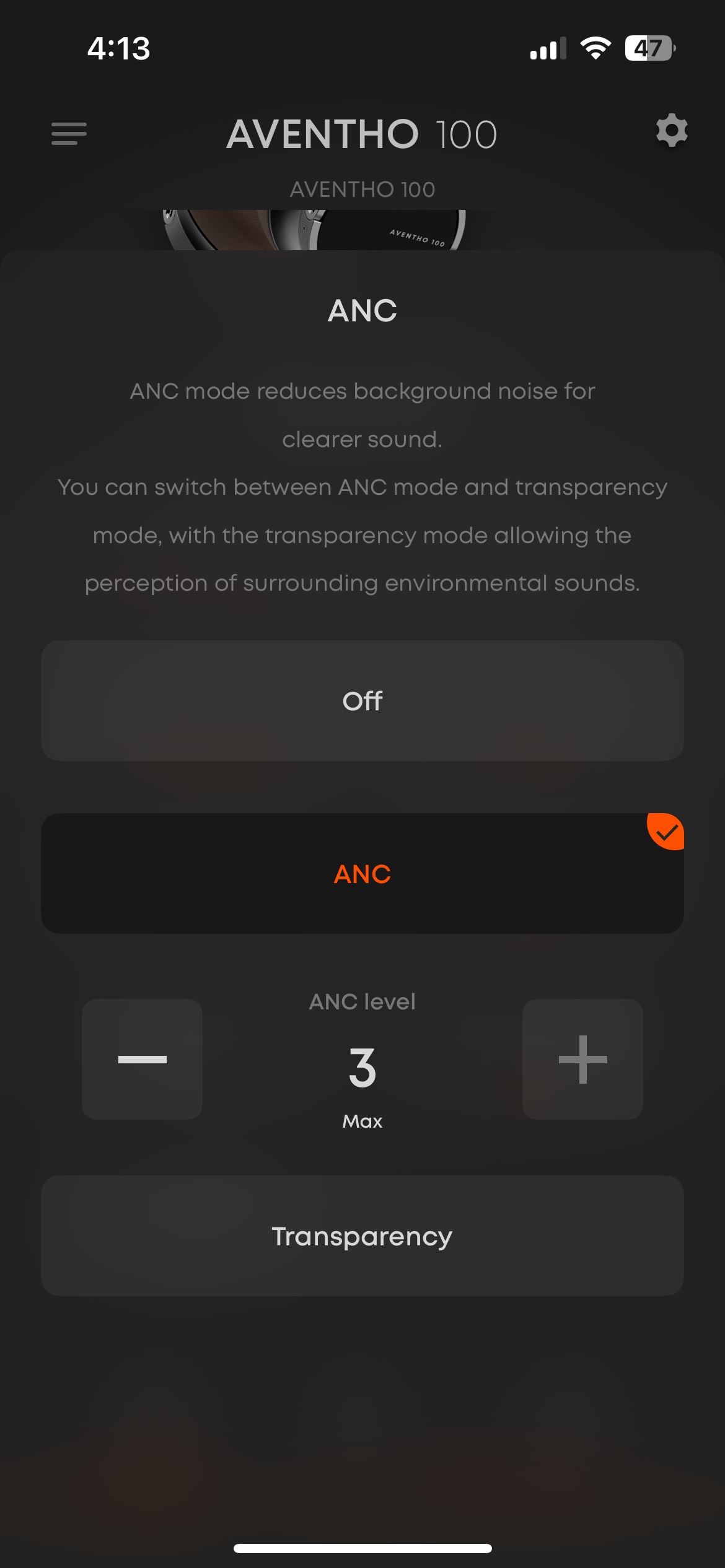
Without even powering them on, the AVENTHO 100 provide a decent level of passive noise isolation, but as expected, not as much as an over-ear pair of headphones. You’ll find both active noise cancellation and a transparency mode, which passes outside noise through to help you stay aware of your surroundings. You can switch between modes using the app or via the power button. Both ANC and transparency have three levels of power, which can be switched in the app. ANC does a decent job of canceling background noise. Transparency mode sounds realistic. With no music playing, there is an audible hiss when in ANC or transparency mode, but this is masked if you have any content playing.
Controls
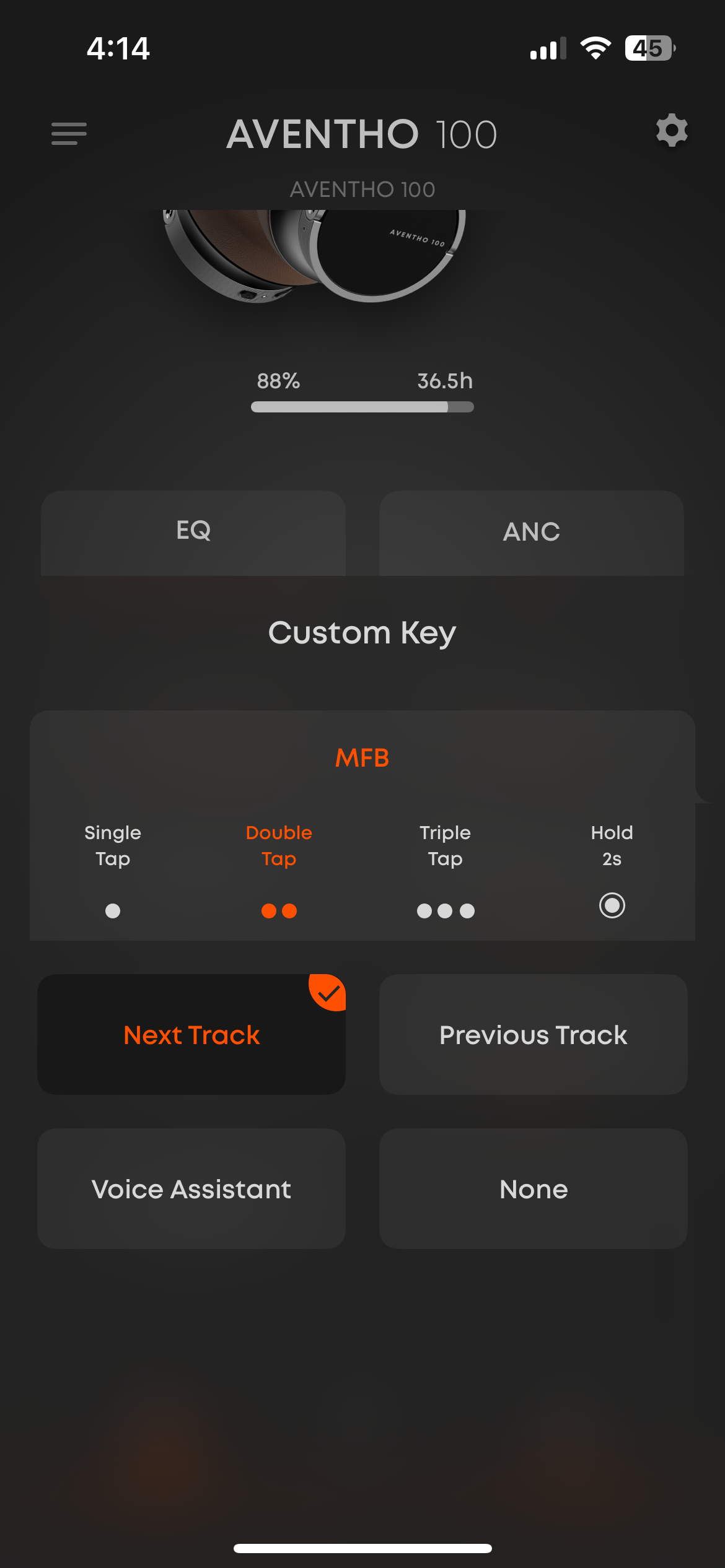
The AVENTHO 100 uses physical buttons rather than touch controls. There are four buttons on the right earcup. Power, which turns the headphones on or off with a hold, while a quick press will switch ANC mode. Volume up and volume down are self-explanatory. By default, the multifunction button will play/pause/answer/end calls with a single press, summon the voice assistant/reject calls with a hold, skip to the next track with a double press, and go to the previous track with a triple press. This can be customized using the app.
Unfortunately, the headphones do not feature wear detection to automatically play or pause music when they are placed on or removed from your head.
Battery life
Despite lacking active noise cancellation, the original AVENTHO headphones had just 20 hours of playback. The new AVENTHO 100 go for up to 40 hours with ANC turned on and more than a whopping 60 hours with ANC turned off. A 15-minute charge can give you up to 15 hours of listening. The AVENTHO 100 also introduce a USB-C port for charging.
For wired audio, there’s a 3.5mm audio jack, which can be used when the headphones are on, off or charging. This means you can make use of ANC when the headphones are on or keep listening even when the headphones are dead. When off, none of the buttons function. When on, the multifunction button does not work, and volume buttons do work, but are independent of the device’s volume.
The USB-C port does not support audio, but the headphones can be used in Bluetooth or wired over 3.5mm while charging.

App
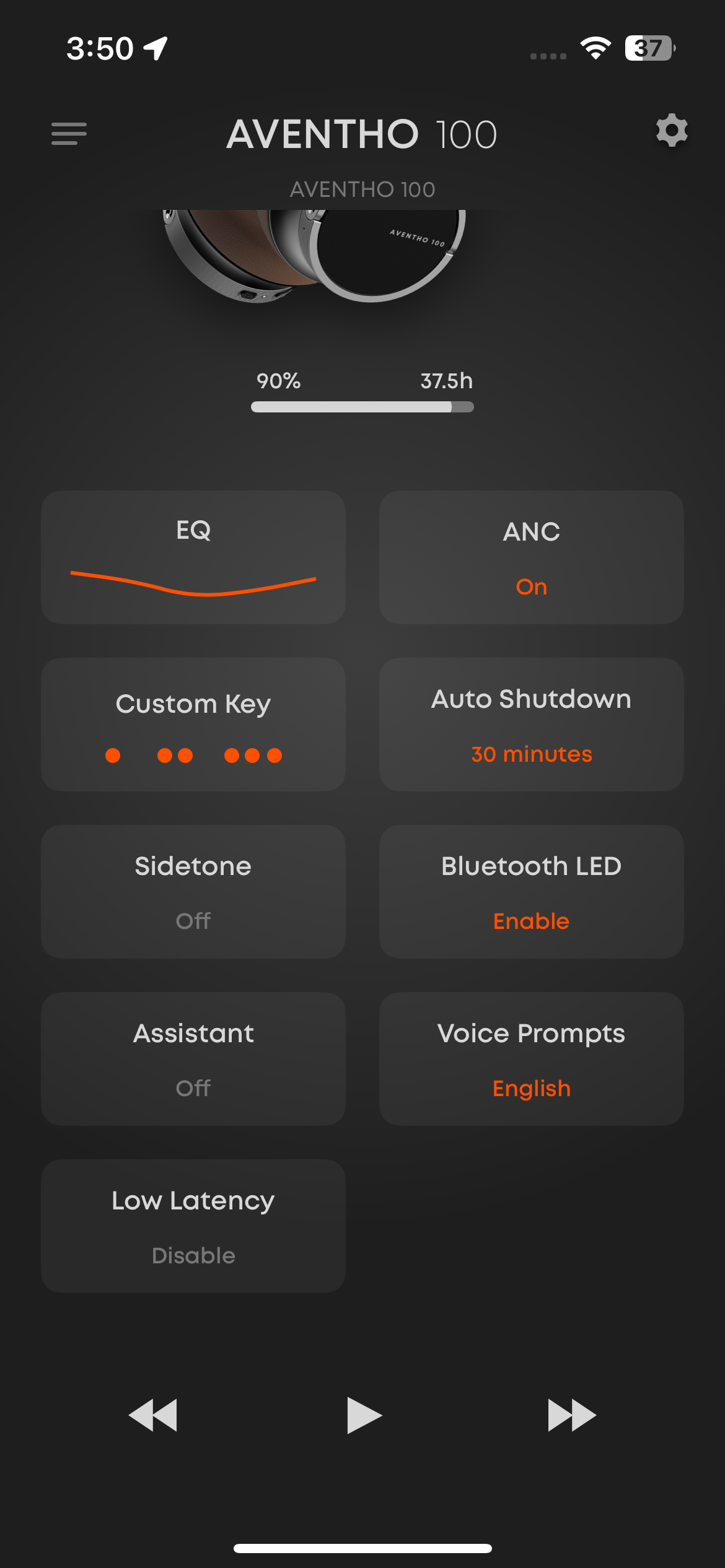
The AVENTHO 100 can start playing music right away, but the optional ‘beyerdynamic’ app provides additional tools for customization. At the top, you’ll see the battery percentage of the headphones, as well as an estimated number of hours of listening left, which is a neat feature that I haven’t seen on any other headphones.
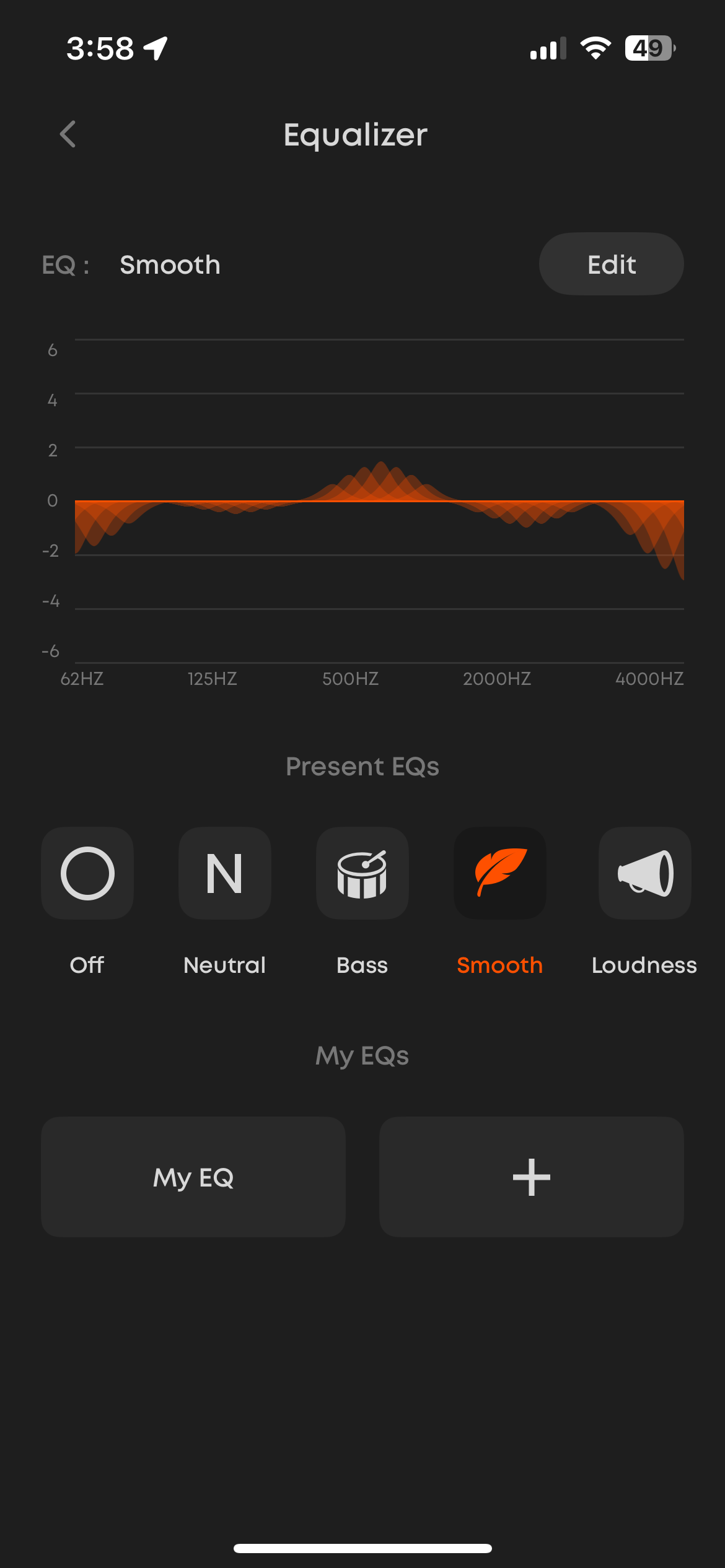
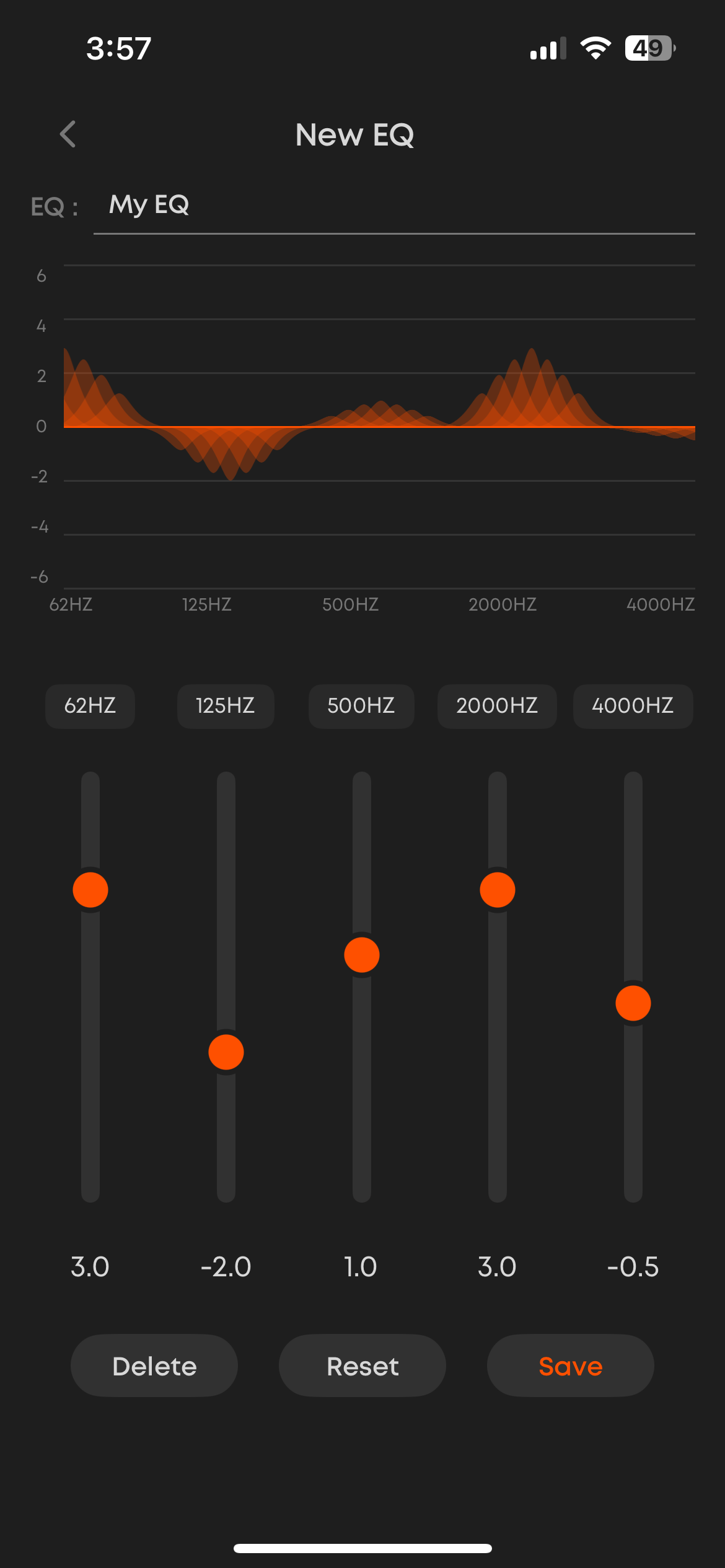
In EQ, you’ll find four presets – Neutral, Bass, Smooth, and Loudness, which are represented in the equalizer. You can edit any of these using a 5-band equalizer and save your own custom preset.
Under ANC you can switch between Off, ANC, and Transparency. The ANC and Transparency options have three levels to choose from.
Custom Key lets you customize what a single tap, double tap, triple tap and 2 second hold of the mulifunction button does between play/pause, next track, previous track, voice assistant and nothing.
Sidetone passes through some of your own voice to the headphones during calls to help them feel more natural.
Interestingly, the Assistant toggle seems reversed to me. When Off, the voice assistant can be summoned with a long press on the multifunction button. When switched to On, holding the multifunction button does nothing. Hopefully this can be fixed in a future update.
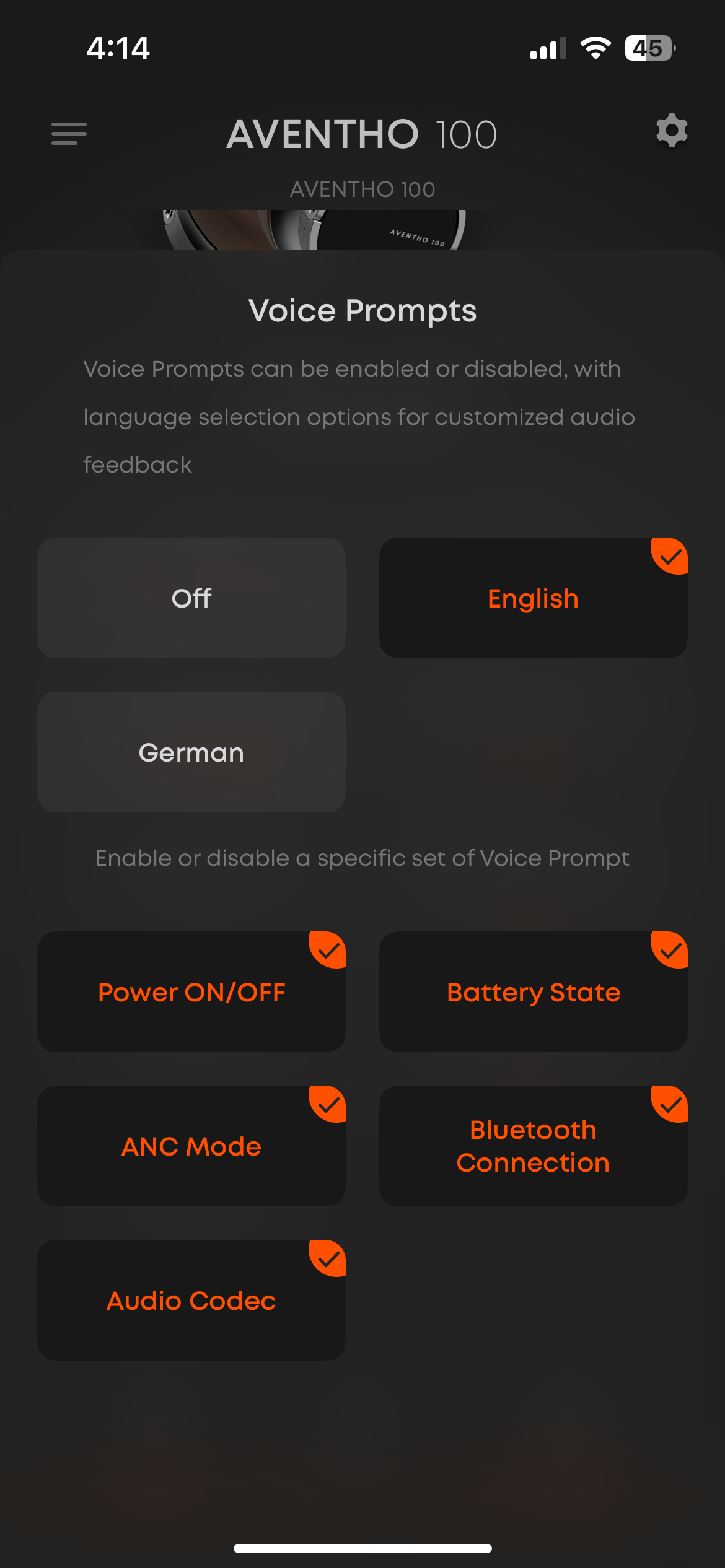
The Voice Prompts menu lets you turn them off, or switch between English and German. You can choose whether to hear prompts for power on/off, battery state, ANC mode, Bluetooth connection and audio codec.
Low Latency minimizes audio delay for gaming.
There are a number of other settings available through the app such as auto shutdown, Bluetooth LED, device name, firmware update, and factory reset.
Pricing and availability
The Beyerdynamic AVENTHO 100 are currently available in Europe and Canada for €199/$299.99 CAD. They are available in the UK via Polar Audio for £169. This is a super competitive price in a space with little competition. With fantastic sound quality, ANC, styling, controls and battery life, the AVENTHO 100 are a great option for those looking for a more compact option than over-ear headphones. The original AVENTHO headphones launched in 2017 for €449, making the AVENTHO 100’s new price a welcome change.
Beyerdynamic sent us the AVENTHO 100 for review. No money was exchanged for our opinions on the product.