

Arturia MiniLab 37 gives producers more room to create without sacrificing portability
Arturia’s new MiniLab 37 takes everything that made the company’s compact MIDI controller a favourite among bedroom producers and expands it with an extra octave, redesigned pads and a workflow aimed at modern music creation.
For many musicians, 25-key MIDI controllers strike a balance between portability and functionality. But they’re also limiting. Whether you’re trying to play with two hands, build richer chord progressions or perform more expressive melodies, that smaller keybed can quickly feel restrictive.
That’s exactly the problem Arturia is looking to solve with the MiniLab 37. Rather than reinventing one of its best-selling controllers, the company has expanded the formula with 12 additional slim keys while keeping the compact footprint that has made the MiniLab range a staple of bedroom studios and mobile production setups.
More keys, more creative freedom
The headline feature is simple: the MiniLab now offers a 37-note keyboard instead of 25. On paper, an extra octave might not sound revolutionary. In practice, it can dramatically change how you play.
The additional keys give producers more room to perform melodies without constantly reaching for octave buttons, while making it much easier to play basslines and chords together. If you’re sketching ideas quickly or recording performances directly into your DAW, that extra range can make the controller feel significantly less restrictive.
This is the most meaningful evolution the MiniLab range has seen since it launched over a decade ago. Previous generations largely refined the same 25-key concept, whereas the MiniLab 37 fundamentally changes how the controller can be used without losing its portability.
Arturia has also kept the keyboard slim enough to fit comfortably on crowded desks, making it an attractive option for producers working in home studios or creators who regularly travel with their setup.
Built for hands-on music production
Beyond the larger keybed, the MiniLab 37 retains the tactile workflow that has become synonymous with the series.
The controller includes:
- 37 velocity-sensitive slim keys
- Eight endless rotary encoders
- Four assignable faders
- Eight RGB velocity- and pressure-sensitive pads arranged in two rows
- Pitch and modulation touch strips
- OLED display with browser control
- Built-in arpeggiator, Chord mode and Hold mode
- USB-C connectivity, MIDI Out and pedal input.
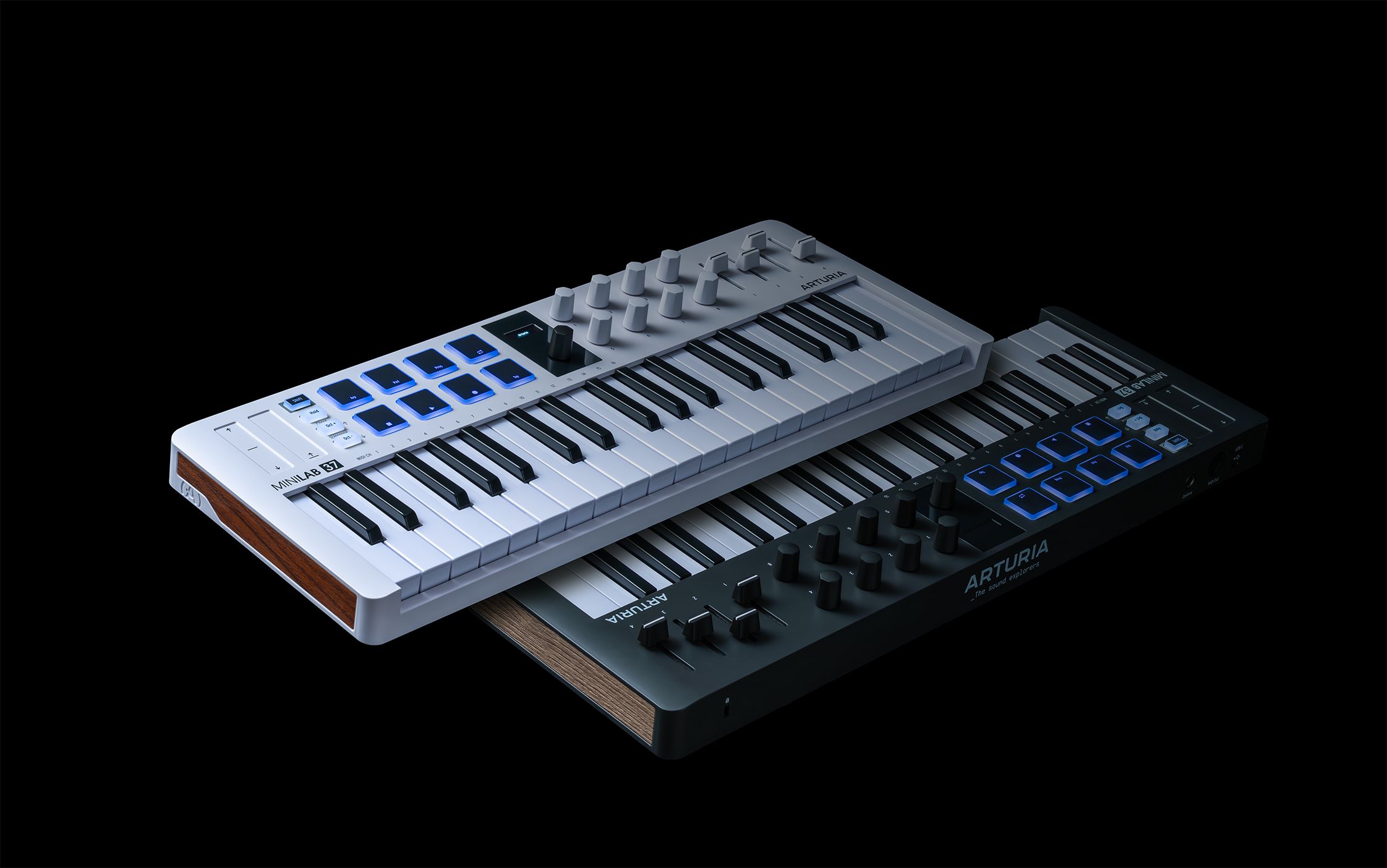
Rather than existing simply as a collection of controls, each feature is designed to reduce the amount of time spent reaching for a mouse.
The endless encoders, for example, automatically stay in sync with whichever instrument or effect you’re controlling, while the assignable faders are ideal for adjusting volume, automation, filters or orchestral expression without interrupting your workflow.
Additionally, the faders provide one of MiniLab’s biggest advantages over many similarly priced competitors, particularly for producers working with orchestral instruments or automation-heavy projects.
A redesigned pad layout
One of the more subtle changes is the redesigned pad layout. Instead of placing all eight pads in a single horizontal row, Arturia has stacked them into two rows of four.
It might seem like a minor redesign, but it has practical benefits for beatmakers and live performers. Finger drumming becomes more comfortable, rapid sample triggering feels more natural, and players familiar with MPC-style workflows should find the layout immediately familiar.
Ready to work with your favourite DAW
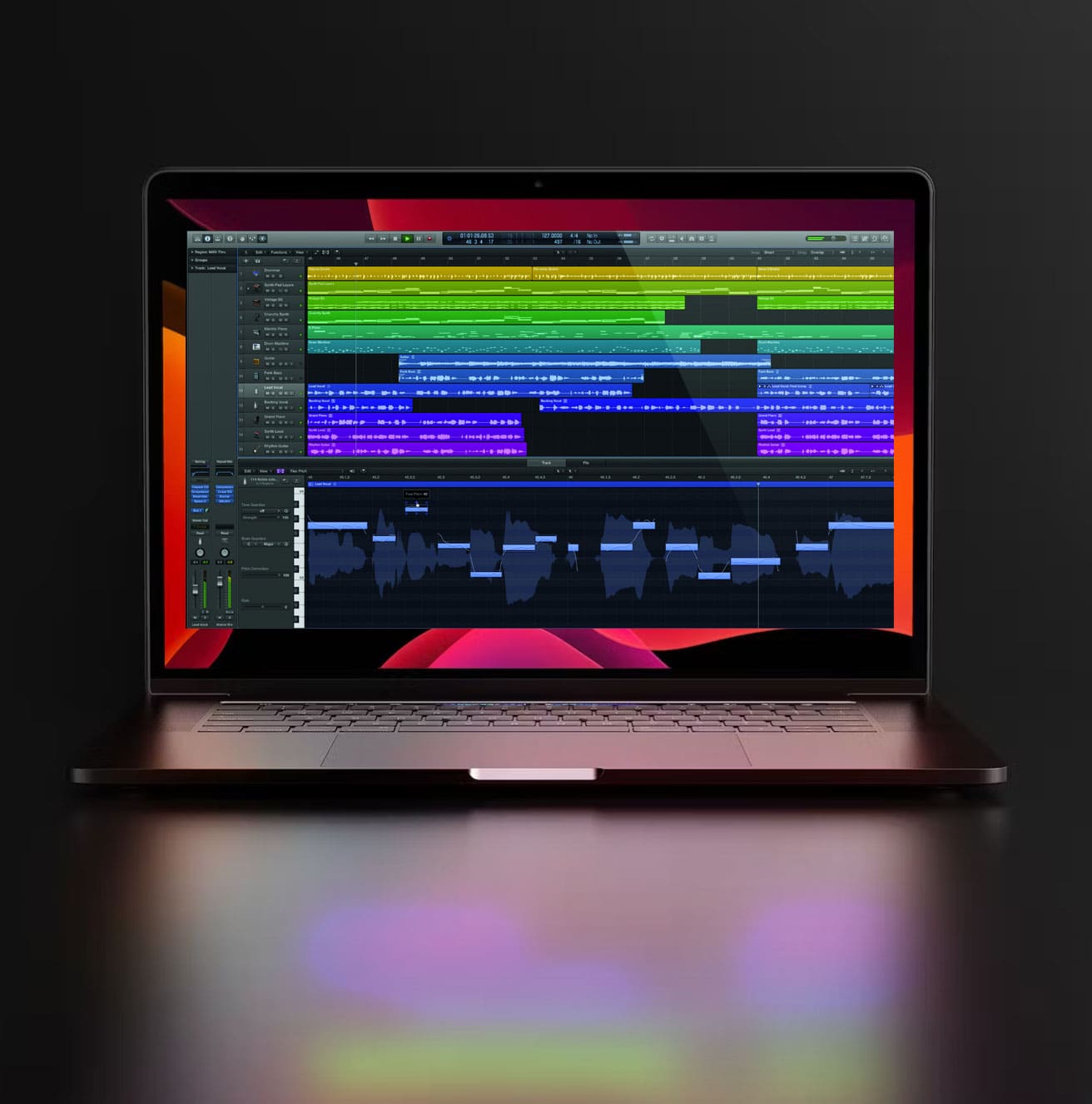
Like previous MiniLab models, the MiniLab 37 is designed to integrate with a wide range of production software straight out of the box.
Arturia includes dedicated integration for major DAWs including Ableton Live, Logic Pro, FL Studio, Cubase and Bitwig, while MCU/HUI compatibility extends support to many other production environments. The controller is also compatible with Native Instruments’ NKS ecosystem, making it easier to browse sounds and control compatible virtual instruments.
For producers just starting out, that means less time configuring MIDI mappings and more time making music.
A software bundle that gets you producing immediately
The MiniLab 37 arrives with a generous software package that helps justify its price. Included are:
- Analog Lab Intro with hundreds of synth and keyboard presets
- Ableton Live Lite
- Native Instruments Komplete 15 Select
- Loopcloud trial and sample packs
- Melodics lessons
- Arturia MIDI Control Center
Whether you’re producing electronic music, recording demos or experimenting with new sounds, the bundle provides enough instruments and software to start creating immediately without making additional purchases.
How does it compare?
Rather than replacing the MiniLab mk3, the MiniLab 37 expands on it. The core experience remains familiar, but the extra octave significantly improves playability for musicians who found 25 keys limiting.
Compared with similarly priced alternatives like the Akai MPK Mini Plus, the MiniLab 37 differentiates itself through its four assignable faders, seamless Analog Lab integration and extensive software bundle. On the other hand, some competitors offer features such as aftertouch or joystick controls that may better suit certain workflows.

Sustainability joins the feature list
Another notable aspect is Arturia’s continued focus on sustainability.
The MiniLab 37 is manufactured using at least 50% recycled plastic, ships in fully recyclable packaging and includes a five-year warranty, reflecting a broader trend of music technology companies placing greater emphasis on product longevity and environmental impact.
Pricing and availability
The Arturia MiniLab 37 is available now in Black and White for $149 on Amazon, positioning it between ultra-compact beginner controllers and larger full-size MIDI keyboards.
For producers working in smaller studios, creators who travel regularly, or anyone looking for a capable secondary controller, the MiniLab 37 looks like a thoughtful evolution of an already successful formula. Rather than adding unnecessary complexity, it focuses on practical improvements that can make everyday music production feel more comfortable, expressive and efficient.