

Qobuz revenue surges 45.7% in 2025 as premium music streaming continues to grow
Qobuz has revealed impressive 2025 revenue growth, highlighting the continued demand for premium music streaming. Here’s what it means for independent artists and why every platform matters.
Starting out as a specialist streaming service for audiophiles, the latest financial results of Qobuz suggest it’s becoming much more than a niche service.
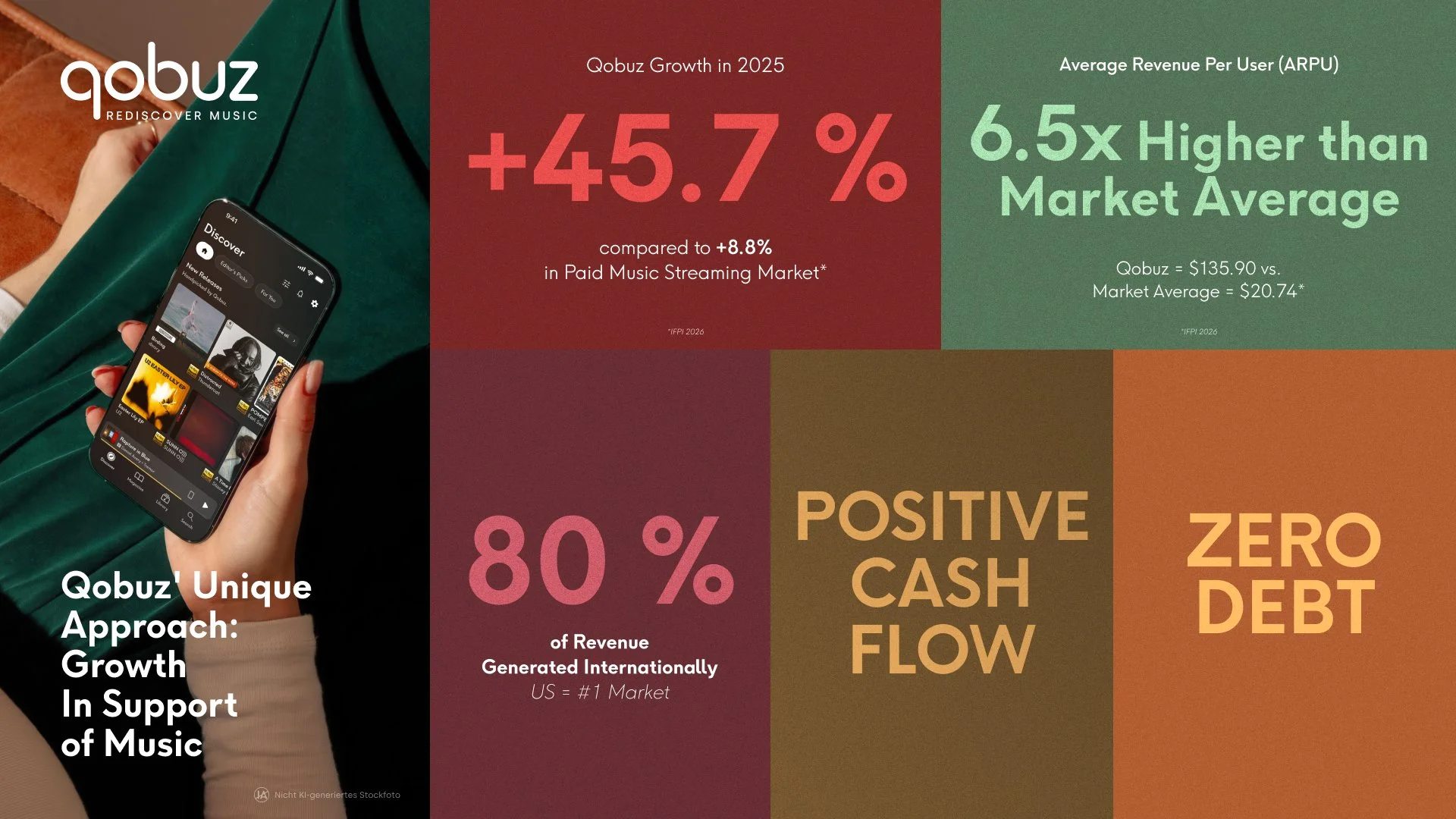
The French streaming platform has announced that its revenue grew 45.7% during 2025, significantly outpacing the wider paid music streaming market, while reaching 1.2 million monthly active users. According to Qobuz, that growth comes as paid streaming continues to expand globally, with the company now generating most of its revenue from outside its home market.
While Spotify, Apple Music, and Amazon Music remain the dominant streaming services by scale, Qobuz’s latest figures show that listeners are increasingly willing to pay for specialist music experiences.
Qobuz is growing faster than the wider streaming market
According to Qobuz, its revenue increased by 45.7% in 2025, compared to 8.8% growth across the wider paid music streaming market, making it one of the fastest-growing streaming services over the past year.
The company also revealed:
- 1.2 million monthly active users
- 80% of revenue now comes from international markets
- The United States has become its largest market
- Positive free cash flow with no financial debt
- A positive net result expected by March 2027
Those figures underline Qobuz’s growing momentum as it continues to establish itself alongside much larger streaming competitors.
Rather than trying to compete directly with the biggest platforms on size, Qobuz has focused on offering something different: high-resolution audio, expert editorial curation, downloadable music purchases and a subscription-only experience with no advertising.
A smaller audience doesn’t always mean a smaller opportunity
One of the most eye-catching figures from Qobuz’s announcement wasn’t its user count, it was how much each listener is worth.
The company says its average annual revenue per user (ARPU) reached $135.90, compared to an industry average of $20.74. According to Qobuz, that reflects the strength of a platform built entirely around paying subscribers for the quality of its experience rather than free, ad-supported listening.
What’s behind Qobuz’s growth?
Qobuz has worked to differentiate itself in other ways. Earlier this year, the company expanded its AI transparency efforts with an AI Charter that prioritises human editorial curation and identifies AI-generated content. It also remains one of the only streaming platforms to publicly disclose an independently audited average royalty payment to rights holders, helping position itself as one of the more transparent players in streaming.
Whether these initiatives become industry standards remains to be seen, but they have helped Qobuz build a distinctive identity at a time when many listeners are looking for alternatives to mainstream streaming services.
What this means for independent artists
The biggest takeaway isn’t that every artist suddenly needs to focus on Qobuz above every other platform. Instead, these results reinforce a much broader lesson that today’s streaming landscape is becoming increasingly diverse.
While Spotify, Apple Music, YouTube Music, Amazon Music, and Deezer continue to dominate global listening, specialist services are carving out loyal communities of highly engaged music fans. Some listeners prioritise audio quality. Others value editorial recommendations over algorithms, or simply want a platform that feels more focused on music itself.
For independent artists, that makes wide distribution more valuable than ever. Every streaming service reaches a slightly different audience, and limiting your releases to only the biggest platforms could mean missing fans who actively choose alternatives like Qobuz.
Make your music available wherever fans listen
As streaming continues to evolve, success is becoming less about putting all your eggs in one basket and more about meeting listeners wherever they choose to discover music.
Whether someone streams through Spotify, Apple Music, YouTube Music or Qobuz, every platform offers another opportunity for your music to be found.
As Qobuz’s latest results show, the biggest opportunities in streaming don’t always come from the biggest platforms. Sometimes, they’re found where passionate listeners are willing to invest most in the music they love.
Distribute your music to streaming platforms worldwide for free with RouteNote today!