
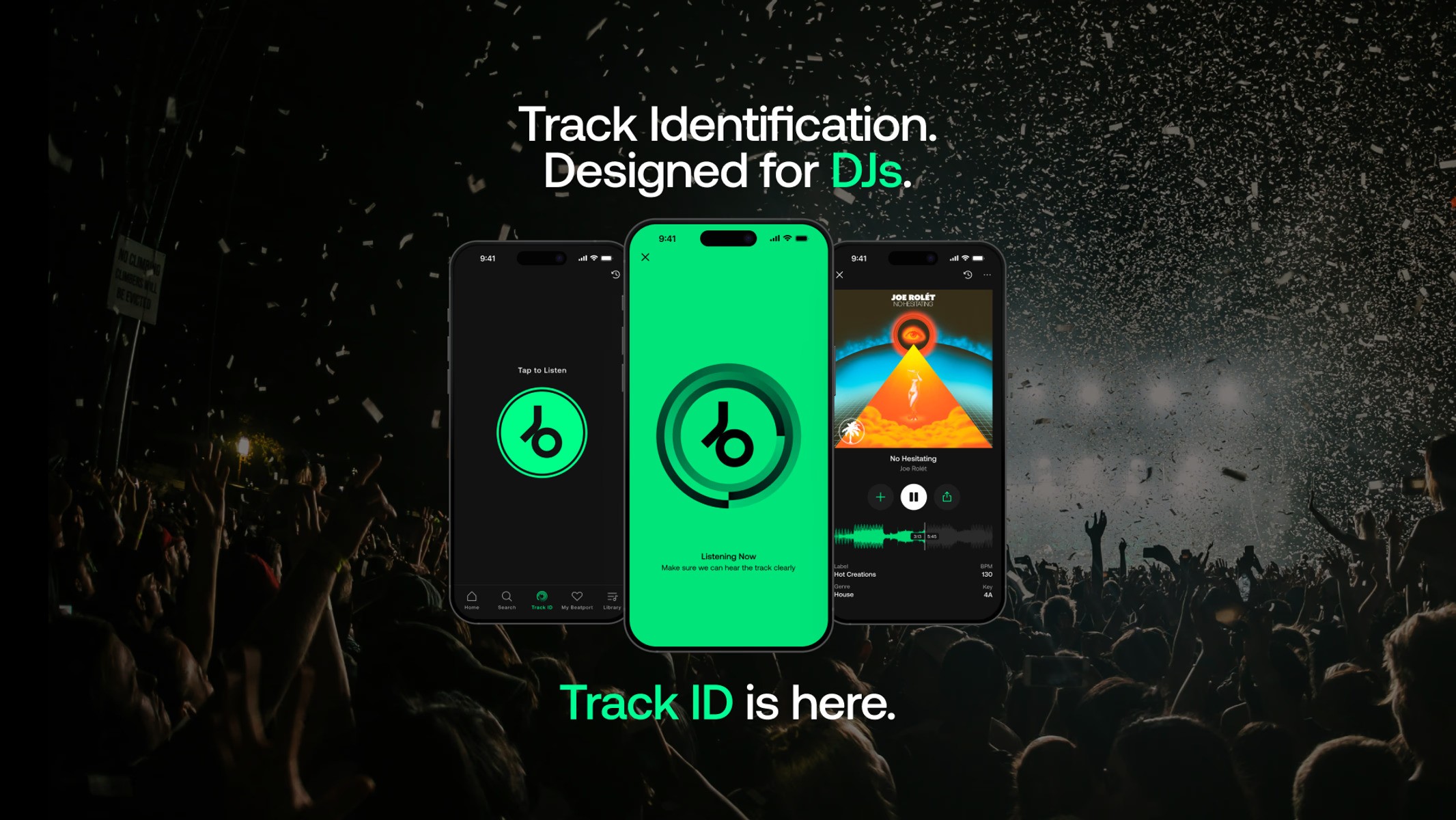
Beatport launches music recognition feature, Track ID, for DJs
Beatport has announced a feature, similar to Shazam, to help DJs identify music in realtime.
Beatport has introduced a new feature called Track ID inside its mobile app for iOS and Android. The tool is designed to help users identify music playing in DJ sets, club environments and festival recordings in real time.
As announced by Beatportal, Track ID has been built specifically for the realities of DJ culture. This includes situations where tracks are pitch-shifted, time-stretched, layered together or heavily edited during live performances.
The company says the feature goes beyond standard music recognition tools by focusing on the challenges of live electronic music. These challenges include overlapping tracks in DJ mixes, mashups, remixes, and environments where loud sound systems and crowd noise can make audio identification more difficult.
According to Beatport, Track ID is designed to handle these conditions through a combination of DJ-focused recognition tools. This includes improved tolerance for pitch changes, support for multi-track detection during blends, and recognition across different versions of the same song, such as edits and remixes. The system is also optimised for live recordings, where audio quality can vary significantly depending on the venue and setup.
The feature is powered by music recognition technology developed in partnership with seeqnc, a company specialising in AI-driven audio identification. Beatport says this collaboration helps improve accuracy in complex listening environments where traditional recognition systems often struggle.
Using Track ID is straightforward. Users open the Beatport mobile app, tap the Track ID icon, and allow the app to listen. Once a track is identified, it is saved into a personal history section within the app. From there, users can preview the track, stream it, add it to playlists or purchase it for later use.
As We Rave You reports, the feature is positioned as a more specialist alternative to mainstream music recognition apps such as Shazam and Google’s built-in tools. While those services are widely used, Beatport is targeting a more specific use case focused on DJ sets and electronic music environments.
Beyond music discovery, Beatport has also highlighted potential longer-term uses for Track ID. As noted by Music Ally, Chief Revenue Officer Helen Sartory explained that the feature could eventually support more accurate setlist reporting. This could help improve transparency around live performances and contribute to more accurate royalty payments for artists and rights holders. Sartory said, “What we hope to see is Track ID being used not only as a discovery tool, but in the future, building the foundations for accurate setlist reporting – helping pay out missing performance royalties – and at a global level, showing labels and artists where and when their music is being performed live.”
Track ID is available now within the Beatport mobile app on both iOS and Android devices.