
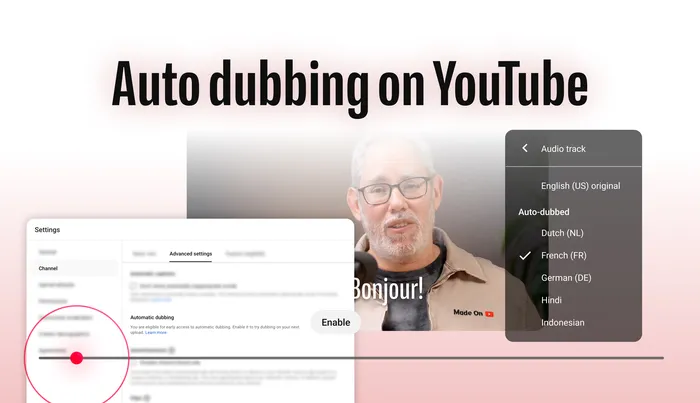
YouTube expands auto dubbing worldwide, making global reach easier than ever
YouTube’s upgraded auto dubbing tools are helping creators unlock audiences around the world.
Last April, YouTube expanded auto dubbing to Partner Program creators, having already expanded its availability a couple of times since first announcing the feature in September 2024. Now, YouTube’s auto dubbing tools are available to creators and viewers around the world. It’s built to help content travel further, opening the door to content and audiences no matter the language.
Auto dubbing goes global
YouTube’s auto dubbing tool automatically translates and voices videos in multiple languages, so viewers can watch in any language they’re more comfortable with. It was used on average by more than 6 million users daily for at least 10 minutes in December last year, and now it’s expanding its reach worldwide.
Auto dubbing now supports 27 languages. That means a video uploaded once can suddenly speak to fans across the world, regardless of language barrier.
YouTube’s Expressive Speech helps too
While translation matters, the energy, emotion, and personality conveyed in your content is crucial. That’s where YouTube’s Expressive Speech tool comes in. Available in 8 languages (English, French, German, Hindi, Indonesian, Italian, Portuguese and Spanish), Expressive Speech aims to better capture the creator’s original emotion and delivery when generating dubbed audio. It helps make dubbed content feel less robotic and more human.
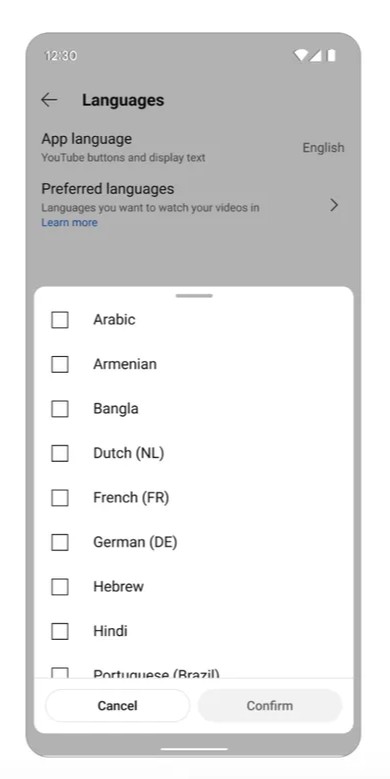
Viewers can choose their Preferred Language
With YouTube’s Preferred Language setting, audiences can choose how they want to experience dubbed content. Instead of the platform automatically guessing your preferred language, viewers can directly manage their language preferences.
That flexibility is useful for multilingual audiences, who might like to hear videos in the different languages they understand- especially if they’re the original language of the video.
Lip Sync coming soon?
YouTube is also testing a Lip Sync feature designed to make dubbed videos look more natural by aligning the speaker’s lip movements with the translated audio. It’s still in development, but it aims to make watching auto dubs feel more of a seamless experience.
Built to work with creators
Auto dubbing is only a positive for creators, designed to work with creators, not against them. YouTube’s Automatic Smart Filtering system is designed to recognize sections that shouldn’t be dubbed, like music or silent moments, helping to preserve the authenticity of the original video.
Auto dubs are also built to be discovery-friendly. They don’t replace your original video or disrupt how it performs. Instead, they can help your content surface in more regions, boosting your discovery in other languages.
And at the end of the day, creators remain totally in control. You can always prefer to upload your own professional dubs or turn the feature off altogether if you wish.
Why it matters
Auto dubbing lowers the barrier to global communication. Artists and creators can now share their content worldwide, cross borders and grow their audiences, without concerns about language barriers. For audiences, it makes it easier to connect with the creators they love, no matter what language they speak.
Want to learn more? Check out YouTube’s video here: