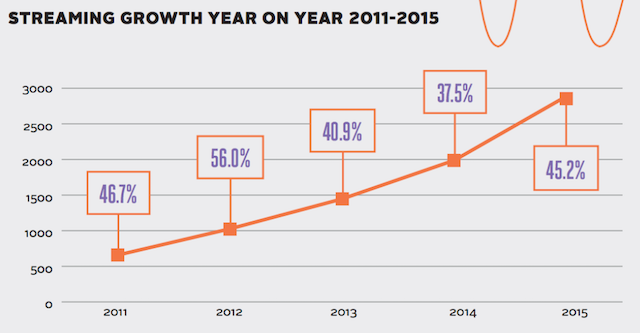
The IFPI have release some very interesting figures with regards to growth in 2011.
- Digital trade revenue was up 8 percent to $5.2 billion.
- That was the first year the growth rate increased since IFPI records began in 2004. Previously, growth rate of 10 percent in 2009 had sunk to five percent in 2010.
- Globally, digital is now 32 percent of labels’ income, up from 29 percent (that is 52 percent in the U.S. and 71 percent in China). Download volume grew 17 percent to 3.6 billion.
- Adoption of subscription services grew 65 percent to 13.4 million consumers. Remarkably, in Sweden, subscription contributes an impressive 85 percent of digital music revenue generally, thanks to its local hero Spotify.
The IFPI have released their report on the digital music market in 2009, a mixture of summary, opinion and statistics covering general developments in the online media market over the last year. Some highlights include interviews with the CEO’s of Spotify and the newly launched Sky Music, and some top line stats on the growth of the music market and it’s struggle with online piracy.
- Global digital music trade revenues reach US$4.2 billion, up 12% in 2009
- 400 services licensed worldwide by music companies with ISPs, mobile and other partners
- New figures show local music collapsing in major markets as piracy bites into releases, sales and investment in France, Spain and Brazil

One of the more striking graphs they’ve published illustrates just how big a pie the music market remains, second only to the computer games industry in terms of digital revenues. Perhaps the music market could take cues from the games industry, which has two distinct models of revenue generation – premium products for sale with heavy DRM protection (facilitated by the increasing online elements of gaming) and free, ad supported casual gaming sites providing access to less spectacular, but almost unlimited content.
Another new survey conducted in the EU argues that music sharers buy less music over the course of a year than those who are classified as online or physical only buyers.
http://www.ifpi.org/content/library/Jupiter_Research_study_on_online_piracy.pdf
Oddly iPod owners aren’t classified as digital music buyers, and it’s not clear how these categories have been delineated or how people have been divided into them, or whether they are mutually exclusive. I wish that when research like this is commissioned it was released in its entirety, to allow us to make our own decisions about it, rather than accepting the opinions of those who publish it based on limited information release. Wishful thinking, perhaps, but it might help us get to the truth if it happened.