

YouTube eases profanity rules, making it easier for creators to earn ad revenue
YouTube is relaxing restrictions, and now allows creators to use strong language in the first seven seconds of videos without sacrificing monetization.
YouTube backtracks on earlier restrictions
YouTube is loosening up. The platform has updated its Advertiser-friendly Guidelines to allow creators to use strong profanity in the first seven seconds of a video and still receive video monetization.
This decision marks a reversal of a stricter stance introduced in 2022, and a clarification on the updated rule from 2023. Here’s the history:
- Back in 2022, YouTube limited monetization to all videos that included bad language in the first 15 seconds of a video.
- Following backlash from creators, YouTube reduced this restriction to videos that included strong profanity within the first 7 seconds.
- Creators were still frustrated by how the policy was applied, and the lack of clarity around it.
Now, YouTube will let creators maintain full monetization for videos that include bad profanity in the first seven seconds, in an announcement made to YouTube ‘Creator Insider’ channel.
“Today we’re updating our Advertiser Friendly Guidelines for content with strong profanity in the first seven seconds. These uploads will now be eligible to earn full ad revenue.”
Connor Kavanagh, YouTube’s Head of Monetization policy
What’s changed?
The updated rules now let creators drop strong profanities at the start of videos and still earn ad revenue. However, there are still limits. Kavanagh noted that frequent use of moderate profanities through a video, or placing strong or moderate language in the title or thumbnail, could still result in limited monetization.
Why the first few seconds matter
YouTube first brought in stricter profanity rules to align with broadcast and advertiser expectations. Essentially, brands wanted to distance their ads from showing up directly before videos that immediately used explicit language.
But now, “those expectations have changed”. With improved ad targeting and control tools, advertisers can now choose the types of content their ads appear alongside.
What does this mean for music creators?
When it comes to music videos, this new rule doesn’t change much. YouTube is already still pretty relaxed when it comes to profanity in music content. So if you’re a label or artist uploading official videos, this update won’t have much impact.
However, for vloggers, behind the scenes content, or any artist making extra content outside of their music, it’s definitely something to note. It means more freedom in your choice of language without losing out on ad revenue.
Need the full breakdown?
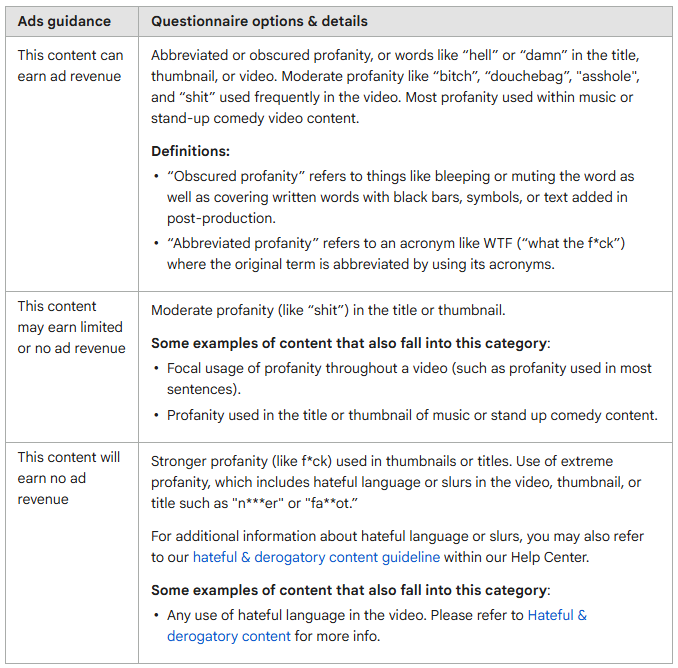
Still confused where the lines are? You can view YouTube’s ‘Inappropriate language’ policy here or in the table below:
Final thoughts
This move shows that YouTube is listening to its creators, and adapting as both user behaviour and advertiser expectations shift.
Recently, YouTube also loosened moderation policies to promote “freedom of expression” for creators, while tightening rules on mass-produced and repetitive videos.
RouteNote partners with platforms like YouTube and other streaming platforms worldwide to get your music out there. If you’re an independent artist looking to distribute your music, get your music onto YouTube’s Content ID system and start earning today- free with RouteNote.