
What is 8D audio & and what does it do to you?
Discover what this iteration of spatial audio is, its effects and benefits, and where you can find tracks for your content.
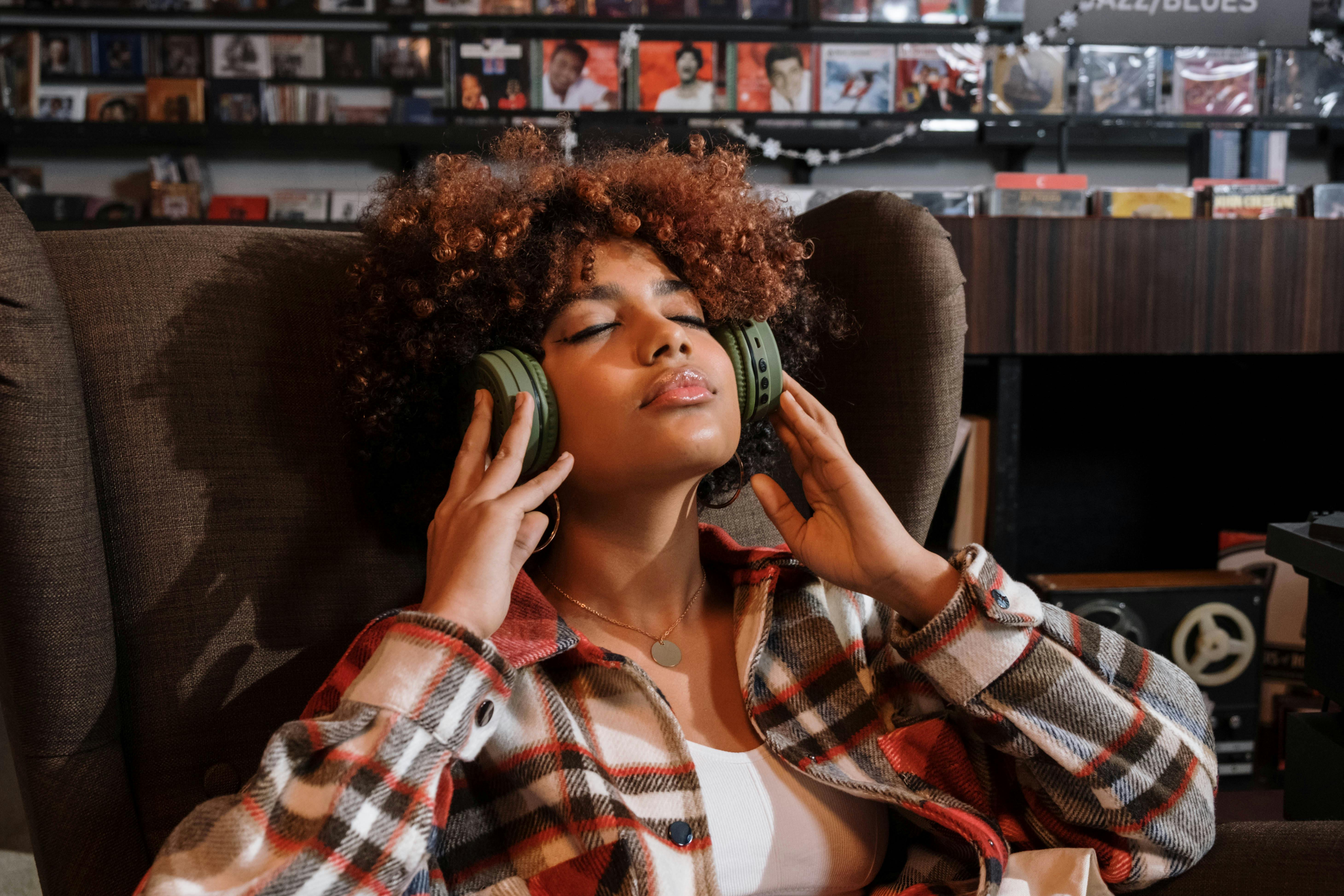
While being nothing new, spatial audio still comes shrouded in mystery for many people. If you’re not even sure what spatial audio refers to, imagine popping some headphones on and feeling instantly immersed into a swirling, slightly disorienting audio space.
There are various iterations of spatial audio, one of them being 8D audio. The effects and use-cases of 8D audio are varied, and we’re going to dive into those right after we explain exactly what it is, and how it works.
What is 8D audio & how does it work?
We’ve already explained that 8D audio is a version of spatial audio. The name itself, however, is a bit of a misnomer. There is no such thing as 8 dimensional audio.
8D audio is actually the product of much audio production trickery applied to stereo audio – an effect created through the use of panning, equalisation, reverb, and volume automation.
Panning is where the audio signal is distributed across the left and right channels of a stereo mix – if you feel like you can hear a sound travelling from one headphone across to the other, that’s panning. Equalisation (EQ) is a production technique that involves adjusting the volume of certain frequencies, like trebles, mids, and bass.
After all this has been played with, the listener is left with sounds that seem as if they are playing from inside their own skull.
The backstory of 8D audio
While 8D may be a newer label, it draws heavily on binaural audio techniques, which played a key role in the early development of spatial sound.
If this is sounding familiar, it’s because you may have come across the binaural beats hype that flooded YouTube and other platforms over the last few years.
Binaural audio became more known in the 1970s, but really started off as far back as 1881. Its first iteration was invented by Clément Ader, and consisted of microphones placed along the edge of the Opera Garnier in Paris, and reached listeners via a telephone system. In order for the effect to work, listeners had to hold two separate headsets up to each ear.
How do you listen to 8D audio?

If you want to experience 8D audio as it was intended, you will need a pair of headphones or decent earbuds.
Without headphones, you won’t get that fully immersive, swirling, 360 degree sensation that 8D audio is known for. Each ear needs to receive the specifically crafted sounds so that the “brain flossing” effect can occur.
Listening to 8D audio through speakers certainly won’t be the same as through headphones. Because the audio will bleed and cross over itself when played through speakers, each ear won’t be fed the specific sounds and frequencies that lead to the desired effect.
If you were a sound designer with a purpose-built space, heaps of expensive equipment, and the right knowledge, you may be able to recreate 8D audio via speakers, but that’s not exactly something most people have access to.
You don’t necessarily need expensive or fancy headphones for 8D audio to work, but any with noise-cancelling would be best, allowing you to really get the full experience.
What does 8D audio do to you?
Besides feeling a bit strange and novel, 8D audio is thought to have numerous impacts on listeners.
If 8D audio also falls into the true binaural beat category, the frequencies need to be lower than 1000hz. Supposedly, binaural beats allow you to reach the same mental state that meditation achieves, but much faster and without the practice and mental control.
This makes 8D audio great for relaxation, getting rid of stress, and can even help people to focus better.
Relaxation & stress relief
Many people listen to 8D audio because it feels calming. The seemingly moving sound can help listeners relax and unwind. Some describe the experience as immersive in a way that reduces mental noise and tension.
As previously mentioned, these effects are similar to those linked with binaural audio, which is often associated with relaxation and meditation-like states. However, it is important to note that most of this evidence is anecdotal rather than clinical.
Neurodiversity, autism & ADHD
8D audio has gained attention among neurodivergent people, particularly those with autism and ADHD. Some listeners say the predictable movement of sound feels grounding and can help with sensory regulation.
For people with ADHD, the immersive sound can sometimes make it easier to focus. The constant motion may provide enough stimulation to reduce distraction.
That said, reactions vary. Some neurodivergent listeners find 8D audio overwhelming or uncomfortable, especially if they are sensitive to sensory input. It’s not a one-size-fits-all sort of thing, and it’s important for each person to be mindful of their own reaction to 8D audio.
Anxiety & mental wellbeing
Some people listen to 8D audio when feeling anxious. The immersive effect can help shift attention away from racing thoughts and create a sense of calm. This is why it’s often grouped with relaxation and mindfulness content online.
There is limited scientific research proving that 8D audio reduces anxiety overall. Most benefits reported come from personal experience rather than medical studies, citing assistance with coping with the effects of anxiety.
Meditation & mindfulness
8D audio is often used during meditation or quiet moments. The feeling of sound moving around the head can help listeners stay present and focused. Some people find this easier and quicker than traditional meditation.
Experts point out that 8D audio is still an audio illusion. While it can support mindfulness, it is not the same as structured meditation practice.
Is 8D audio dangerous?
Just as the benefits of 8D audio are anecdotal and not based in medical evidence or exact science, the reported downsides are also based on individual experience.
Some people have reported feeling dizzy or nauseous after listening to 8D audio, and sensory overload is also a possibility for some people.
However, generally speaking, the main danger of 8D audio is the same as any audio – overexposure to high-volume audio. If the volume is kept at or below 85 dB you should be safe from any ear damage.
What can you use 8D audio for?
We’ve talked about meditation, relaxation, and the “brain-flossing” effect that comes from listening to 8D audio. But, if you’re a content creator, then here are some examples of projects/works that 8D audio is ideal for:
- YouTube music videos labelled as “8D audio” or “8D headphones experience”
- Meditation and mindfulness audio videos
- Relaxation and stress-relief soundscapes
- ASMR and sensory-based content
- Podcast intros, outros, or experimental episodes
- Storytelling and spoken-word audio projects
- Gaming or cinematic audio experiences
Where can you find 8D audio for content projects?
If you want to include 8D audio in your content, there are safe and easy ways to get started. Most 8D audio found online is made for listening only and isn’t licensed for reuse in videos, podcasts, or commercial content.
For this reason, creators should avoid ripping audio from YouTube or streaming platforms, as these tracks are rarely cleared for reuse and can lead to copyright claims.
Royalty-free audio libraries
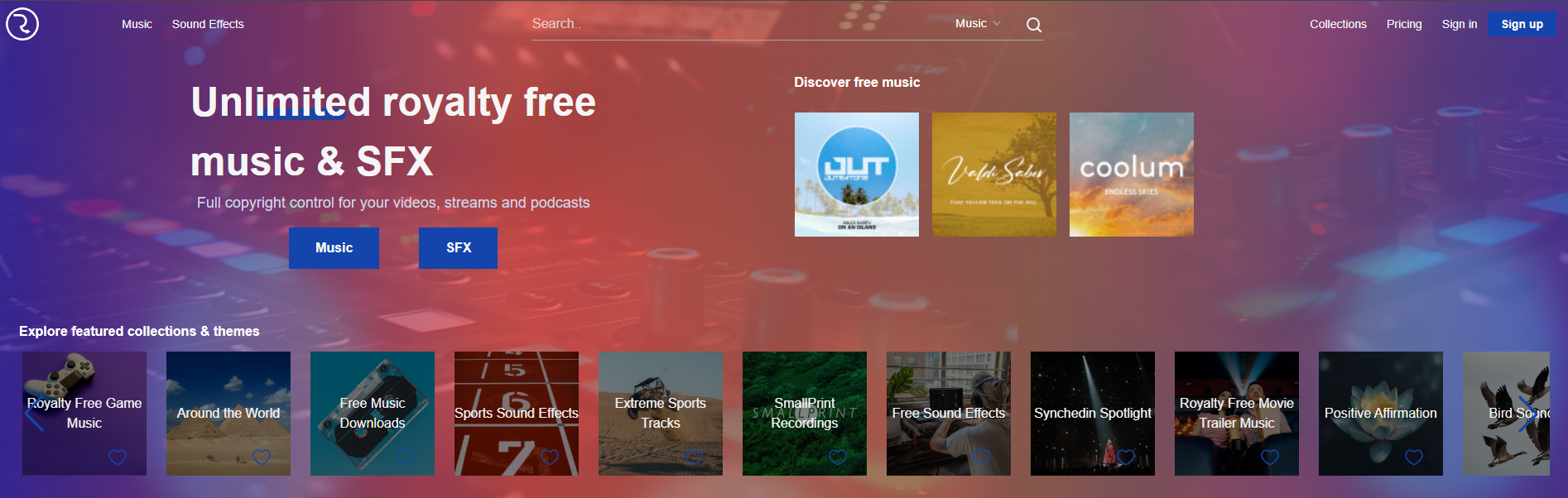
Unless you’re able to record, mix and master your own original 8D audio, your best bet is to source it from a royalty-free audio library.
RouteNote Licensing offers a selection of royalty-free 8D audio tracks that are cleared for use in content creation. These tracks are suitable for videos, social media, podcasts, games, and other creative projects.
Because the tracks are properly licensed, creators can use them without worrying about copyright strikes or takedowns.
Why licensing matters
Using unlicensed 8D audio can result in demonetisation, content removal, or copyright claims. This is especially common with 8D edits of popular songs, which are often unauthorised remixes.
Licensed, royalty-free audio ensures that the original creators are paid and that your project stays protected. For content creators, this makes royalty-free libraries the most reliable source for 8D audio.
No headaches here.