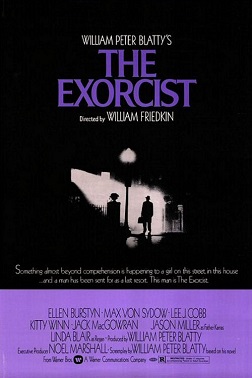
What Is the Theme Song from “The Exorcist”?
“Tubular Bells” by Mike Oldfield.
More specifically, the famous opening piano figure comes from the beginning of “Tubular Bells, Part One”.
And here’s the surprising part.
It wasn’t written for The Exorcist.
Oldfield created the music as part of a long, experimental instrumental composition.
The album was released in May 1973.
The Exorcist arrived later that year and used part of the recording.
The film then permanently transformed how millions of people heard the music.
Who is Mike Oldfield?
Mike Oldfield is a British multi-instrumentalist and composer.
He became internationally famous through Tubular Bells.
The album was extraordinarily ambitious.
Rather than recording a conventional collection of songs, Oldfield built extended instrumental compositions using numerous instruments.
He played much of the material himself.
Guitars.
Keyboards.
Bass.
Percussion.
Bells.
Layer upon layer.
The result was one of the most unusual debut albums to become a major commercial success.
Was Oldfield trying to write horror music?
No.
That is one of the most important things to understand.
Tubular Bells contains many different musical moods.
Some passages sound unsettling.
Others are playful.
Pastoral.
Rhythmic.
Almost folk-like.
The famous piano section acquired its horror identity through the film.
Without The Exorcist, listeners might have understood it as an atmospheric progressive-rock composition.
The movie changed everything.
Why did The Exorcist use it?
Director William Friedkin wanted music that created tension without sounding like a conventional horror score.
He had explored other musical possibilities.
Then he encountered Oldfield’s recording.
The opening caught his attention.
Its repeating piano figure sounded strangely innocent and unsettling simultaneously.
That was exactly the contrast the film needed.
Was there another original score?
Yes.
Composer Lalo Schifrin worked on music connected with the film.
Friedkin ultimately rejected much of that approach.
The finished film uses music relatively sparingly rather than relying on continuous horror scoring.
That restraint makes the selected cues more powerful.
When “Tubular Bells” appears, the contrast with the surrounding silence becomes significant.
Why does the piano sound so frightening?
Repetition.
The notes are simple.
The melody circles.
There isn’t an obvious dramatic resolution.
That creates uncertainty.
Your brain begins expecting something.
But the music doesn’t immediately provide the emotional answer.
The result is tension.
Interestingly, the same basic musical qualities can sound reflective or beautiful outside a horror context.
The film taught audiences to interpret them as threatening.
How much of “Tubular Bells” is used?
Only a portion of the much longer composition is strongly associated with the film.
That is why hearing the full album can be surprising.
If you expect an hour of terrifying piano music, you will instead discover a much broader piece of progressive music.
The recording moves through multiple sections and instrumental combinations.
Some are considerably less frightening than the famous introduction.
What does the title mean?
Tubular bells are an actual percussion instrument.
They’re also called orchestral chimes.
Large metal tubes are suspended and struck to produce pitched bell-like sounds.
The instrument features prominently in Oldfield’s composition.
The title refers to the music and instrumentation rather than a hidden horror-film meaning.
Why was Tubular Bells important for Virgin Records?
Because it became the first album released by Virgin Records.
Richard Branson’s new label took a chance on Oldfield’s unconventional project.
That decision became extraordinarily important.
The album sold in huge numbers and helped establish Virgin as a serious record company.
The Exorcist connection subsequently introduced it to an even larger international audience.
A strange instrumental album helped launch a major music business.
Not the most obvious commercial strategy.
It worked.
Did Mike Oldfield like the association with The Exorcist?
Not particularly at first.
He had created the music as a personal composition rather than a horror soundtrack.
The film’s success meant the opening theme became known to many people almost exclusively as creepy music.
That was not necessarily how he wanted the work to be understood.
It’s a familiar problem with successful soundtrack placements.
A film can give a recording an enormous audience.
It can also permanently change the recording’s identity.
Is the theme played on piano or synthesizer?
The best-known opening figure has a piano-like keyboard sound.
The wider composition uses multiple instruments and overdubs.
It’s worth listening on headphones because the layers gradually become clearer.
The arrangement is much more complex than the simple opening suggests.
Why does the music return every Halloween?
Because audiences immediately associate it with The Exorcist.
The film remains one of the defining horror productions of the 1970s.
Its musical identity has survived alongside it.
The opening notes can communicate:
possession
horror
the supernatural
and psychological dread.
You don’t need the film on screen.
The association is already stored in your memory.
Other famous horror-film music to discover
Halloween – John Carpenter
Psycho – Bernard Herrmann
Suspiria – Goblin
The Omen – Jerry Goldsmith
Candyman – Philip Glass
A Nightmare on Elm Street – Charles Bernstein
The Thing – Ennio Morricone
Each uses music differently.
Carpenter relies heavily on repetition.
Herrmann uses violent orchestral effects.
Glass uses minimalist patterns and voices.
Following the composers is an excellent way to explore horror beyond the films themselves.
What genre is Tubular Bells?
Progressive rock.
Experimental rock.
Instrumental rock.
There are also elements that overlap with ambient and classical music.
That makes the full record a very different experience from a conventional horror soundtrack.
Is there another recent reason to revisit it?
Yes.
During an October 2026 discussion around horror cinema, Jamie Lee Curtis recalled performing a teenage dance routine to “Tubular Bells”, complete with theatrical blood effects.
It’s another example of how the recording became embedded in horror culture far beyond its original musical purpose.
What is the song from The Exorcist?
“Tubular Bells” by Mike Oldfield.
It was released before the film.
It wasn’t composed specifically for the movie.
Only part of the longer work became associated with The Exorcist.
And if you’ve never listened to the complete album, you’re missing a much stranger musical experience than the famous piano introduction suggests.
Sometimes the scariest music was never supposed to be scary.