What Does “Macarena” Actually Mean? The Real Story Behind the Dance
“Macarena” is about a woman who enjoys dancing, attention and romantic freedom.
But there’s something many people who danced to it during the 1990s never realised.
The original Spanish lyrics describe a complicated romantic situation involving infidelity.
That makes the song considerably less innocent than its reputation as a family-party favourite.
Los del Río originally released “Macarena” in 1993.
The version most international listeners recognise is the Bayside Boys remix, which became an enormous hit in 1996.
The music changed.
The arrangement became more electronic.
And the song developed a dance that almost everybody seemed to know.
But its origins were far more traditional.
Who originally sang “Macarena”?
Los del Río.
The Spanish musical duo consists of Antonio Romero Monge and Rafael Ruiz Perdigones.
They developed their career through Andalusian musical traditions.
Their work incorporated flamenco and Spanish popular music.
By the time “Macarena” became internationally famous, they had already been performing for decades.
That is particularly interesting.
The enormous global hit didn’t come from a new teenage pop group.
It came from two experienced Spanish musicians who had spent much of their careers working within their own country’s musical traditions.
What does the word Macarena mean?
It’s a Spanish female name.
It also has strong cultural associations with Seville.
The name is connected with the city’s Macarena district and the religious devotion surrounding the Virgen de la Esperanza Macarena.
Los del Río used it for the song’s fictional female character.
But the original inspiration involved a real dancer with a different name.
That creates another layer to the story.
Who inspired the song?
A Venezuelan flamenco dancer named Diana Patricia Cubillán Herrera.
Los del Río were attending an event in Venezuela during the early 1990s.
Diana performed.
Antonio Romero Monge was impressed.
He spontaneously began developing a musical phrase celebrating her dancing.
The original idea used Diana’s name.
Later, the musicians developed the song further and replaced it with Macarena.
That means one of the world’s most recognisable dance songs began as a spontaneous reaction to somebody dancing at a private event.
What is the original Spanish song about?
A fictional woman named Macarena.
She enjoys attention and romantic excitement.
The lyrics also describe her relationship with a boyfriend who is away serving in the military.
While he is absent, she becomes involved with other men.
That is the part many international listeners never understood.
The song isn’t simply an innocent celebration of exercise or dancing.
It contains an adult romantic story.
The cheerful musical arrangement makes that easy to miss.
Why didn’t English-speaking listeners notice?
Because the most famous version combines Spanish and English.
The original Spanish narrative remained connected with the composition.
But the Bayside Boys remix introduced new English-language sections.
Those sections weren’t simply direct translations of the original Spanish verses.
They presented a more straightforward party atmosphere.
That allowed many listeners to enjoy the recording without understanding the complete original story.
The music became associated with group dancing rather than romantic complications.
What is the Bayside Boys remix?
The version that made “Macarena” a global phenomenon.
Miami producers Mike Triay and Carlos de Yarza created the remix during the mid-1990s.
They changed the rhythmic production.
Added English-language material.
And made the recording more suitable for clubs and mainstream American radio.
The original Spanish chorus remained recognisable.
But the overall musical identity became much more electronic.
That version eventually dominated international charts.
When did “Macarena” become famous?
The original recording was released in 1993.
It became popular in Spanish-speaking markets.
The Bayside Boys remix developed during 1995.
Then the song became an enormous international hit in 1996.
It spent fourteen weeks at No. 1 on the Billboard Hot 100.
That is an extraordinary chart run.
The recording also became one of the defining dance crazes of the decade.
Who invented the Macarena dance?
The familiar group routine developed through the song’s popularity rather than simply emerging as a complete choreographed performance from the original musicians.
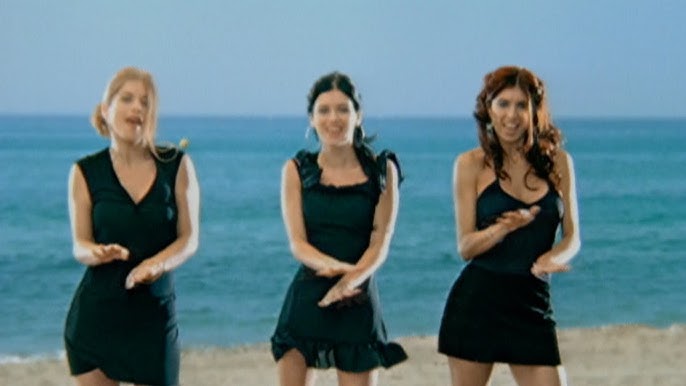
The dance spread through clubs, parties and social events.
Its movements were relatively simple.
That made it easy for large groups to participate.
Over time, the routine became almost as famous as the recording.
The song and dance eventually became inseparable.
Why was the dance so popular?
Because people could learn it quickly.
The movements repeat.
There is no need for advanced dance training.
And a group can perform the routine together.
That made it perfect for:
weddings,
school discos,
birthday parties,
holiday resorts,
and sporting events.
The recording offered an immediate shared activity.
People didn’t need to know the artist or understand the lyrics.
They simply needed to follow the person dancing beside them.
Was “Macarena” really performed at political events?
Yes.
One of its most famous American cultural moments occurred during the 1996 Democratic National Convention.
Delegates participated in the dance.
The scene became widely discussed.
It demonstrated just how far the recording had travelled beyond ordinary pop music.
A Spanish-language song had become part of mainstream American political entertainment.
That’s an unusual achievement for any recording.
What genre is “Macarena”?
The original draws from Spanish rumba and flamenco-influenced popular music.
The Bayside Boys version belongs much more closely to dance-pop and Latin-influenced electronic music.
That difference is important.
The original and remix are recognisably connected.
But their rhythmic foundations and intended audiences are different.
Listening to both versions demonstrates how much production can transform a composition.
Why is “Macarena” still played at weddings?
Because the dance creates instant participation.
Wedding music often needs to bring people from different generations together.
Somebody may not know contemporary pop.
Another person may not know older rock.
But many people recognise the Macarena.
The routine becomes a shared joke and activity.
That gives the recording a practical cultural role.
It’s almost a piece of party infrastructure.
Songs like “Macarena”
Try:
Los del Río – Macarena
Lou Bega – Mambo No. 5
Las Ketchup – The Ketchup Song
Ricky Martin – Livin’ la Vida Loca
Shaft – (Mucho Mambo) Sway
Kaoma – Lambada
Bellini – Samba de Janeiro
Vengaboys – We Like to Party!
These recordings explore different combinations of Latin influence, dance-pop and group-participation music.
Why do people keep rediscovering it?
Because the song belongs to several generations of memory.
People who attended parties in 1996 remember the original craze.
Younger listeners may discover the dance through family events or online videos.
The choreography remains familiar.
And the recording’s unexpected lyrical history provides another reason to investigate it.
That’s an effective combination for long-term cultural relevance.
What does “Macarena” really mean?
The original tells the story of a woman who enjoys dancing and romantic attention, including relationships outside her existing partnership.
The famous international remix transformed the recording into a global party anthem.
Millions of people performed the dance without understanding the original Spanish story.
That’s one of popular music’s stranger contradictions.
A song involving infidelity became something entire families danced to together.