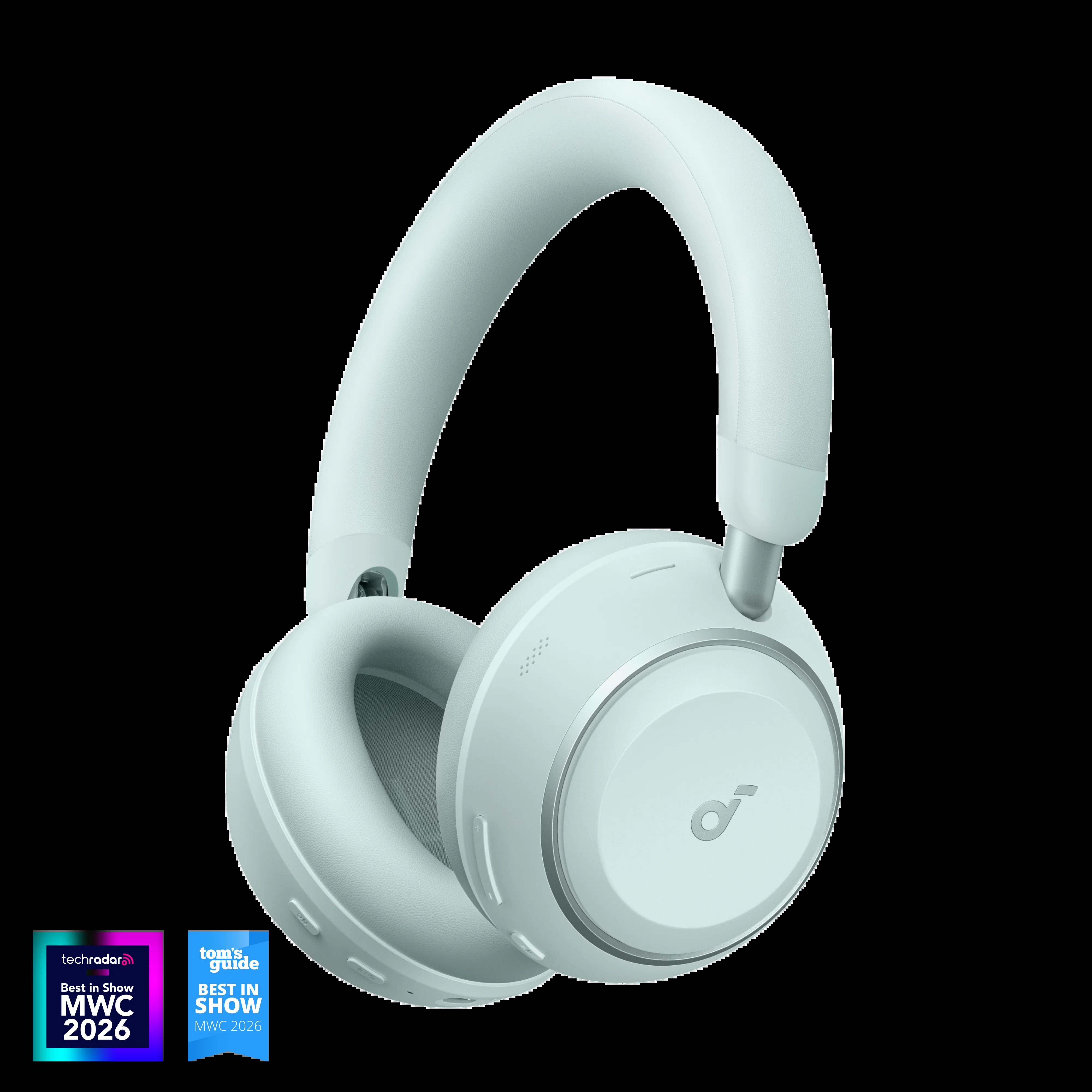
Soundcore Space 2 Pro: Do Anker’s New AI Headphones Actually Make a Difference?
AI is finding its way into almost every new piece of technology, and headphones are next.
Anker has unveiled the new Soundcore Space 2 Pro over-ear headphones, bringing its custom Thus AI chip into a full-sized pair of wireless headphones for the first time.
But forget the AI branding for a moment.
For someone actually buying a pair of headphones, the more important question is simple:
What does the AI chip actually do?
And in the case of the Soundcore Space 2 Pro, there are a few features that could genuinely be useful rather than simply giving Anker another AI logo to put on the box.
What are the Soundcore Space 2 Pro?
The Soundcore Space 2 Pro are Anker’s latest wireless over-ear noise-cancelling headphones.
They were announced around IFA 2026 and are scheduled to go on sale from September 22 for $200 in the US.
That puts them into an interesting part of the headphone market.
They’re considerably cheaper than premium models such as Apple’s AirPods Max and many flagship headphones from Sony and Bose, while still trying to offer some of the technologies consumers normally associate with more expensive products.
The headline feature is Anker’s Thus AI chip.
What does the Anker Thus AI chip actually do?
Rather than relying entirely on your phone or cloud services, the Thus chip performs AI audio processing directly inside the headphones.
Anker says the chip uses a compute-in-memory architecture and can provide significantly more AI processing performance than chips previously used in its audio products.
That extra processing power is being used for things that headphone buyers will actually notice.
The biggest areas are:
- active noise cancellation
- clearer phone calls
- voice isolation
- environmental noise detection
- real-time audio processing
This is probably where the idea of AI headphones starts becoming more interesting.
Better noise cancellation could be the biggest benefit
The Soundcore Space 2 Pro use an eight-microphone system for adaptive active noise cancellation.
The headphones can analyse the surrounding environment and adjust noise cancellation as conditions change.
That could be particularly useful if you regularly use headphones while travelling.
Walking down a relatively quiet street is very different from sitting on a train, boarding a plane or entering a busy coffee shop.
Traditional noise cancellation can already deal with these environments reasonably well, but more powerful on-device processing potentially allows the headphones to react more intelligently and more quickly.
Whether the Space 2 Pro can compete with the best noise cancelling headphones from Sony or Bose will need to be tested properly once they are released.
But this is one of the more convincing uses of AI in headphones.
Calls could actually be where the AI matters most
Perhaps the most interesting feature isn’t music at all.
It’s phone calls.
Anker is using the Thus chip to separate your voice from surrounding noise in real time.
The Space 2 Pro reportedly use a six-microphone voice isolation system for calls, while the AI processor analyses speech and background noise to try to make your voice clearer to the person on the other end.
Anyone who has tried taking a phone or Zoom call using headphones in a busy airport, train station or city street will understand why this matters.
The headphones don’t just need to make the other person sound good.
You need to sound good to them.
Anker has already been using its Thus technology in the Soundcore Liberty 5 Pro earbuds, where the company has concentrated heavily on improving voice quality and removing environmental noise from calls.
Bringing that technology to over-ear headphones makes a lot of sense.
The Space 2 Pro still need to be good headphones
Of course, nobody should buy headphones simply because they contain an AI processor.
They still need to sound good.
The Space 2 Pro support LDAC for higher-quality wireless audio, according to details revealed alongside their launch.
Battery life also looks competitive.
Anker says the headphones can deliver up to around 60 hours of playback without ANC, while Engadget reports up to 30 hours with active noise cancellation enabled.
For most listeners, that means they should easily last several days — or potentially considerably longer — between charges.
And that arguably matters more than almost any AI feature.
Are AI headphones actually necessary?
Probably not.
But that doesn’t mean AI processing inside headphones is pointless.
There is an important distinction emerging between companies simply attaching AI chatbots to products and manufacturers using machine learning quietly behind the scenes to improve how hardware works.
Headphones are actually a fairly logical place for this technology.
A pair of headphones is constantly dealing with changing information:
What sounds are happening around you?
Which sound is your voice?
Which sounds should be removed?
How much noise cancellation should be applied?
How should the audio be adjusted?
AI processing can potentially make those decisions continuously without the listener having to do anything.
That’s much more useful than having another AI assistant asking you what it can help you with.
Should you buy the Soundcore Space 2 Pro?
We won’t know exactly how good the Space 2 Pro are until the headphones have been properly tested following their September 22 release.
But on paper, they’re interesting.
At $200, Soundcore is positioning them below many flagship noise-cancelling headphones while offering adaptive ANC, LDAC, long battery life and sophisticated call-processing technology.
The Thus AI chip shouldn’t be the reason you buy them.
The results should be.
If Anker’s AI processing genuinely makes calls clearer, noise cancellation smarter and everyday listening more seamless, then consumers might barely notice that AI is involved.
And that’s probably exactly how AI in headphones should work.
The best AI feature may ultimately be the one you never have to think about.