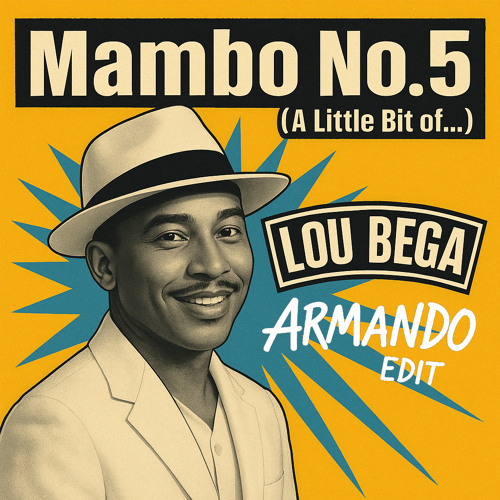
Who Originally Sang “Mambo No. 5”? Before Lou Bega’s 1999 Hit
“Mambo No. 5” was originally composed and recorded by Cuban bandleader Pérez Prado in 1949, with the recording released in 1950.
But the original didn’t have Lou Bega’s famous lyrics.
In fact, it was an instrumental.
Nearly fifty years later, Bega sampled musical material from Prado’s recording and transformed it into one of the biggest pop hits of 1999.
The result became so familiar that many listeners assume Bega invented the complete song.
But its musical history begins decades earlier, inside the development of mambo.
And in 2026, the original recording received an important new recognition when the Library of Congress selected it for preservation in America’s National Recording Registry.
Who was Pérez Prado?
Dámaso Pérez Prado was a Cuban pianist, composer and bandleader.
He became one of the most important musicians associated with the international popularity of mambo.
During the late 1940s and 1950s, his recordings helped bring Cuban dance music to audiences around the world.
His arrangements frequently used powerful brass sections and energetic rhythms.
The result was music designed for dancing.
Prado became known as the King of Mambo.
His influence extends far beyond the recording eventually sampled by Lou Bega.
When did the original “Mambo No. 5” come out?
Prado created the composition in 1949.
The recording was released in 1950.
It became one of his defining international successes.
Unlike Bega’s version, the original doesn’t feature a singer listing romantic interests.
The horns carry much of the musical personality.
The percussion creates the rhythm.
And the arrangement develops through instrumental interplay.
Listening to it reveals how much of the later pop hit’s identity came from Prado’s original musical ideas.
Why is it called “Mambo No. 5”?
The title belongs to Prado’s series of numbered mambo compositions.
He developed numerous pieces using the mambo form.
The number distinguishes this particular composition.
It isn’t a reference to five romantic partners or anything in Bega’s lyrics.
That’s a common misunderstanding.
The title existed before the later pop song’s fictional romantic story.
What is mambo music?
Mambo is a Cuban dance-music style that developed through Afro-Cuban musical traditions.
It became internationally successful during the mid-twentieth century.
Its arrangements frequently feature strong percussion, brass instruments and complex rhythmic interplay.
Mambo developed in a very different musical environment from late-1990s European pop.
That makes the connection between Prado and Bega especially interesting.
One composition moved across nearly half a century and into an entirely different popular-music culture.
How did Lou Bega discover the song?
Bega was developing a Latin-influenced pop sound during the late 1990s.
His producers encountered Prado’s original recording and recognised the potential of its distinctive brass material.
The precise circumstances of the discovery have been described differently by people involved.
But the central musical fact is clear.
Prado’s composition provided important source material for the new recording.
Bega added his own vocals and lyrical concept.
The finished result became “Mambo No. 5 (A Little Bit of…)”.
Is Lou Bega’s “Mambo No. 5” a cover or sample?
It’s best described as a new recording built around sampled and adapted musical material from Prado’s earlier composition.
Bega didn’t simply sing new words over the complete original instrumental master.
His producers created a new pop arrangement incorporating recognisable elements of the older mambo.
That distinguishes the recording from a straightforward cover.
It also explains why the songwriting credits and rights became complicated.
The original composition and the newer creative material both contributed to the finished hit.
What do Lou Bega’s lyrics mean?
The song presents a playful narrator listing several women and romantic encounters.
The names become part of the song’s central hook.
Bega has described the recording as having another layer beneath the cheerful surface.
In his interpretation, the narrator is also reflecting on the mistakes and confusion of youthful romance.
But most listeners experience the recording primarily as a party song.
Its infectious rhythm makes the lyrical details secondary.
The music is designed to feel fun.
Was Lou Bega’s version successful?
Extremely.
Released in 1999, it topped charts in numerous European countries.
It also reached No. 3 on the Billboard Hot 100 in America.
The recording became associated with weddings, parties, radio and late-1990s nostalgia.
For many listeners, it remains one of the decade’s most recognisable novelty-pop songs.
But the enormous popularity also obscured the original Cuban recording.
That’s why the history is worth revisiting.
Was there a copyright dispute?
Yes.
The use of Prado’s composition led to a lengthy dispute involving rights and authorship.
The legal questions concerned the relationship between the original music and Bega’s newer creative contribution.
The dispute eventually resulted in recognition of both Prado’s underlying composition and the new work associated with Bega’s version.
It’s an unusually visible example of how a popular sample can create complicated questions about songwriting ownership.
For listeners, the practical takeaway is simple: Bega’s hit contains a significant musical connection with a much older composition.
Why was the original recognised in 2026?
The US Library of Congress selected Pérez Prado and His Orchestra’s “Mambo No. 5” for the National Recording Registry.
The registry preserves recordings considered culturally, historically or aesthetically important.
The decision recognises the original’s influence on international dance music.
It’s also an opportunity to correct a common misunderstanding.
The composition wasn’t invented in 1999.
It was already a major musical achievement in 1950.
What is the difference between mambo and salsa?
Both belong to overlapping Latin American musical traditions, but they aren’t identical.
Mambo became particularly associated with large orchestral arrangements and dance music during the mid-twentieth century.
Salsa developed later through a broader combination of Cuban, Puerto Rican and New York musical influences.
There are shared rhythmic foundations and considerable historical connections.
But salsa isn’t simply another name for mambo.
Listeners interested in exploring more global dance-music traditions can also discover Radar’s guide to Brazilian funk and baile funk, while remembering that Brazilian funk is a separate genre with a different history.
Songs like the original “Mambo No. 5”
Try Pérez Prado’s “Mambo No. 8”, “Qué Rico el Mambo” and “Cherry Pink and Apple Blossom White”.
Then explore Tito Puente, Machito and other major Afro-Cuban bandleaders.
For the later pop interpretation, try Lou Bega’s “Tricky, Tricky” and other Latin-influenced pop from the late 1990s.
The two musical worlds are very different, but hearing them together reveals how older instrumental arrangements can inspire modern pop.
Who originally sang “Mambo No. 5”?
Nobody sang the original.
Pérez Prado composed and recorded it as an instrumental in 1949, releasing it in 1950.
Lou Bega transformed its musical material into a vocal pop hit in 1999.
The two recordings share an important musical connection but belong to different periods and styles.
And with Prado’s original now recognised by the National Recording Registry, there’s never been a better reason to discover the music behind one of the 1990s’ most familiar party songs.