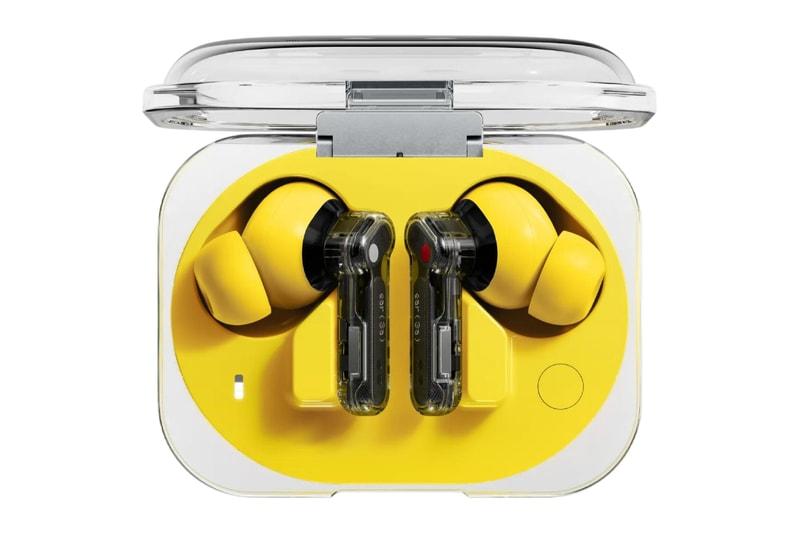
Nothing Ear (3a) vs Ear (a): Are the New Earbuds Worth Upgrading To?
Nothing has expanded its affordable wireless earbud range with the Ear (3a), introducing stronger bass, improved noise cancellation and several new features.
But how much has actually changed compared with the original Nothing Ear (a)?
Released in 2024, the Ear (a) proved that wireless earbuds didn’t necessarily need to cost a fortune to offer high-resolution audio support, active noise cancellation and an eye-catching design.
The Nothing Ear (3a), released in July 2026, builds on that formula.
Rather than completely reinventing the earbuds, Nothing has introduced targeted improvements to sound quality, connectivity, personalisation and everyday functionality.
So if you already own the Ear (a), is it worth upgrading?
Nothing Ear (3a) vs Ear (a): Specifications Compared
| Feature | Nothing Ear (3a) | Nothing Ear (a) |
|---|---|---|
| Release year | 2026 | 2024 |
| Dynamic driver | 12mm | 11mm |
| Active noise cancellation | Up to 45dB | Up to 45dB |
| Hi-Res Audio with LDAC | Yes | Yes |
| Bluetooth | 6.0 | 5.3 |
| Battery, earbuds only, ANC off | Up to 10 hours | Up to 9.5 hours |
| Battery, including case, ANC off | Up to 42 hours | Up to 42.5 hours |
| Advanced eight-band EQ | Yes | No |
| Static Spatial Audio | Yes | No |
| Audio Snapshot | Yes | No |
| Extra-small ear tips | Yes | No |
The Ear (3a) launched at £99 in the UK, while the original Ear (a) launched at £99 and has subsequently been available at lower prices.
Both models offer many of the features listeners would expect from more expensive wireless earbuds.
However, there are a few differences that could influence which pair is right for you.
Sound Quality: Bigger Drivers and More Bass
One of the most significant hardware changes is the driver.
The original Ear (a) uses an 11mm dynamic driver, while the Ear (3a) increases this to 12mm.
Nothing claims the newer design can deliver up to 5dB more bass output, alongside improved clarity across the frequency range.
For listeners who enjoy hip-hop, electronic music and bass-heavy pop, that could make the Ear (3a) more appealing.
However, bigger drivers don’t automatically guarantee better sound.
The way an earbud is tuned, how comfortably it fits and how effectively it seals inside your ear are all important factors.
Both models support LDAC, allowing high-resolution wireless audio transmission when paired with a compatible device.
That means upgrading to the Ear (3a) isn’t necessary simply to gain access to the LDAC codec.
The bigger difference may be how much control you have over the final sound.
The Ear (3a) Has a Much Better Equaliser
The original Ear (a) offers basic equaliser controls through the Nothing X app.
For listeners who simply want to add more bass or slightly adjust the sound, this may be sufficient.
The Ear (3a) introduces a more advanced eight-band equaliser.
This allows users to make more precise changes to different parts of the frequency range.
For example, you could reduce excessive bass while leaving lower-mid frequencies relatively untouched.
Or you could adjust vocal-presence frequencies without dramatically changing the rest of the recording.
That additional flexibility is particularly useful for people who listen to different genres or enjoy fine-tuning their headphones.
It also makes the Ear (3a) a more attractive option for listeners who want greater control over sound.
Noise Cancellation: Is the Ear (3a) Better?
Both models advertise active noise cancellation of up to 45dB.
However, the Ear (3a) uses an updated wideband ANC system designed to improve noise reduction across a broader range of frequencies.
This is particularly relevant when listening in environments with a mixture of low-frequency noise and human voices.
For example, the constant rumble of a train or aeroplane is different from the changing sound of people talking in a busy café.
Nothing’s newer ANC technology is designed to handle a wider variety of situations.
That doesn’t mean the Ear (a) suddenly has poor noise cancellation.
For many everyday situations, the original model may still provide more than enough isolation.
The biggest practical improvement will depend on your surroundings and how well each pair fits your ears.
Battery Life: Surprisingly Little Difference
Battery life is an area where the older model remains competitive.
The Ear (3a) provides up to 10 hours of music playback from the earbuds alone with ANC switched off.
The Ear (a) offers up to 9.5 hours under comparable conditions.
However, total battery life with the charging case is almost identical.
The Ear (3a) reaches up to 42 hours, while the Ear (a) is rated for up to 42.5 hours.
With ANC enabled, Nothing rates the Ear (3a) for up to six hours per charge and 25 hours including the case. The Ear (a) offers up to 5.5 hours and 24.5 hours respectively.
Actual battery life will vary depending on volume, noise cancellation, codec and other settings.
For most listeners, battery performance alone is unlikely to justify replacing the older earbuds.
Audio Snapshot Is a New Feature
One of the biggest functional differences is Audio Snapshot.
This feature allows Ear (3a) users to capture short sections of audio playing through their connected phone.
For example, you could save part of a podcast, an interesting interview or a moment from a song.
The earbuds use built-in storage to capture the audio, which can then be transferred through the Nothing X app.
It’s an unusual feature for wireless earbuds and isn’t available on the original Ear (a).
However, it isn’t the same as a microphone-based voice recorder.
Audio Snapshot is designed to capture media playing on your connected device, rather than conversations happening around you.
Whether you’ll use it regularly depends on your listening habits.
For people who frequently save interesting audio moments, it could be useful.
For listeners who simply want to play music, it may have little influence on their purchasing decision.
Spatial Audio Arrives on the Ear (3a)
Nothing has also added Static Spatial Audio to the Ear (3a).
Spatial audio processing attempts to make sound feel more expansive than conventional stereo playback.
It can be particularly enjoyable when watching films, playing games or listening to certain types of music.
However, the Ear (3a) uses static spatial processing rather than a head-tracked system that changes as you move your head.
The original Ear (a) doesn’t include this feature.
For some listeners, the added sense of space will be a welcome improvement.
Others may prefer traditional stereo playback, particularly when listening to albums where the original mix is important.
Design and Comfort
Both models feature Nothing’s recognisable transparent-inspired design.
The Ear (3a) introduces a more rounded case and revised styling, alongside a new pink colour option.
It is available in black, white, yellow and pink.
Nothing has also added an extra-small ear tip size, giving users four options instead of the three included with the Ear (a).
This could be a meaningful improvement for listeners who struggled to get a secure fit with the original model.
Comfort is subjective, though, and the newer design won’t automatically fit everyone better.
Should You Upgrade From Nothing Ear (a) to Ear (3a)?
If you already own the original Ear (a) and are happy with its sound, comfort and battery life, there isn’t necessarily a compelling reason to replace it.
Both models support LDAC and active noise cancellation, while their battery specifications remain very similar.
The Ear (3a) makes more sense if you particularly want:
- More detailed sound customisation through the advanced EQ.
- The improved wideband noise cancellation system.
- Static Spatial Audio.
- Audio Snapshot recording.
- An extra-small ear tip option.
For first-time Nothing buyers, the decision may come down to price.
The original Ear (a) can represent excellent value when discounted.
However, the Ear (3a) offers a more complete range of features and greater sound customisation.
Ultimately, Nothing hasn’t reinvented its affordable earbuds.
It has refined an already capable product, making the Ear (3a) a worthwhile option for new buyers while leaving existing Ear (a) owners with little reason to rush into an upgrade.