Xiaomi 18 Fold – Is This the Foldable Phone That Finally Gets the Size Right?
Foldable phones have been around for several years, but there is still one fairly obvious problem with many of them.
They are big.
Samsung, Google and other manufacturers have spent years turning smartphones into devices that unfold into small tablets. That can be brilliant for watching videos, multitasking and reading, but it can also make the phone heavier and less comfortable to use every day.
Xiaomi is trying something slightly different with its newest foldable.
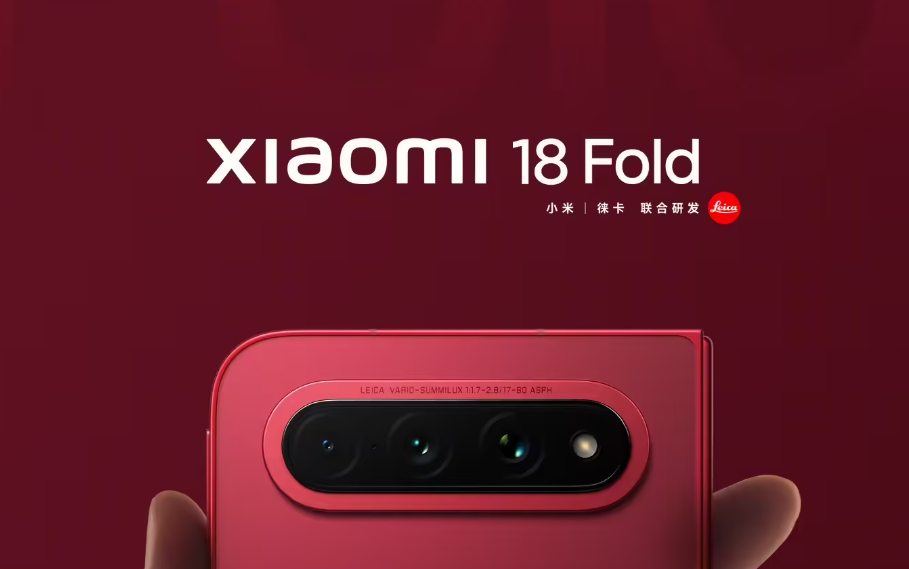
The Xiaomi 18 Fold introduces what the company calls a new “mid-fold” design, attempting to sit somewhere between a traditional large foldable and a small flip phone.
And from a consumer point of view, that could be one of the most interesting foldable ideas we have seen in a while.
What is the Xiaomi 18 Fold?
The Xiaomi 18 Fold is Xiaomi’s latest flagship foldable smartphone and is scheduled to be officially launched in China on September 7, 2026.
It also represents a change in Xiaomi’s foldable branding.
Previous large Xiaomi foldables used the MIX Fold name, including the Xiaomi MIX Fold 4.
This time, the company is bringing the foldable directly into its main flagship phone family as the Xiaomi 18 Fold.
That alone suggests Xiaomi sees foldable phones becoming less of an experimental side product and more of a mainstream flagship category.
A smaller foldable could actually make more sense
The most interesting part of the Xiaomi 18 Fold isn’t necessarily its processor or cameras.
It’s the shape.
The phone has a 5.38-inch external display and opens to reveal a 7.58-inch internal foldable screen.
That makes it smaller than many traditional book-style foldables.
Xiaomi describes this as a “mid-fold” form factor.
From a consumer perspective, the idea makes a lot of sense.
Most of the time, you probably want your smartphone to remain relatively easy to hold.
But occasionally you want a much larger screen.
The Xiaomi 18 Fold is trying to offer both without making the folded device feel enormous.
The outside screen could be the most important feature
One of the biggest problems with early foldable phones was that their external displays often felt compromised.
Some were too narrow.
Others were awkwardly shaped.
That meant you frequently had to unfold the phone simply to perform normal smartphone tasks.
Xiaomi appears to be paying much more attention to how the 18 Fold works while closed.
Its 5.38-inch outer screen uses a wider format designed to make the phone easier to operate with one hand.
That could make a huge difference.
A good foldable shouldn’t require you to unfold it every time you want to send a message, change a song or check Google Maps.
The internal screen should feel like an added benefit rather than something you constantly need.
Open it and you get a 7.58-inch screen
When you do want more space, the Xiaomi 18 Fold opens into a 7.58-inch display.
That’s large enough to make quite a difference when watching YouTube, browsing websites, viewing photos or running multiple apps.
For music fans, a larger display could also be useful for things such as Spotify, YouTube Music, lyrics, concert videos and music production apps.
You essentially get a normal-sized smartphone that can transform into something closer to a small tablet.
That remains the big attraction of book-style foldable phones.
Xiaomi is building its own processor
The Xiaomi 18 Fold will also be powered by Xiaomi’s new Xring O3 processor.
This is particularly interesting because Xiaomi is increasingly developing more of the technology inside its devices rather than relying entirely on companies such as Qualcomm.
The Xring O3 is a 3nm flagship processor and has been designed to support the new LPDDR6 memory standard being supplied by Chinese chipmaker CXMT.
For consumers, the technical details aren’t particularly important.
What matters is whether the phone feels fast, manages battery life well and can handle the additional demands of running apps across a large foldable display.
Xiaomi is also placing a heavy emphasis on on-device AI, with the phone expected to run Xiaomi’s MiMo AI model alongside HyperOS 4.
The battery could be a major advantage
Battery life has traditionally been one of the biggest compromises with folding phones.
Large screens consume lots of power, while foldable designs leave manufacturers with less space to fit large batteries.
Xiaomi appears to be tackling this aggressively.
The Xiaomi 18 Fold is expected to feature a 6,000mAh battery with 67W wired charging and 50W wireless charging.
If real-world battery performance matches the specifications, this could be one of the device’s biggest strengths.
A foldable phone becomes far more useful if you can actually take advantage of the larger display without constantly worrying about finding a charger.
Xiaomi is taking the cameras seriously too
Foldable phones have sometimes made camera compromises compared with conventional flagship phones.
Xiaomi doesn’t appear to want that happening here.
The Xiaomi 18 Fold uses a Leica-branded triple-camera system.
Information released ahead of launch points to:
- a 200-megapixel main camera
- a 50-megapixel telephoto camera with 3.5x optical zoom
- a 50-megapixel ultrawide camera
The main camera uses a 1/1.56-inch sensor, while Xiaomi is once again using Leica Summilux optics.
On paper, that’s a seriously capable camera system for a foldable phone.
The 3.5x optical zoom could be particularly useful because telephoto cameras are still an area where some folding phones compromise.
Durability is still the big foldable question
No matter how good foldable phones become, consumers are understandably going to worry about durability.
There’s a moving hinge.
There’s a flexible display.
And these devices are generally very expensive.
Xiaomi says the 18 Fold uses its latest Dragon Bone hinge alongside dual-layer ultra-thin glass for the internal screen.
The company has also been promoting improved drop protection, claiming the new structure is significantly more resistant to impacts than its previous generation of foldable phones.
Of course, manufacturer durability claims aren’t the same thing as living with the phone for two or three years.
That will be one of the most important things to watch once real consumers start using it.
The Xiaomi 18 Fold could arrive at exactly the right time
The timing of this phone is interesting.
Samsung continues to push its Galaxy Z Fold range, while Apple is widely expected to enter the foldable smartphone market.
Suddenly foldable phones are moving from an unusual niche into one of the most competitive areas of the smartphone industry.
Xiaomi appears to believe the next battle won’t simply be about who can make the biggest folding screen.
It could be about who can make a foldable that feels least compromised as a normal smartphone.
And that’s where the Xiaomi 18 Fold becomes interesting.
Is the Xiaomi 18 Fold worth waiting for?
We can’t answer that properly until Xiaomi reveals the final price and the phone has been independently tested.
Pricing and wider international availability have not yet been confirmed ahead of the September 7 launch.
But based on what Xiaomi has shown so far, the 18 Fold looks promising.
The smaller body could make it more comfortable.
The 7.58-inch screen still provides a genuine reason to unfold it.
The 6,000mAh battery sounds unusually large for a foldable.
The Leica cameras appear to be properly flagship-level.
And Xiaomi’s new Xring processor makes this more than simply another incremental phone update.
Perhaps most importantly, Xiaomi seems to be asking the right question.
Instead of asking:
“How large can we make a folding phone?”
It appears to be asking:
“How small can we make a foldable while still giving people a genuinely useful large screen?”
That might ultimately prove to be the more important innovation.
If Xiaomi gets the size, price and durability right, the Xiaomi 18 Fold could be one of the most interesting foldable phones of 2026.