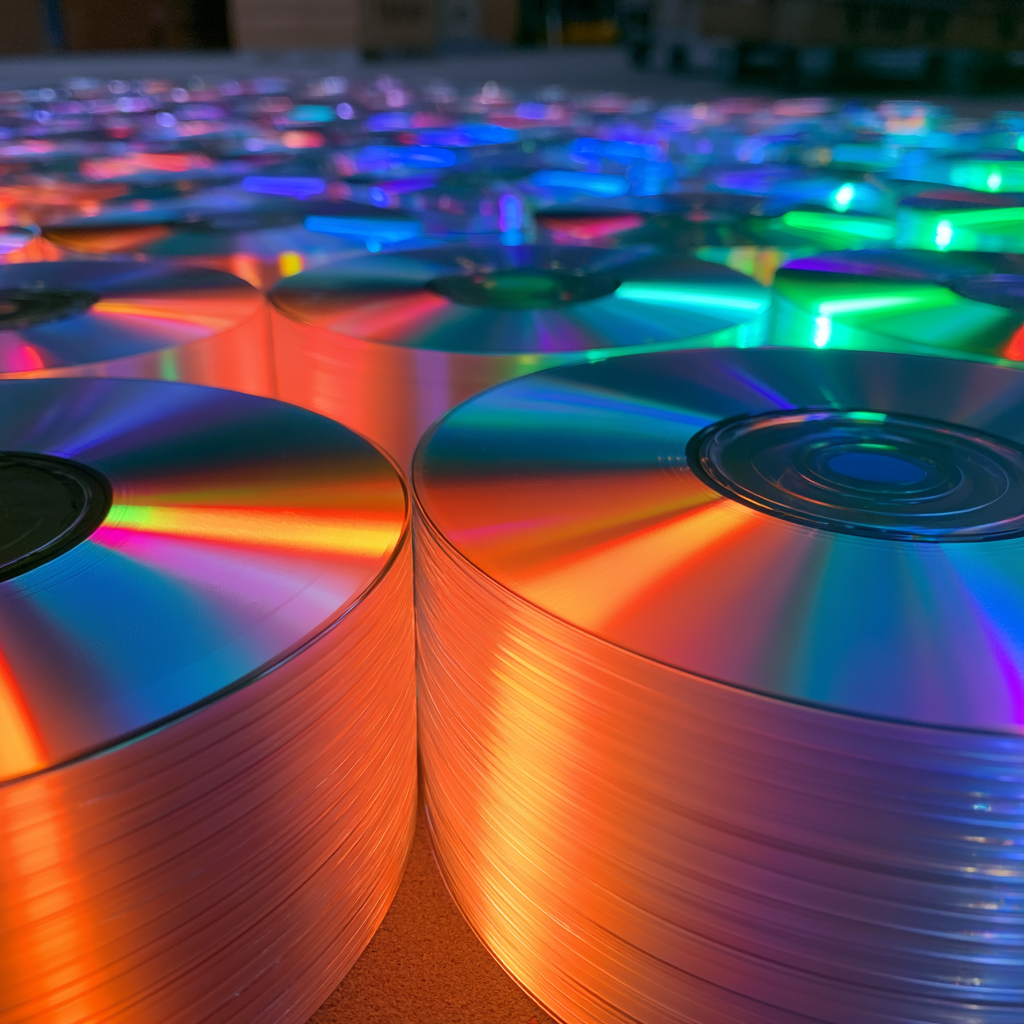
Are CDs Making a Comeback? Why CD Sales Are Surging Again in 2026
For years, the compact disc looked like a format heading for extinction.
Streaming had made accessing millions of songs almost effortless. Spotify, Apple Music, YouTube Music and other services meant listeners no longer needed shelves filled with albums.
Then something unexpected happened.
CDs started growing again.
New figures from the Recording Industry Association of America show that US CD revenue increased by 58.6% year-on-year during the first half of 2026, reaching around $171 million. Physical music revenue overall increased by 25.9%, while streaming continued to dominate the wider music market.
Separate data from entertainment analytics company Luminate paints a similar picture. US consumers bought approximately 16.3 million CDs during the first half of 2026, a 16% increase compared with the same period a year earlier.
Even more surprisingly, CD sales are currently growing considerably faster than vinyl unit sales.
So, are CDs officially making a comeback?
It certainly looks like it.
But the reason might have less to do with listening to CDs and more to do with the changing relationship between music fans and the artists they love.
Are CDs making a comeback in 2026?
Yes. There is now strong evidence that CDs are experiencing a genuine revival.
According to Luminate’s 2026 Midyear Report, 16.3 million CDs were sold in the US during the first six months of the year, representing growth of 16%.
Vinyl album sales remained higher overall at approximately 21.8 million units, but vinyl grew by only around 2.4% during the same period.
That means CD unit sales grew almost seven times faster than vinyl during the first half of the year.
RIAA data released in September provides another indication of just how quickly the market is changing.
CD revenue increased 58.6% compared with the first half of 2025, while vinyl revenue increased 17.7%. Streaming remained by far the largest part of the recorded music industry, generating approximately $4.9 billion and accounting for 82% of US recorded music revenue.
In other words, CDs aren’t replacing Spotify.
Something different is happening.
People appear to be streaming music and buying physical copies of the albums they care most about.
Why are CDs becoming popular again?
There probably isn’t one single reason behind the CD revival.
Instead, several trends are happening at the same time.
Streaming has made music easier to access than at any point in history, but it has also made music increasingly intangible.
You can save thousands of albums to your library without physically owning anything.
A CD gives fans something different.
It is an object.
You can put it on a shelf. Collect it. Read the booklet. Look at the artwork. Buy a limited edition. Get it signed. Give it as a present.
For younger listeners who have spent most of their lives consuming music digitally, that physical experience can actually feel new.
Ironically, CDs may now have some of the novelty that streaming once had.
Gen Z is helping bring CDs back
One of the most interesting parts of the CD revival is the age of some of the people buying them.
This isn’t simply people who owned large CD collections in the 1990s replacing their old copies.
Younger fans are increasingly interested in physical music.
Coverage of Luminate’s 2026 research found that around half of Gen Z and millennial CD buyers don’t even own a CD player.
That sounds ridiculous until you think about what they are actually buying.
For these listeners, a CD can be as much a piece of merchandise as a method of playing music.
Someone might listen to an album hundreds of times through Spotify while owning the CD simply because they love the artist.
The CD becomes a physical representation of their fandom.
It isn’t necessarily replacing streaming.
It complements it.
K-pop has completely changed what a CD can be
One of the biggest reasons CD sales are rising is K-pop.
K-pop labels have become extremely good at turning physical albums into collectable products.
Rather than simply putting a disc into a plastic case, albums can contain photo cards, posters, photo books, alternative artwork and other exclusive items.
Fans may also have multiple versions of the same album to collect.
That changes the economics of the CD completely.
The actual disc is almost just one component of the product.
BTS has been a major contributor to CD growth in 2026, while acts including ENHYPEN and ATEEZ have also generated significant physical sales.
However, the CD revival isn’t entirely a K-pop story.
Luminate found that even when K-pop releases are removed from the figures, US CD sales still increased by 6.7%.
That’s an important number.
K-pop is accelerating the trend, but it isn’t creating the whole trend.
CDs have one big advantage over vinyl: price
Vinyl has enjoyed a spectacular revival over the past decade, but it has one obvious weakness.
Records can be expensive.
New vinyl albums commonly cost significantly more than their CD equivalents, particularly for deluxe releases, coloured vinyl and limited editions.
Building a serious vinyl collection can therefore become an expensive hobby.
CDs offer much of the same appeal at a lower price.
You still get:
Album artwork
A physical copy of the music
Something to display
Something to collect
Something you actually own
But usually without paying vinyl prices.
For teenagers and younger music fans in particular, that matters.
It could allow CDs to occupy an interesting middle ground between completely digital streaming and relatively expensive vinyl collecting.
CDs are perfect for the collector economy
Music fandom has increasingly become part of the wider collector economy.
Fans aren’t simply listening to their favourite artists.
They’re buying merchandise, special editions, box sets, posters and limited releases.
Taylor Swift has repeatedly demonstrated how multiple physical editions can become part of an album release strategy, while K-pop has taken physical collectability even further.
Luminate has highlighted physical product strategy, including deluxe editions and retail exclusives, as an increasingly important way for major releases to cut through a crowded entertainment market.
CDs work extremely well within this model.
They’re small.
They’re relatively cheap to manufacture.
They’re easy to ship.
They can have multiple covers.
They can include additional collectables.
And fans can reasonably own several editions without needing an enormous record shelf.
The future of CDs might therefore look less like the CD market of 1999 and more like the trading-card market.
Streaming may actually be helping physical music
At first glance, streaming and physical music appear to be competitors.
In reality, they may increasingly support each other.
Streaming gives listeners instant access to almost every artist.
That allows people to discover more music.
Once someone becomes a serious fan, they may want something more permanent.
Think about the difference between the two.
Streaming says:
“I listen to this artist.”
Buying an album says:
“I’m a fan of this artist.”
Those are different behaviours.
Streaming can therefore function as the discovery and listening layer, while physical music becomes the ownership and fandom layer.
The numbers certainly aren’t showing consumers abandoning streaming.
Global on-demand audio music streams increased 9.8% during the first half of 2026 to around 2.8 trillion streams, according to Luminate.
Streaming is still growing.
CDs are growing too.
The two formats don’t have to compete.
Are CD players making a comeback too?
This might be the next interesting part of the trend.
If consumers continue buying CDs, hardware manufacturers suddenly have a reason to sell devices capable of playing them.
Portable CD players have already become something of a retro technology product, alongside renewed interest in cassette players, wired headphones, old iPods and other dedicated music devices.
There is also a huge amount of CD hardware already sitting in people’s homes.
Games consoles, cars, computers, hi-fi systems and DVD players produced over previous decades often included CD playback.
Unlike vinyl, listeners don’t necessarily need an expensive setup to start using a CD collection.
And with so many CDs available second-hand for relatively little money, the barrier to entry can be extremely low.
Do CDs sound better than streaming?
This depends heavily on the streaming service, settings, audio equipment and source recording.
Traditional audio CDs contain uncompressed digital audio at 16-bit/44.1kHz.
Some streaming services also offer lossless audio at CD quality or higher, meaning a CD won’t automatically sound better.
However, CDs do provide a consistent source that isn’t affected by a streaming service changing its catalogue, removing an album or altering the available version.
You also don’t need an internet connection or subscription.
For most people, though, sound quality probably isn’t the primary reason behind the current revival.
Ownership and collectability appear to be much bigger factors.
Why buy CDs when Spotify exists?
This might actually be the wrong question.
Spotify and CDs solve two completely different problems.
Streaming is incredibly convenient if you want access to almost any music immediately.
A physical album is better if you want to own something from an artist you love.
You can stream 100 albums in a month.
You probably wouldn’t buy 100 CDs.
Instead, listeners might stream everything and purchase physical copies of the five or ten albums that mean something to them.
That could ultimately create a healthier physical music market than trying to convince consumers to return entirely to buying albums.
Physical ownership becomes premium fandom rather than the default way of accessing music.
CDs vs vinyl: which is more popular in 2026?
Vinyl is still ahead of CDs in both US unit sales and revenue.
Luminate reported around 21.8 million vinyl records sold during the first half of 2026 compared with approximately 16.3 million CDs.
RIAA figures also show vinyl generating substantially more money than CDs.
But CDs currently have something vinyl doesn’t: much faster growth.
That doesn’t necessarily mean CDs will overtake vinyl.
Instead, we may be entering an era where multiple formats coexist.
Streaming handles everyday listening.
Vinyl offers a premium analogue experience.
CDs provide affordable physical ownership and collectability.
Each format serves a different type of consumer behaviour.
Are CDs worth buying in 2026?
For many music fans, absolutely.
CDs have several advantages that have become easy to overlook.
They’re relatively inexpensive.
They sound good.
They’re durable when treated properly.
They’re easy to store.
Second-hand albums can be extremely cheap.
You own the music permanently.
And increasingly, new CDs are being packaged as collectables rather than simply containers for music.
There is another benefit too.
A streaming catalogue is never entirely under your control.
Albums can disappear from services. Licensing agreements can change. Versions can be replaced.
A CD sitting on your shelf is yours.
In an era where almost everything is rented, subscribed to or stored somewhere in the cloud, that idea might be becoming more appealing again.
Will the CD comeback last?
The 2026 numbers are impressive, but it is too early to say whether CDs are heading for another decade-long revival similar to vinyl.
Some of the current growth is being driven by particularly successful releases and the enormous popularity of physical collecting within K-pop.
But the fact that CD sales are still growing even when K-pop is removed from the data suggests something broader is happening.
Music consumption may be splitting into two different behaviours.
We want unlimited access to music.
But we also want to own the music we truly love.
Streaming solved the first problem brilliantly.
Physical music solves the second.
And CDs might turn out to be perfectly suited to that new world.
The compact disc isn’t replacing streaming.
It doesn’t need to.
After spending years looking like obsolete technology, the CD may be finding a completely new purpose: not as the main way we listen to music, but as one of the cheapest and easiest ways to physically own a piece of the artists we love.
And in 2026, that appears to be enough to give the CD a surprisingly powerful second life.
Frequently asked questions
Are CDs making a comeback?
Yes. US CD sales increased significantly during the first half of 2026. Luminate reported a 16% year-on-year increase in CD unit sales, while RIAA figures showed CD revenue rising 58.6%.
Why are CDs popular again?
Collectability, affordability, nostalgia, K-pop fandom and a growing interest in owning physical music are all contributing to the resurgence.
Is Gen Z buying CDs?
Yes. Younger consumers are an important part of the physical music market, and some are buying CDs primarily as collectables and artist merchandise rather than as their main method of listening to music.
Are CDs growing faster than vinyl?
In percentage terms, yes. Luminate reported US CD unit sales growth of 16% in the first half of 2026 compared with approximately 2.4% growth for vinyl.
Is vinyl still more popular than CDs?
Yes. Vinyl still sells more units in the US and generates considerably more revenue, but CDs are currently growing faster.
Do CDs sound better than Spotify?
Not necessarily. CDs provide lossless 16-bit/44.1kHz audio, but some streaming services also offer lossless music. Sound quality depends on the service, recording, settings and audio equipment being used.
Why would someone buy a CD without owning a CD player?
Many fans now treat physical albums as collectables and merchandise. They may stream the music while buying the CD for its artwork, packaging, photo cards, special editions or simply to support the artist.
Are CDs worth collecting?
They can be. CDs are generally cheaper and easier to store than vinyl, while second-hand CDs can often be purchased inexpensively. Limited editions and special releases can also have collector appeal.