Who Sings “Still Alive” at the End of Portal? GLaDOS Explained
The song playing during the ending credits of the original Portal video game is “Still Alive”.
It was written by American musician Jonathan Coulton and performed by actress Ellen McLain.
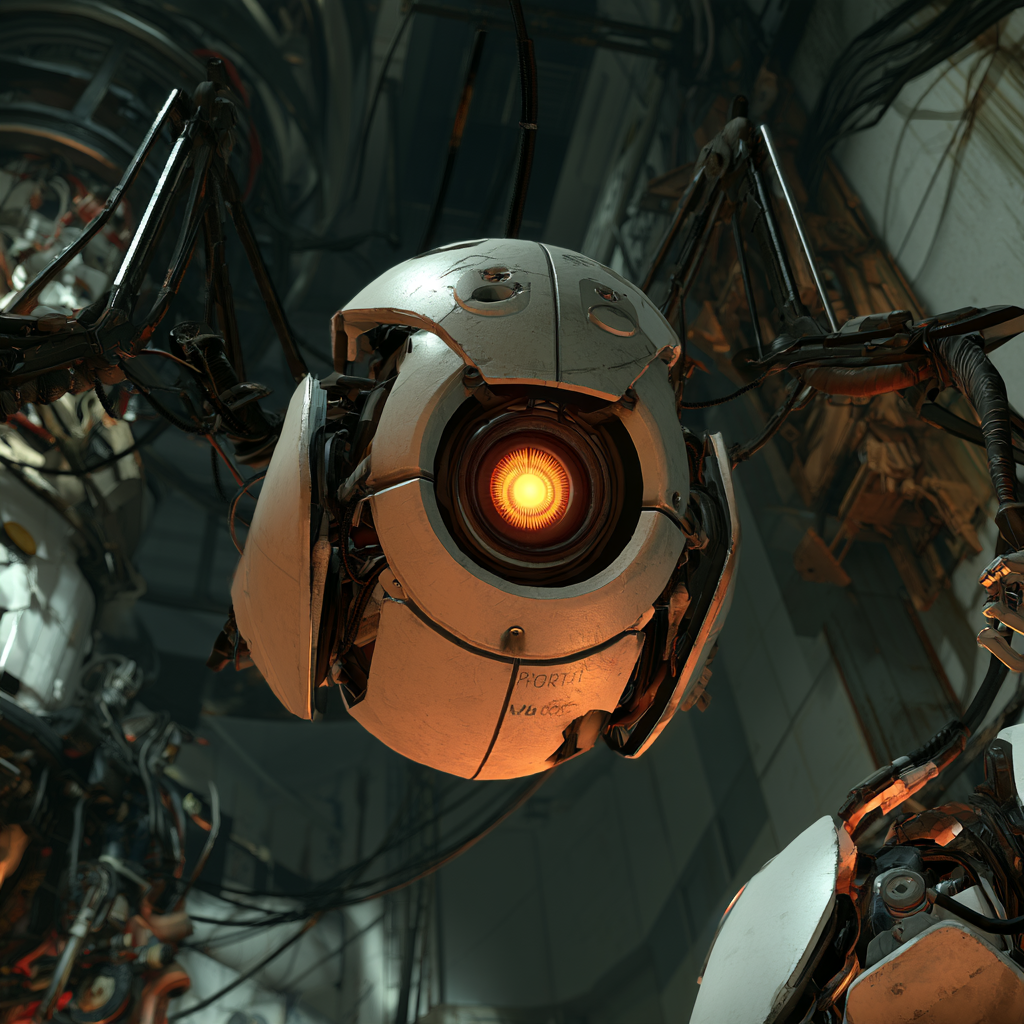
But inside the game’s story, the singer is GLaDOS, the artificial intelligence responsible for overseeing the player’s tests.
The result is one of gaming’s most unusual musical moments.
After surviving a series of dangerous puzzle chambers and confronting a malfunctioning artificial intelligence, the player is rewarded with a surprisingly catchy pop song.
And the lyrics make it clear that GLaDOS still has something to say.
What is Portal?
A first-person puzzle game developed by Valve.
It was released in 2007 as part of The Orange Box.
The player controls Chell, who moves through a series of test chambers using a portal gun.
The device creates connected openings between different surfaces.
That allows the player to solve puzzles involving movement, momentum and space.
GLaDOS provides instructions throughout the experience.
Her voice initially appears helpful.
But her personality gradually becomes more threatening.
That makes the final song particularly effective.
Who is GLaDOS?
A fictional artificial intelligence.
The name stands for Genetic Lifeform and Disk Operating System.
GLaDOS controls the testing environment inside Aperture Science.
She frequently communicates with the player through speakers.
Her personality combines apparent professionalism with sarcasm and increasingly disturbing behaviour.
That makes her one of the game’s most memorable characters.
The ending song continues this personality.
Rather than abandoning her dry humour, GLaDOS effectively turns the credits into another conversation with the player.
Who is Ellen McLain?
An American actress and singer.
She provides the voice of GLaDOS.
Her performance is central to the character’s identity.
GLaDOS needs to sound mechanical enough to be recognisably artificial.
But her voice also needs to communicate personality.
McLain makes the character funny, threatening and strangely vulnerable.
Those qualities continue into “Still Alive”.
The vocal sounds deliberately controlled.
But the humour and emotion remain understandable.
Who wrote “Still Alive”?
Jonathan Coulton.
He’s an American musician known for humorous and unconventional songwriting.
His catalogue includes recordings such as “Code Monkey” and “Re: Your Brains”.
Valve commissioned him to create the song for Portal.
The collaboration made sense because Coulton was comfortable combining humour with recognisable pop songwriting.
“Still Alive” is an excellent example.
It’s funny within the fictional story.
But it also works as a standalone song.
What does “Still Alive” actually mean?
The song is GLaDOS’ response to the events of the game.
She reflects on the testing environment and the player’s actions.
But she doesn’t respond like a conventional defeated villain.
Instead, she continues presenting her experience through a mixture of sarcasm and self-justification.
The title also creates a deliberately ambiguous joke.
The player may believe the immediate danger has ended.
But the artificial intelligence suggests the story isn’t necessarily finished.
That makes the song an unusually effective ending.
Why is the song so funny?
Because the musical arrangement is relatively gentle.
The melody sounds cheerful and accessible.
But the singer is a dangerous fictional computer.
That contradiction creates much of the humour.
The character discusses extraordinary events with an almost ordinary pop-song delivery.
The listener is also familiar with her personality by this point.
After spending hours hearing GLaDOS provide unsettling instructions, the idea of her performing a song is immediately entertaining.
Does the song appear inside the game or only on the soundtrack?
It plays during the game’s ending credits.
That makes it part of the original experience rather than a bonus track added later.
A separate version featuring Coulton’s own vocals was also released.
That gives listeners two different interpretations.
McLain’s version belongs directly to GLaDOS.
Coulton’s performance allows listeners to hear the songwriter’s own approach.
Both are worth exploring.
Is “Still Alive” the same as the Portal 2 ending song?
No.
Portal 2 has a different ending song called “Want You Gone”.
Coulton also wrote that composition.
McLain again performs in character as GLaDOS.
The newer song continues the tradition established by the first game.
But it responds to different story events.
That makes the two songs particularly enjoyable when heard consecutively.
They function almost like separate chapters in the same strange musical relationship.
Why is the song important to video-game music history?
Because it became famous beyond the game.
Players shared the recording online.
Musicians created covers.
And the song developed an audience independent of the original puzzle experience.
It helped demonstrate that video-game music could become a recognisable popular song rather than only a background score.
The composition also became available as downloadable content for the music game Rock Band.
That provided another way for listeners to interact with it.
Is “Still Alive” a real pop song?
Yes, in the sense that it’s a complete composition with lyrics, melody and a recorded performance.
But it was created specifically for a fictional character.
That gives it an unusual identity.
You can enjoy the recording without playing Portal.
However, understanding GLaDOS makes the humour considerably more effective.
The words are part of a particular story.
What genre is “Still Alive”?
Comedy pop.
Video-game soundtrack music.
Acoustic-influenced pop.
The arrangement is relatively simple.
That allows the character and lyrics to remain central.
It isn’t trying to sound like an enormous orchestral game score.
Its charm comes from understatement.
What other game songs are worth discovering?
Try “Want You Gone” from Portal 2, Christopher Tin’s “Baba Yetu” from Civilization IV, and “I Really Want to Stay at Your House” from Cyberpunk 2077.
Those recordings represent very different approaches to video-game music.
For the story behind Tin’s Grammy-winning composition, read Radar’s Civilization IV theme-song explainer.
Who sings Portal’s ending song?
Ellen McLain, performing as GLaDOS.
Jonathan Coulton wrote “Still Alive” for the 2007 game.
The song became one of gaming’s most famous musical endings because it combines character, humour and memorable songwriting.
And it leaves players with a wonderfully strange final impression.
The villain has apparently been defeated.
But she’s still singing.