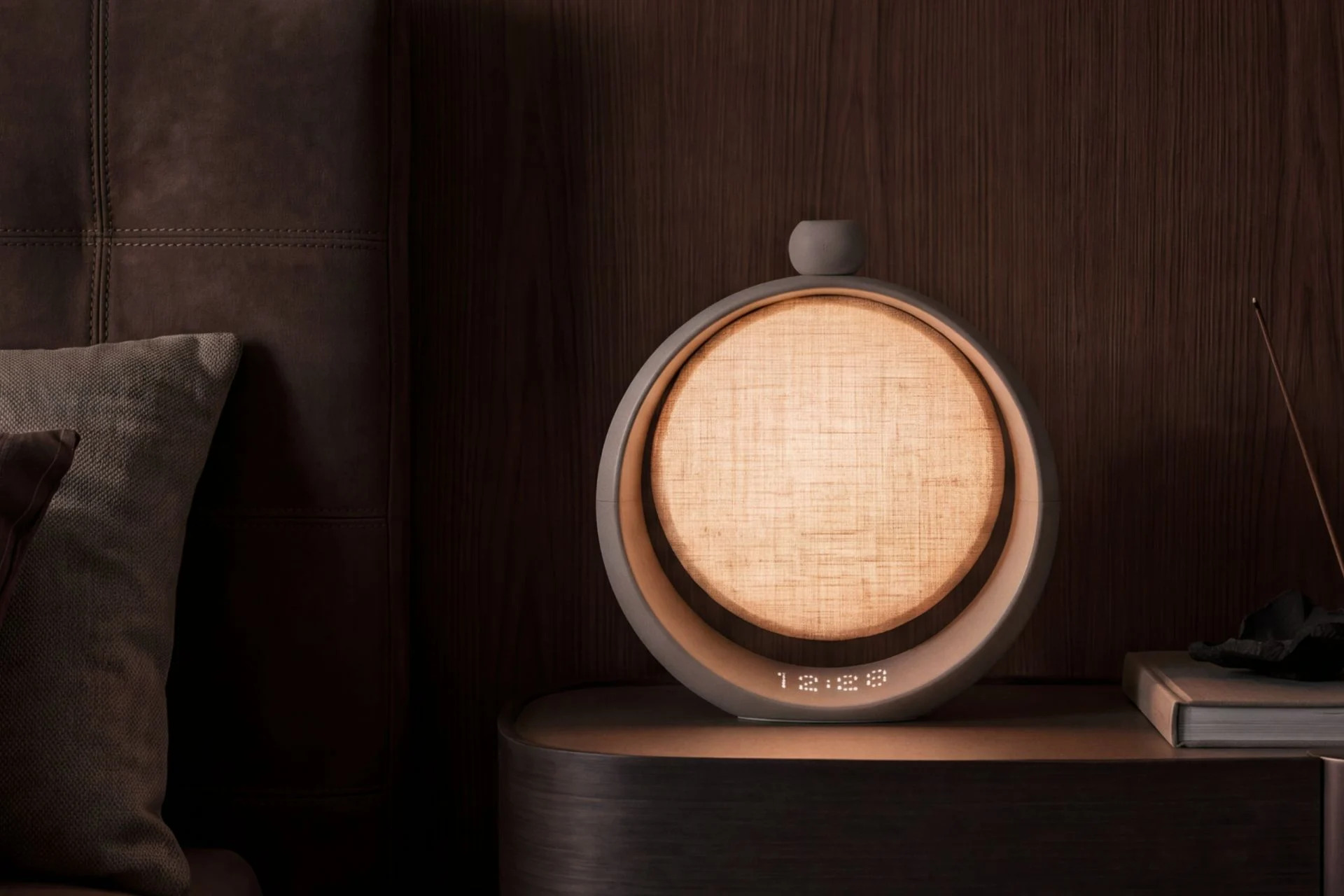
Anker SleepLab Pro Uses Radar, Sound and Light to Help You Sleep Better
Anker is taking sleep audio in a slightly unusual direction with the new Anker Soundcore SleepLab Pro, a bedside speaker that can track your sleep without requiring you to wear a smartwatch, smart ring or pair of earbuds.
Announced at IFA 2026, the SleepLab Pro combines a sleep speaker, ambient lighting, alarm clock and contact-free sleep tracker into a single device.
Instead of attaching sensors to your body, Anker is using 60GHz millimetre-wave radar to monitor tiny movements while you sleep. The technology is designed to track information including heart rate, breathing and different stages of sleep from your bedside table.
For people who like the idea of sleep tracking but don’t enjoy wearing an Apple Watch, Oura Ring or earbuds in bed, it could be one of the more interesting sleep gadgets we’ve seen this year.
What is the Anker SleepLab Pro?
The SleepLab Pro is essentially a smart sleep speaker designed to do much more than play white noise.
You place it next to your bed and the speaker uses radar to monitor your sleep without making physical contact with you.
Anker says it can track heart rate and breathing while analysing four different stages of sleep. It can then use that information to adjust the sounds and lighting around you.
Rather than simply telling you how badly you slept the following morning, the idea is that the SleepLab Pro actively changes your environment to try to help you sleep better.
That is arguably a more interesting approach to sleep technology.
Plenty of smartwatches already tell us that we didn’t sleep enough. What most of us probably want is something that can actually help us do something about it.
Radar tracks your sleep without a wearable
The biggest feature is the 60GHz mmWave radar system.
Radar can detect extremely small movements from your body, allowing the SleepLab Pro to estimate things such as breathing patterns and heart rate.
The benefit is that you don’t have to wear anything.
There is no watch strapped around your wrist, no ring on your finger and no earbuds sitting in your ears all night.
Anker says the system can recognise your sleep cycle without direct contact with your body.
This could potentially make sleep tracking far more appealing to people who have tried wearable sleep trackers but eventually stopped using them because they found them uncomfortable.
Of course, how accurately Anker’s radar compares with established sleep trackers remains to be seen. Independent reviews will be important here.
The speaker creates a personalised sleep soundtrack
This is where the SleepLab Pro gets particularly interesting from an audio perspective.
Instead of simply offering a collection of rain sounds and white noise, Anker wants the speaker to learn which sounds actually help you relax.
The system combines sleep sounds with what Anker describes as acoustic beats, breathing exercises and personalised audio.
The Verge reports that the speaker is designed to analyse your routines over several weeks and determine which combinations of sound and lighting appear to result in better sleep.
You could potentially discover that you sleep better with rainfall, gentle ambient music or particular acoustic beats playing in the background.
Over time, the speaker could then build your bedtime routine around those preferences.
It effectively turns the traditional sleep sound machine into something much more personalised.
More than 180 sleep and relaxation sounds
The standard SleepLab also gives us an idea of how heavily Anker is leaning into audio.
Anker says users will be able to access more than 180 white-noise and breathing sounds, alongside the ability to stream their own music, podcasts or other audio.
Bluetooth support means the speaker isn’t limited to Anker’s own sleep library either.
If you already have a favourite Spotify playlist, ambient album or podcast that helps you fall asleep, you can still use the SleepLab as a regular Bluetooth speaker.
That makes it considerably more useful than a dedicated sleep tracker that sits unused during the rest of the day.
Lighting is part of the experience too
Sound isn’t the only thing Anker is trying to personalise.
The SleepLab Pro includes multi-colour ambient lighting designed to work alongside the audio.
At night, softer lighting can be used as part of your wind-down routine.
In the morning, the speaker includes a sunrise simulation that gradually introduces light to wake you more naturally rather than suddenly blasting an alarm next to your head.
There is still an alarm if subtlety doesn’t work.
The combination makes the SleepLab Pro feel more like an all-in-one bedside sleep system rather than simply another wireless speaker.
You don’t need your phone next to your bed
Another surprisingly useful feature is that the SleepLab can operate without constantly needing your phone.
The Verge reports that many of its functions can be activated with a button and used independently of a smartphone. It also doesn’t require a paid subscription.
That’s potentially important.
Many people are actively trying to keep their phone away from their bed rather than adding even more reasons to look at it.
Being able to start your sleep routine without opening an app, scrolling through notifications and inevitably ending up watching something completely unrelated could be one of the simplest benefits of the product.
SleepLab vs SleepLab Pro
Anker is launching two versions of the speaker.
The standard SleepLab focuses primarily on sound, lighting and alarms.
The SleepLab Pro adds the 60GHz radar system and personalised sleep tracking.
Both offer spatial audio, ambient lighting, sleep sounds and sunrise-style alarms, but you’ll need the Pro version if you want the contactless health and sleep monitoring.
At the time of writing, Anker’s official announcement says final pricing and launch timing for both models will be announced later. The Verge has reported expected prices of $169.99 for the SleepLab and $269.99 for the radar-equipped SleepLab Pro.
Could the Anker SleepLab Pro actually help you sleep?
That’s the big question.
There are already countless sleep apps, white-noise machines, smartwatches and sleep trackers promising to improve our nights.
The interesting part of the SleepLab Pro isn’t necessarily any single feature.
It’s the combination.
It can measure your sleep, play relaxing audio, change the lighting, learn which routines appear to work and gradually build a personalised sleeping environment around you.
And it does all of that without requiring you to wear anything.
Whether the radar tracking proves accurate and whether personalised sounds actually make a noticeable difference will need proper testing.
But the broader idea makes sense.
Instead of buying another gadget that tells you how you slept, Anker is trying to build one that might actually help you sleep better.
For anyone who already falls asleep listening to music, white noise or ambient sounds, the Anker SleepLab Pro could be one of the most interesting audio products announced at IFA 2026.