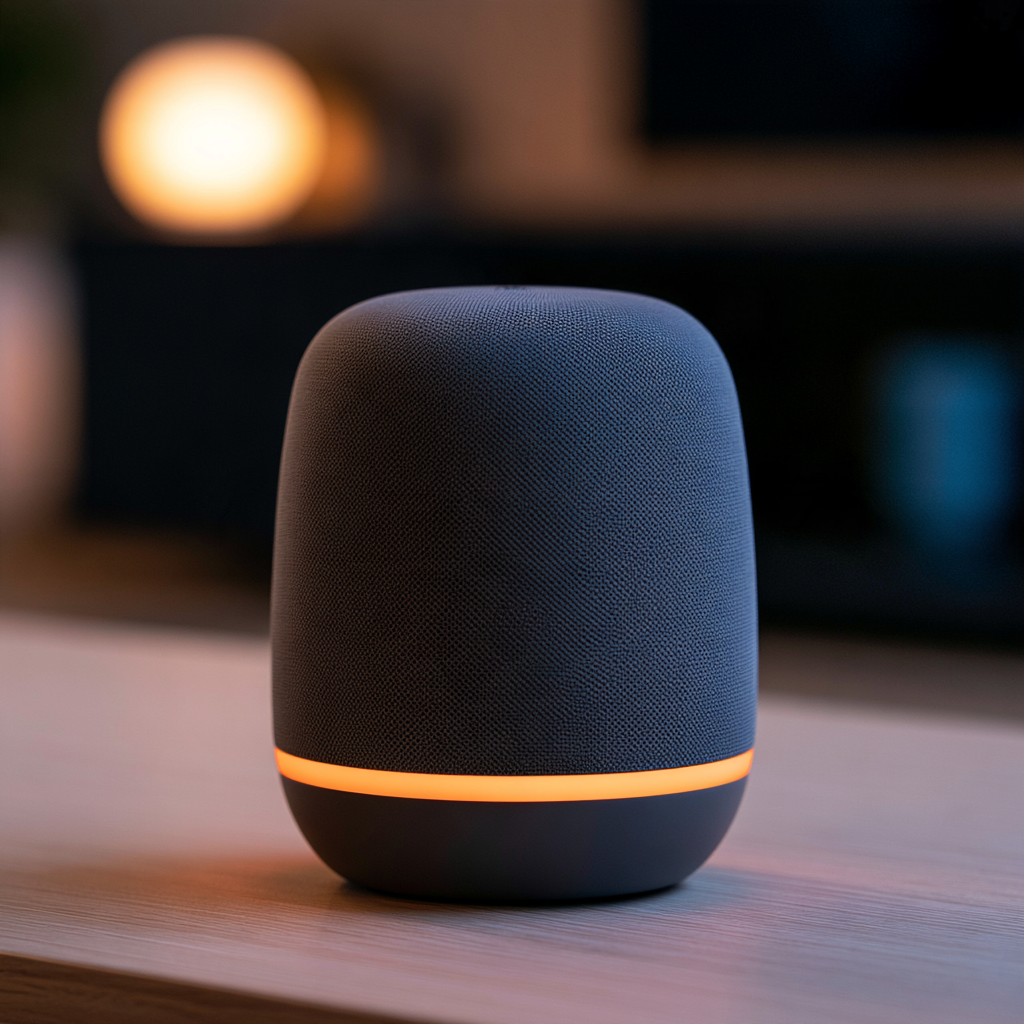
Why Did Smart Speakers Miss the AI Revolution?
Amazon and Google spent the best part of a decade putting smart speakers into homes around the world.
Amazon now says there are more than 600 million Alexa devices in existence.
That is an extraordinary installed base.
Yet for most of their lives, devices such as the Amazon Echo and Google Nest have been surprisingly limited.
Ask them to play music.
Set a timer.
Turn the lights off.
Check the weather.
And occasionally spend several attempts trying to convince them which song you actually wanted.
Then generative AI arrived.
ChatGPT, Gemini, Claude and other AI models demonstrated that computers could suddenly hold conversations, understand complicated questions, remember context, research topics and increasingly take actions on behalf of users.
Which raises an obvious question.
Why weren’t smart speakers the first devices to benefit?
Smart speakers should have been perfect for AI
In many ways, Amazon and Google had already built the ideal hardware for the AI revolution.
Millions of homes already had internet-connected microphones sitting in kitchens, bedrooms and living rooms.
The devices were permanently powered.
They had speakers.
They already understood voice commands.
They were connected to music services, calendars, shopping accounts, smart-home devices and other services.
The hardware distribution problem had effectively already been solved.
What was missing was intelligence.
For years, Alexa and Google Assistant weren’t really conversational AI systems. They were essentially voice interfaces built around predefined commands, APIs and skills.
You had to learn how to speak to them.
Modern generative AI reverses that relationship.
The computer learns how to understand you.
That seemingly small change completely transforms what a smart speaker could become.
Amazon is finally turning Alexa into an AI assistant
Amazon is now trying to make that transition with Alexa+.
Alexa+ uses generative AI to allow much more natural conversations and can perform tasks including controlling smart-home devices, organising calendars, making reservations, shopping and interacting with other services.
Amazon has also released a new generation of Echo hardware specifically designed around Alexa+, including the Echo Dot Max, Echo Studio, Echo Show 8 and Echo Show 11.
The new devices include more powerful processors, improved microphones and sensors designed to allow Alexa to understand what is happening around the home.
Early usage suggests something interesting is happening.
Amazon says people using Alexa+ are having around twice as many conversations with Alexa as before, while tens of millions of customers are now using the service.
Perhaps people didn’t stop caring about voice assistants.
Perhaps the assistants simply weren’t very good.
Google is doing the same thing with Gemini
Google has reached a similar conclusion.
In June 2026, Google launched a new $99.99 Google Home Speaker designed specifically around Gemini.
Instead of the traditional Google Assistant experience, Gemini for Home allows users to have more natural conversations, ask follow-up questions and issue more complicated commands.
Gemini is also being rolled out to older Nest speakers and displays.
Google has even introduced Gemini Live on compatible devices, allowing people to have longer back-and-forth conversations with their smart speakers.
This is much closer to the original promise of the smart speaker.
Not:
“Hey Google, set a timer for ten minutes.”
But potentially:
“Help me organise dinner tonight. Check what I’ve got planned, suggest something I can cook in 30 minutes, add anything I’m missing to my shopping list and remind me to start cooking at six.”
That is a completely different product.
Why did this take so long?
Part of the answer is technology.
The language models capable of powering these experiences simply didn’t exist when the original Amazon Echo launched.
But there are other reasons.
Running modern AI models is expensive.
Response times matter far more when you’re talking to a device than when you’re typing into a chatbot.
Privacy becomes considerably more sensitive when the AI is permanently sitting inside your home.
And connecting AI safely to real-world actions — ordering products, unlocking doors, changing thermostats or managing calendars — is substantially harder than generating text on a screen.
There is also a business-model problem.
Amazon originally sold many Echo devices extremely cheaply because Alexa could theoretically increase shopping and Prime engagement.
Google could use Home devices to strengthen its ecosystem.
But neither company managed to create a huge standalone software business from smart speakers.
AI could change that.
Amazon now charges $19.99 per month for Alexa+ in the US while including it with Prime, while Google offers advanced Gemini for Home functionality through its Google Home Premium subscription.
Suddenly the smart speaker potentially becomes a subscription product rather than simply inexpensive hardware.
The smart speaker might finally become useful
The first smart-speaker boom may simply have arrived ten years too early.
Amazon and Google successfully convinced hundreds of millions of consumers to put voice-controlled computers around their homes.
The problem was that the computers weren’t intelligent enough.
Generative AI changes that.
A genuinely intelligent home assistant could become one of the most useful applications of AI.
It could know your calendar.
Understand your family’s routines.
Control your home.
Manage shopping lists.
Recommend music.
Answer complicated questions.
Help children with homework.
Plan meals.
Book restaurants.
Manage reminders.
Coordinate travel.
And increasingly complete tasks rather than simply answering questions.
Instead of opening ChatGPT on your phone, the AI would simply exist around you.
AI smart speakers could be the next major AI platform
There has been enormous speculation about what device eventually comes after the smartphone.
AI glasses?
AI pins?
Wearable assistants?
Perhaps the answer has been sitting on the kitchen counter for the last decade.
Amazon already has more than 600 million Alexa devices in the world.
Google has an enormous installed base of Google Home and Nest products.
Sonos, Bose and other audio companies already have speakers throughout millions of homes.
Amazon has even started expanding Alexa+ onto third-party Bose speakers.
The distribution is already there.
The missing ingredient was intelligence.
For almost a decade, smart speakers promised us an intelligent computer that lived inside our homes.
Instead, we mostly got an expensive timer that could play Spotify.
Generative AI might finally deliver the product we thought we were buying in the first place.