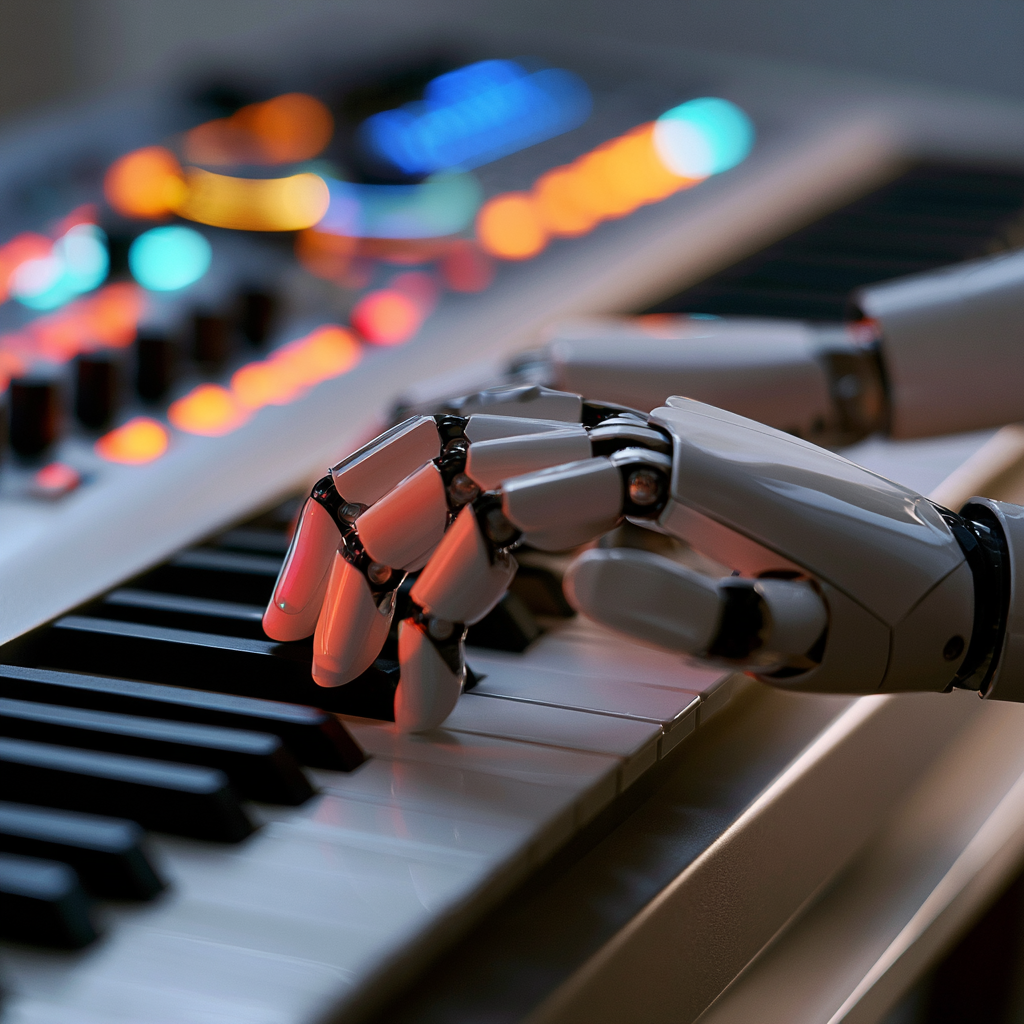
Why Australia’s new AI music rules could be a big win for human artists
AI is going to become part of making music. That battle is probably already over.
But there is a much bigger question the music industry still needs to answer:
Should a song generated almost entirely by artificial intelligence compete in exactly the same way as a song written, performed and recorded by a human artist?
Australia has just taken a fairly clear position.
The Australian Recording Industry Association (ARIA) has changed its chart rules so that wholly AI-generated recordings are no longer eligible for the official Australian charts. Music that uses AI as a supporting creative or production tool can still qualify, provided the recording remains substantially human-made.
For artists, that distinction could become increasingly important.
AI music isn’t the same thing as artists using AI
There is a tendency to turn the debate around AI music into two camps.
Either you embrace AI or you oppose it.
The reality is much more complicated.
Artists have always used technology.
Drum machines changed music. Synthesizers changed music. Auto-Tune changed music. Digital audio workstations completely transformed how records are produced.
AI will almost certainly become another tool in that process.
An artist might use AI to help clean up audio, separate stems, master a track, experiment with backing vocals or generate ideas during production.
ARIA’s rules don’t prevent that.
In fact, its guidance specifically allows many forms of AI-assisted production. AI mastering, stem separation, effects and other production tools can all still be used without automatically making a song ineligible for the charts.
The line appears when AI becomes the artist rather than the tool.
If the lead vocal or a key instrumental performance is AI-generated, for example, ARIA can classify the recording as AI-generated rather than AI-assisted.
That seems like an important distinction.
Artists are already competing for an incredibly limited resource: attention
The biggest problem facing most independent artists today isn’t necessarily creating music.
It’s getting anyone to hear it.
Millions of tracks are already competing for playlist placements, algorithmic recommendations, TikTok videos, radio plays and listener attention.
Generative AI changes the economics of music creation dramatically because it makes producing huge quantities of music extremely cheap.
A human artist might spend weeks writing, recording and producing a song.
An AI system can potentially generate hundreds or thousands of tracks in the same period.
Once those songs start competing for the same chart positions, recommendations and streaming revenue, the question becomes less about technology and more about market structure.
Should infinite machine-generated supply compete directly against finite human creativity?
ARIA appears to believe there should at least be some separation.
One AI-assisted song helped force the issue in Australia
The debate became particularly visible after Australian producer Josh Fawaz released a version of Madonna’s “Like a Prayer”.
The track became the most-played song on Australian radio and reached number four on two ARIA charts in July 2026. Fawaz subsequently updated the Spotify listing to disclose that AI had been used to generate the vocals and drums.
Under ARIA’s new rules, AI-generated lead vocals or key instrumental performances can make a recording ineligible for the charts.
That incident exposes the much bigger problem the industry is going to face.
Listeners don’t always know whether the person they think they are listening to actually performed the music at all.
And as AI music becomes better, distinguishing between the two simply by listening will become increasingly difficult.
The real value of music is the person behind it
There is another reason artists should care about this debate.
Music isn’t just audio.
People become fans of artists.
They go to concerts.
They follow their lives.
They learn the stories behind songs.
They connect a lyric with something an artist experienced.
They buy merchandise, join fan communities and follow an artist across multiple albums and decades.
The Next Web article discussing Australia’s decision makes a similar point: much of music’s cultural value comes from the human experience behind the work rather than simply the sound produced by the recording.
That doesn’t mean AI-generated music cannot sound good.
It almost certainly will.
The question is whether sounding good is the only thing we value about music.
For many listeners, it isn’t.
This shouldn’t become an anti-AI movement
Artists should also be careful not to push this argument too far.
Trying to ban AI from music altogether would probably be both unrealistic and counterproductive.
Some of the most interesting music created over the next decade could come from artists combining their own creativity with new AI tools.
AI could make sophisticated production available to musicians who couldn’t previously afford expensive studios.
It could help artists translate songs into different languages.
It could accelerate mixing and mastering.
It could create entirely new instruments and production techniques.
Artists should have access to those tools.
The better principle is simple:
AI should amplify artists rather than replace them.
That is essentially the line Australia is beginning to draw.
Transparency will become increasingly important
The next part of this debate is likely to be transparency.
Listeners may eventually expect music services to tell them whether a recording is human-created, AI-assisted or substantially AI-generated.
That would allow listeners to make their own decisions.
There is already movement in that direction across the global recording industry, with ARIA basing its new rules on broader industry principles intended to distinguish AI-generated recordings from human-created music that uses AI tools.
That distinction could eventually become as normal as seeing explicit-content labels or songwriter credits today.
For independent artists, transparency could actually become a competitive advantage.
Being able to say “I wrote this, I sang this and I created this” may become more meaningful in a world where almost anyone can generate convincing music in seconds.
Human creativity could become more valuable, not less
There is an interesting possibility hidden inside all of this.
AI may ultimately make human-created music more valuable.
When photography became ubiquitous, original paintings didn’t disappear.
When mass-produced furniture became cheap, handcrafted furniture gained a different kind of value.
Scarcity changes perception.
If the internet eventually becomes flooded with unlimited AI-generated music, genuinely human music might become something listeners actively seek out.
The story behind a record could matter more.
Live performances could matter more.
Artist identity could matter more.
Authenticity could become part of the product.
That would completely change the assumption that AI inevitably reduces the value of artists.
It might actually increase the value of artists who can build genuine relationships with audiences.
Australia may just be the start
ARIA’s decision does not solve the AI music debate.
It doesn’t determine how streaming royalties should work.
It doesn’t resolve questions around copyrighted music being used to train AI models.
And it certainly doesn’t stop people from releasing AI-generated songs.
What it does is establish a principle.
There is a difference between an artist using artificial intelligence and artificial intelligence replacing the artist.
For musicians watching AI become increasingly powerful, that might be the most important distinction the music industry can make.
Artists shouldn’t be scared of AI tools.
They should probably be experimenting with them.
But the future of music shouldn’t require removing humans from music altogether.
Technology should make artists more creative.
It shouldn’t make artists unnecessary.