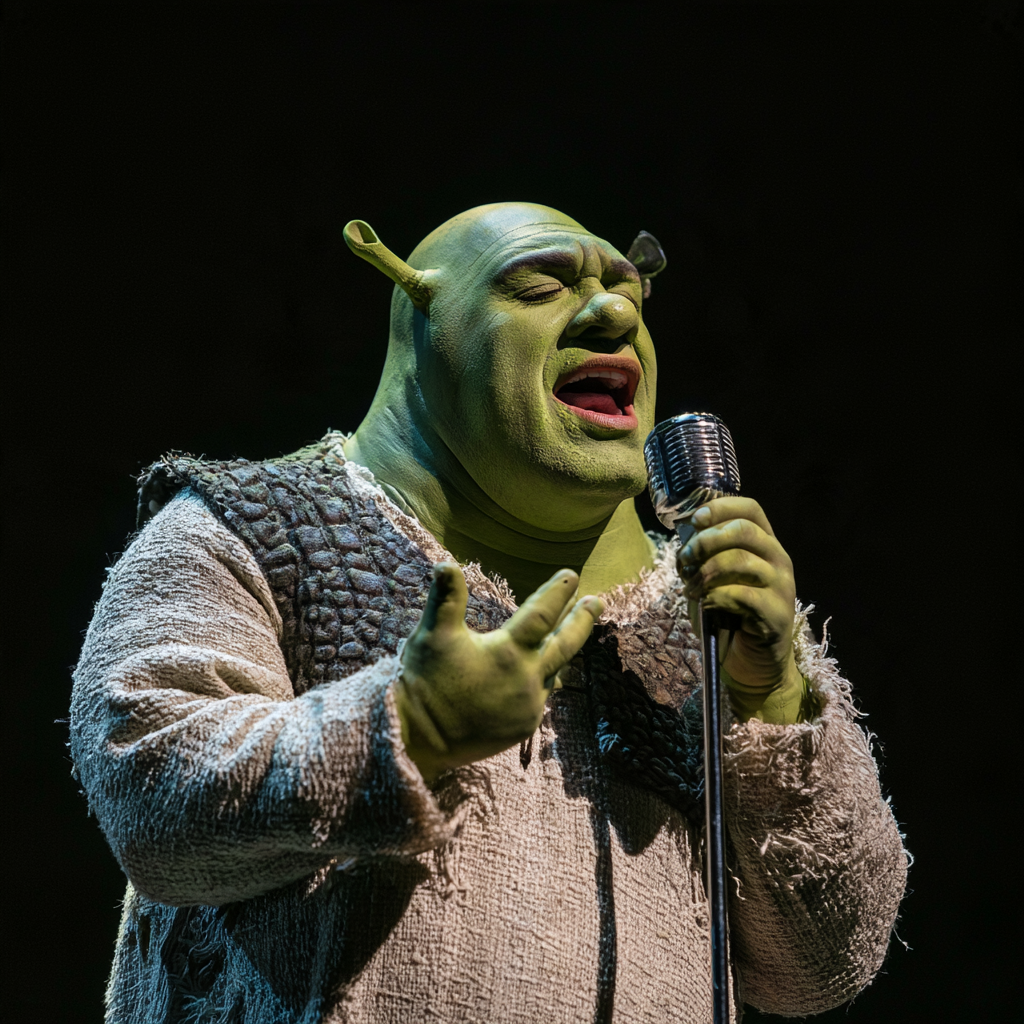
Who Sings “Hallelujah” in Shrek? John Cale vs Rufus Wainwright
The version of “Hallelujah” heard during the emotional montage in the original Shrek film is performed by John Cale.
But there’s a confusing detail.
If you listen to the official Shrek soundtrack album, you’ll hear Rufus Wainwright singing the song instead.
Neither artist originally wrote it.
“Hallelujah” was written and first recorded by Leonard Cohen, who released it in 1984.
That gives one of the most recognisable musical moments in animated cinema an unusually complicated history.
Three performers are associated with the same composition.
And two different recordings are connected with the very same film.
What happens during the Hallelujah scene?
The song plays during a montage in which several important characters are unhappy.
Shrek has returned to his swamp.
Fiona is preparing to marry Lord Farquaad.
Donkey and Shrek have argued.
The relationships established earlier in the film appear to be falling apart.
That’s why the music works so effectively.
For much of its running time, Shrek is energetic and irreverent.
Its soundtrack includes songs such as Smash Mouth’s “All Star”.
But this particular moment requires something more intimate.
“Hallelujah” creates the emotional contrast.
Who is John Cale?
A Welsh musician best known as a founding member of The Velvet Underground.
He subsequently developed a career as a solo performer, producer and experimental musician.
His music spans rock, classical experimentation and sophisticated songwriting.
Cale recorded his version of “Hallelujah” for the 1991 tribute album I’m Your Fan.
His arrangement is particularly important because it helped establish the stripped-back piano-led interpretation many later singers followed.
The Shrek filmmakers found his recording emotionally suitable for their scene.
Why is Rufus Wainwright on the soundtrack album?
Because he recorded another version for the official soundtrack release.
Wainwright was associated with DreamWorks’ music operations at the time.
His performance was included on the commercial album.
The film’s directors, however, preferred the emotional restraint of Cale’s version.
Director Andrew Adamson later explained that Wainwright’s recording felt slightly too polished and expansive for the moment.
Cale’s performance sounded more vulnerable.
That better matched Shrek’s emotional situation.
Who originally wrote Hallelujah?
Leonard Cohen.
The Canadian singer-songwriter released the composition on his 1984 album Various Positions.
The original recording is more elaborate than many later piano-led versions.
Cohen’s lyrics combine biblical references with romantic and spiritual imagery.
The composition wasn’t initially an enormous mainstream hit.
Its reputation grew through later interpretations.
John Cale and Jeff Buckley were particularly important in introducing it to new audiences.
Did Jeff Buckley sing the Shrek version?
No.
Buckley’s famous recording appeared on his 1994 album Grace.
His interpretation became one of the most admired versions of the composition.
The Shrek filmmakers considered it during the music-selection process.
But they ultimately preferred Cale.
That distinction matters because Buckley’s version is frequently confused with the recordings used in the film and soundtrack.
What does Hallelujah actually mean?
The meaning is deliberately complicated.
The word itself is associated with praise and religious devotion.
But Cohen combines that language with romantic frustration, human imperfection and desire.
The composition can sound spiritual and emotionally wounded simultaneously.
That’s one reason different performers have been able to interpret it so successfully.
One singer may emphasise devotion.
Another may communicate heartbreak.
Cale’s version makes the emotional uncertainty particularly noticeable.
Why does it fit Shrek so well?
Because Shrek is frightened of being emotionally vulnerable.
He presents himself as somebody who doesn’t need other people.
Much of that attitude is defensive.
His experiences have taught him to expect rejection.
When his relationship with Fiona appears impossible, he retreats into the familiar isolation of his swamp.
Cale’s restrained vocal suits that moment.
The music doesn’t make Shrek sound like a conventional romantic hero.
It makes him sound lonely.
Is the Shrek version different from the original lyrics?
Yes.
Cale developed his own selection from Cohen’s larger body of verses.
The filmmakers also edited the recording for the scene.
That helped create a version appropriate for the story and its audience.
The changes weren’t simply about shortening the running time.
The selected material needed to support the characters’ emotions.
Why has Hallelujah become so famous through covers?
Because the underlying composition is unusually adaptable.
It has a memorable melodic structure.
But the emotional perspective isn’t restricted to one fixed interpretation.
A singer can approach it through folk, gospel, rock or intimate piano accompaniment.
That flexibility helped transform a relatively overlooked 1984 recording into one of the most widely performed songs of modern popular music.
What other Shrek songs should you discover?
The original film’s soundtrack includes Smash Mouth’s “All Star”, “I’m a Believer”, Eels’ “My Beloved Monster”, The Proclaimers’ “I’m on My Way” and Dana Glover’s “It Is You (I Have Loved)”.
The franchise continued using familiar music in later films.
Radar’s recent Shrek 2 coverage explores the famous “Holding Out for a Hero” performance by the Fairy Godmother.
That musical moment is much more theatrical, but it demonstrates the same creative approach: familiar songs can become essential parts of an animated character’s story.
Songs like John Cale’s Hallelujah
Try Jeff Buckley’s “Hallelujah”, Leonard Cohen’s “Famous Blue Raincoat”, Rufus Wainwright’s “Going to a Town”, Nick Cave’s “Into My Arms” and Sufjan Stevens’ “Mystery of Love”.
Each recording combines emotional vulnerability with restrained musical arrangements.
Who actually sings Hallelujah in Shrek?
John Cale sings the version heard in the film.
Rufus Wainwright performs the version included on the official soundtrack album.
Leonard Cohen wrote and originally recorded the song.
The distinction explains why searching for the Shrek soundtrack can produce a voice that doesn’t quite match the scene you remember.