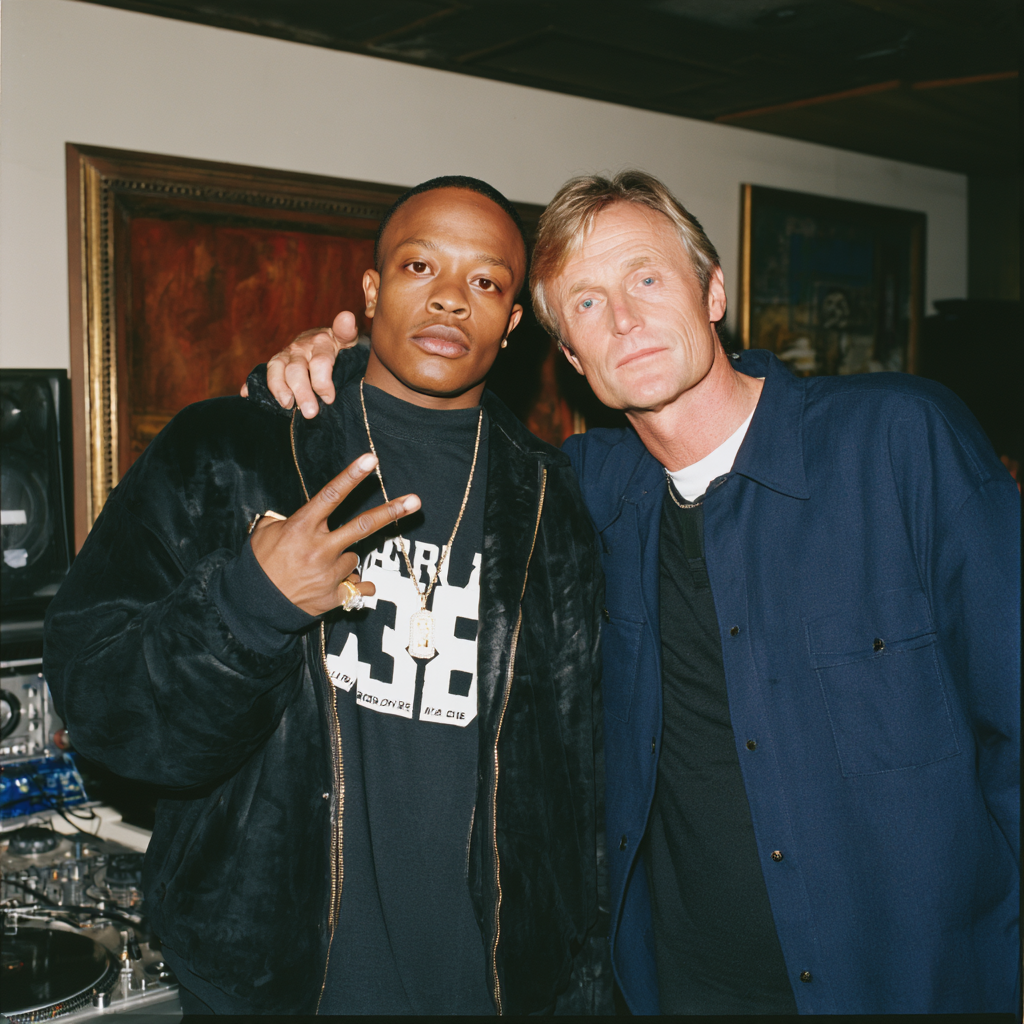
What Song Does Dr. Dre’s “The Next Episode” Sample? David McCallum Explained
Dr. Dre’s “The Next Episode” samples “The Edge”, an instrumental recording by Scottish actor and musician David McCallum.
The original recording dates from the 1960s and was produced by American musician David Axelrod.
But there’s another surprising detail.
David McCallum is the same actor who became internationally famous for playing Dr. Donald “Ducky” Mallard in NCIS.
That means one of the most recognisable introductions in hip-hop has an unexpected connection with one of television’s most familiar actors.
What part of “The Edge” does Dr. Dre sample?
The distinctive guitar phrase that provides the recognisable opening of “The Next Episode”.
The original recording combines a tense instrumental melody with a much larger orchestral arrangement.
Dr. Dre incorporates that memorable musical idea into a West Coast hip-hop production.
The result sounds completely natural inside the newer recording.
But listening to “The Edge” reveals that the familiar opening existed more than thirty years before Dre’s album.
Who was David McCallum?
A Scottish actor who developed an extensive career across film and television.
McCallum became internationally famous during the 1960s through his role as Illya Kuryakin in The Man from U.N.C.L.E.
He subsequently reached another enormous audience through NCIS, where he played medical examiner Ducky Mallard.
However, music had been an important part of his life long before those later television appearances.
McCallum studied music and developed an interest in instruments and orchestral arrangements.
During the 1960s, he released several instrumental albums.
“The Edge” emerged from that less widely remembered part of his career.
Did the NCIS actor actually write the sample?
Not personally.
Although the original recording is credited to David McCallum as the recording artist, David Axelrod wrote and produced “The Edge”.
That distinction is particularly interesting.
McCallum’s recording career involved collaborations with experienced studio musicians, producers and arrangers.
Axelrod’s involvement helped give the instrumental its distinctive atmosphere.
McCallum is the named recording artist, while Axelrod is the important creative figure behind the composition.
Who was David Axelrod?
An American composer, arranger and producer.
Axelrod became particularly associated with sophisticated arrangements combining jazz, soul, funk, rock and orchestral influences.
His recordings developed a substantial following among hip-hop producers searching for unusual instrumental samples.
Axelrod’s musical personality often involved dramatic strings, powerful percussion and memorable instrumental passages.
Those qualities made his catalogue particularly suitable for reinterpretation.
Several decades after his original recordings appeared, his influence became increasingly recognisable throughout hip-hop.
When did Dr. Dre release “The Next Episode”?
The recording appeared on Dr. Dre’s album 2001, released in November 1999.
It subsequently became a single in 2000.
Despite the album’s title, the project was therefore released before the actual year 2001.
The album also includes “Still D.R.E.”, “Forgot About Dre” and “What’s the Difference”.
Together, these recordings helped establish one of the most recognisable West Coast hip-hop albums.
Who performs on “The Next Episode”?
Dr. Dre and Snoop Dogg are the principal performers.
The recording also includes vocal contributions from Kurupt and Nate Dogg.
Their contrasting voices provide much of the song’s personality.
The familiar guitar sample establishes the musical atmosphere, while the vocal performances move between different rhythmic approaches.
Nate Dogg’s closing vocal became another particularly recognisable part of the recording.
Was Dr. Dre the first artist to sample “The Edge”?
No.
Other hip-hop producers had already discovered the instrumental.
A late-1990s remix of Scaramanga’s “Death Letter” by Godfather Don is among the earlier documented examples.
But Dre’s interpretation became the most internationally recognisable use of the musical material.
That demonstrates how producers can discover the same recording and create completely different musical results.
Why does the sample work so well?
Because it establishes confidence immediately.
The guitar phrase is distinctive enough to become recognisable within seconds.
Its slightly mysterious character also creates space for the performers.
Rather than building the track around a large conventional melody, Dre uses the instrumental phrase as a recurring musical identity.
Listeners recognise the song before the main vocal has properly begun.
That’s one reason its introduction has remained so culturally recognisable.
Was “The Next Episode” performed at the Super Bowl?
Yes.
Dr. Dre and Snoop Dogg opened the 2022 Super Bowl halftime show with the song.
The performance introduced the recording to another enormous international audience.
It also demonstrated how recognisable the musical introduction had become.
The track was already more than twenty years old, but its immediate energy still worked as the opening statement of one of entertainment’s largest live performances.
What genre is “The Next Episode”?
West Coast hip-hop, with strong connections to the G-funk tradition.
The production combines a recognisable instrumental hook with a relaxed but powerful rhythmic foundation.
Its use of a 1960s orchestral recording demonstrates how hip-hop can incorporate musical material from entirely different historical periods without losing its own identity.
Other famous hip-hop samples worth discovering
Try exploring:
- Beyoncé – Crazy in Love, which samples The Chi-Lites
- M.I.A. – Paper Planes, which samples The Clash
- Kanye West – Stronger, which samples Daft Punk
- Eminem – Stan, which samples Dido
- Dr. Dre – Nuthin’ but a ‘G’ Thang, which samples Leon Haywood
Radar’s guide to 25 famous songs built on samples is an excellent starting point for discovering the original music behind these recordings.
What does “The Next Episode” sample?
“The Edge”, recorded by David McCallum and written and produced by David Axelrod.
The original comes from McCallum’s 1960s musical career, long before he became famous as Ducky in NCIS.
Listen to the original recording first, then return to Dr. Dre.
One of hip-hop’s most familiar introductions suddenly opens the door into an entirely different era of music.