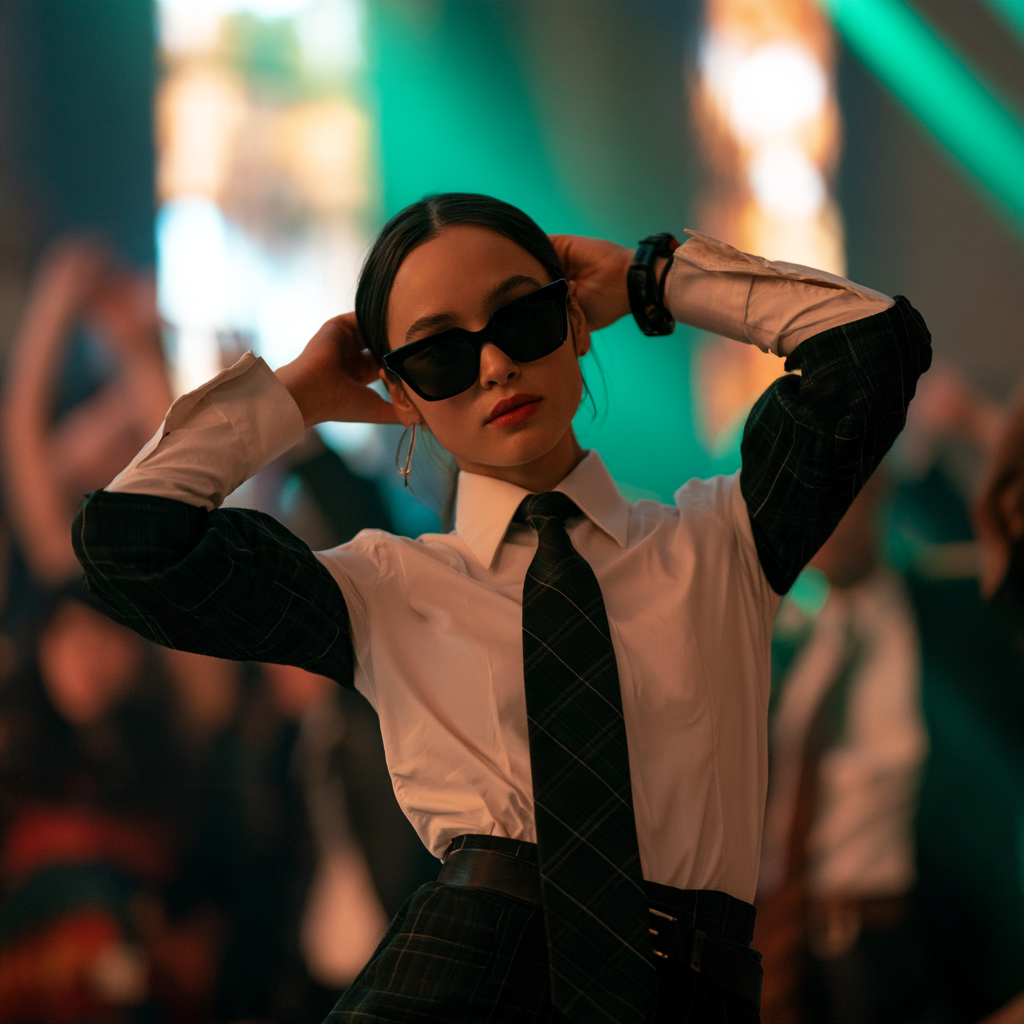
What Song Plays in The Umbrella Academy Dance Scene? Tiffany Explained
The song playing during the famous dance scene in The Umbrella Academy is “I Think We’re Alone Now” by Tiffany.
But Tiffany didn’t originally write or record it.
The song was first made famous by Tommy James and the Shondells in 1967.
Tiffany transformed it into an enormous international hit during the late 1980s.
Then Netflix gave the recording another cultural life through The Umbrella Academy in 2019.
The scene is particularly memorable because all the characters are dancing separately.
They believe they’re alone.
But they’re actually sharing the same experience.
It’s one of the cleverest examples of a familiar pop song being used to reveal something about television characters.
When does the dance scene happen?
During the first episode of The Umbrella Academy.
The Hargreeves siblings return to their childhood home following the death of their adoptive father, Reginald Hargreeves.
Their relationships are complicated.
They haven’t been close for years.
There is tension surrounding the reunion.
Then somebody plays Tiffany’s recording.
The characters begin dancing.
Not together.
Separately.
Each person moves in their own room.
The camera reveals that they’re all responding to the same music.
Why is the scene so memorable?
Because it communicates the characters’ emotional connection without dialogue.
The siblings appear extremely different.
They have different personalities.
Different experiences.
And complicated relationships with their father.
But the music creates one shared moment.
For a few seconds, they seem connected.
Even though they aren’t physically together.
That’s particularly effective because the song’s title suggests isolation.
The characters believe they’re alone.
The audience can see that they aren’t.
Who sings the version used in the series?
Tiffany.
The American singer became internationally famous during the late 1980s.
Her recording of “I Think We’re Alone Now” was released in 1987.
It reached No. 1 in several countries, including the United States and Britain.
For many listeners, her version became definitive.
The production combines electronic pop with an energetic vocal performance.
That gives it a much brighter musical identity than the original 1960s recording.
Who originally recorded “I Think We’re Alone Now”?
Tommy James and the Shondells.
Their version was released in 1967.
The song was written by Ritchie Cordell.
It became a major American hit.
The original recording belongs to the bubblegum-pop and garage-rock environment of the late 1960s.
The arrangement is more guitar-driven than Tiffany’s.
But the melody is immediately recognisable.
Listening to both versions demonstrates how much a song can change through a new production style.
What does the song actually mean?
Young romantic attraction and the desire for privacy.
The narrator describes two people who want to spend time together without being watched or interrupted.
The idea is simple.
They want a moment away from everybody else.
That makes the song particularly suitable for teenage pop.
The recording combines romantic excitement with a slight sense of rebellion.
The characters aren’t necessarily doing anything particularly dramatic.
They simply want privacy.
But that desire feels enormous when you’re young.
Why did Tiffany cover it?
Her producer George Tobin introduced her to the song.
Tiffany was initially uncertain about recording older material.
She wanted to establish her own musical identity.
But the composition was extremely catchy.
The production team recognised that it could work with a contemporary arrangement.
They transformed the original into a bright 1980s pop recording.
That version became Tiffany’s major breakthrough.
It also helped establish her reputation through an unusual promotional strategy involving performances in shopping malls.
Why are shopping malls important to Tiffany’s story?
Because she toured American malls during the early stages of her career.
The performances introduced her music directly to young audiences.
That was an unusual strategy.
Rather than relying entirely on conventional concert venues, she performed in places where teenagers were already spending time.
The approach helped generate attention.
As her music became more successful, the crowds grew.
Eventually Tiffany became one of the most recognisable teenage pop stars of the period.
“I Think We’re Alone Now” was central to that success.
Did Tiffany know the original song?
Yes, although she initially wasn’t particularly enthusiastic about the idea of covering it.
Her producer believed the composition could become successful again.
The new arrangement gave it a completely different character.
That transformation is important.
Tiffany didn’t simply recreate Tommy James’ recording.
Her version belonged to the musical world of 1987.
Synthesizers.
Large pop production.
A bright, youthful performance.
The composition remained the same.
The surrounding atmosphere changed.
Why does the scene work so well in The Umbrella Academy?
Because the song provides both humour and emotional depth.
The characters are adults.
Their relationships are strained.
Their childhood was unusual and often difficult.
Then an old pop recording causes them to dance almost like teenagers.
The moment makes them feel more human.
It also reminds viewers that the siblings share a history.
They may not communicate well.
But they grew up in the same house.
The music becomes a connection to that earlier period.
Was the dance choreographed?
The scene was designed to feel spontaneous.
The actors developed movements reflecting their characters’ personalities.
That makes the sequence particularly entertaining.
The dancing isn’t uniformly polished.
Some characters appear confident.
Others are awkward.
Some seem completely absorbed.
The differences communicate personality.
The scene works because the actors aren’t attempting to perform one perfectly synchronised routine.
They’re showing how different people respond to the same song.
Is the song in Stranger Things too?
Yes.
Tiffany’s recording also appeared in the final season of Stranger Things.
Its use in December 2025 generated renewed interest.
The song returned to the British charts in early 2026, decades after its original success.
That makes it a particularly strong example of television reviving older catalogue music.
The Umbrella Academy introduced it to one audience.
Stranger Things provided another cultural moment.
The same recording continues finding new listeners through familiar television scenes.
What genre is “I Think We’re Alone Now”?
The original belongs to 1960s pop rock and bubblegum pop.
Tiffany’s version is more closely associated with synth-pop and mainstream 1980s pop.
Both use the same central melody.
But their rhythmic and instrumental arrangements are different.
That gives listeners two useful ways to explore the composition.
The original provides the musical history.
Tiffany’s version provides the familiar television soundtrack.
Songs like Tiffany’s “I Think We’re Alone Now”
Try:
Debbie Gibson – Only in My Dreams
Cyndi Lauper – Girls Just Want to Have Fun
Belinda Carlisle – Heaven Is a Place on Earth
The Bangles – Walk Like an Egyptian
Kim Wilde – Kids in America
Rick Astley – Together Forever
Tommy James and the Shondells – Mony Mony
These recordings provide a route through energetic pop from the 1960s and 1980s.
Why does the song keep returning?
Because the melody is extremely strong.
It worked in 1967.
It worked again in 1987.
And it continues working in television soundtracks.
The theme is also universal.
Wanting privacy.
Wanting somebody close.
Feeling temporarily disconnected from the rest of the world.
Those emotions don’t belong to one particular generation.
What song plays during The Umbrella Academy dance scene?
“I Think We’re Alone Now” by Tiffany.
Her version became a major hit in 1987.
The original recording belongs to Tommy James and the Shondells in 1967.
The Umbrella Academy used the song to create a surprisingly emotional scene involving siblings dancing separately inside the same house.
The result became one of the show’s most recognisable moments.
And it proves that sometimes a familiar pop song can explain a relationship more effectively than another conversation.