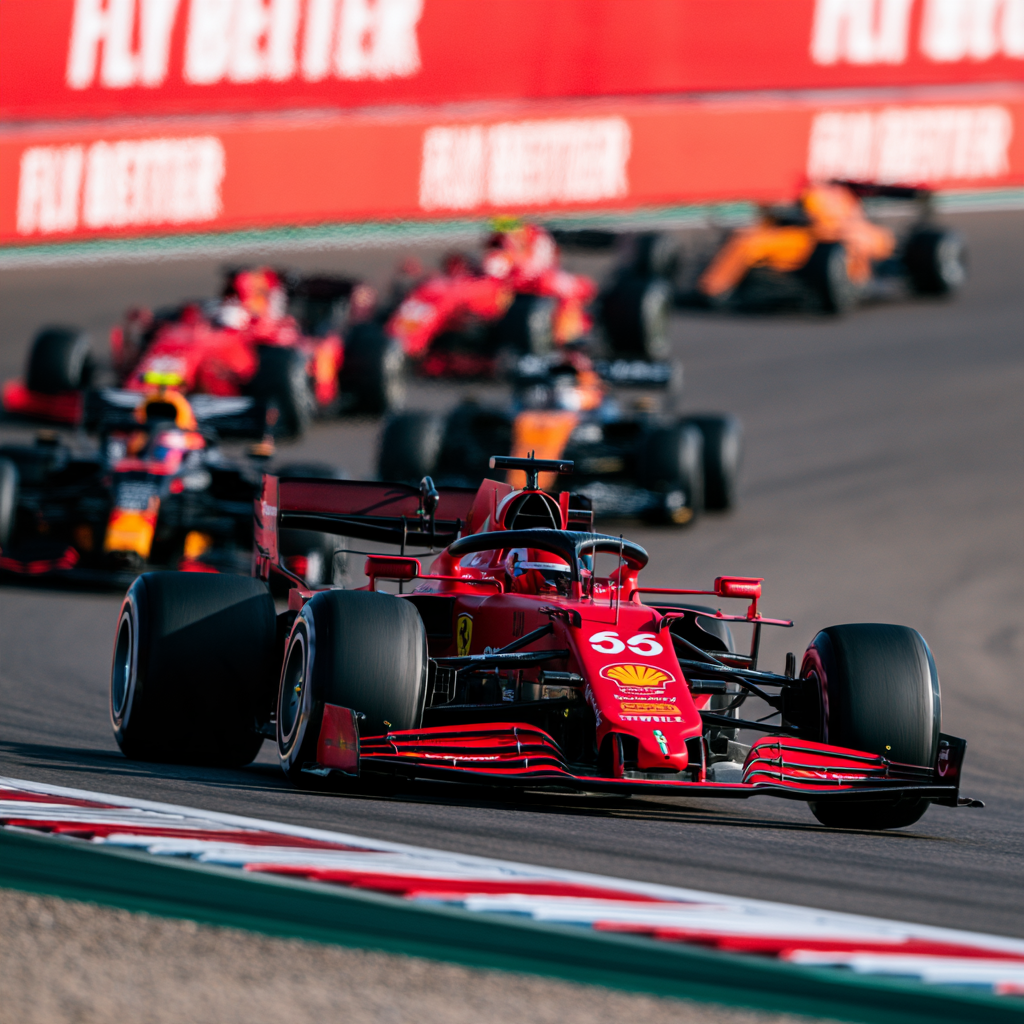
What Is the Formula 1 Theme Song? Fleetwood Mac’s “The Chain” Explained
The famous music associated with British Formula 1 television coverage is the instrumental ending of Fleetwood Mac’s “The Chain”.
The recording appeared on the band’s 1977 album Rumours.
The BBC began using its dramatic bass-driven outro for Formula 1 coverage in 1978.
And the association became so powerful that generations of British motorsport fans recognise the music almost immediately.
But there’s a surprising detail.
“The Chain” wasn’t originally written for racing.
It’s a song about damaged relationships, loyalty and the difficulty of keeping people together.
That makes its eventual connection with Formula 1 particularly unusual.
What part of “The Chain” is used for Formula 1?
The dramatic instrumental outro.
The complete song begins relatively quietly.
Acoustic guitar and vocals establish a tense atmosphere.
The arrangement gradually develops.
Then, near the ending, John McVie’s bassline introduces something completely different.
The rhythm becomes more urgent.
The instruments build.
Lindsey Buckingham’s electric guitar adds enormous energy.
That final section became the famous Formula 1 theme.
It’s particularly effective for racing because the music sounds as though it’s accelerating.
When did Formula 1 start using it?
The BBC adopted the recording during the early period of its Formula 1 television coverage.
The music became closely connected with the sport in Britain.
For viewers, hearing the instrumental section meant the programme was beginning.
Eventually the association became almost automatic.
The bassline could create excitement before a single racing car appeared.
That is one of the strongest examples of an existing pop recording becoming the permanent musical identity of a television programme.
Why did the BBC choose “The Chain”?
Because the ending creates extraordinary anticipation.
Formula 1 coverage needs to communicate speed, danger and competitive intensity.
The instrumental section does that naturally.
The bassline begins with restraint.
Then the drums and guitar increase the energy.
The music feels increasingly urgent.
That makes it perfect for opening footage of racing cars preparing for a Grand Prix.
It creates the emotional feeling of a race before the action has started.
Is the song still used today?
The association has survived several changes in British broadcasting.
When ITV took over Formula 1 coverage in 1997, the familiar music was replaced.
But the BBC restored it when Formula 1 returned to the broadcaster in 2009.
Channel 4 subsequently retained the recording when it began broadcasting Formula 1 in 2016.
That continuity demonstrates how strongly audiences connected the music with the sport.
Broadcasters can change.
Presenters can change.
Drivers can retire.
But the familiar bassline remains part of British F1 culture.
Who wrote “The Chain”?
All five members of Fleetwood Mac’s classic Rumours lineup received songwriting credits.
Those members were:
Stevie Nicks
Lindsey Buckingham
Christine McVie
John McVie
Mick Fleetwood.
That is particularly unusual.
Most songs on Rumours were primarily associated with individual writers.
“The Chain” developed through contributions from several different ideas and recording sessions.
It became something like a musical collaboration assembled from separate pieces.
Was “The Chain” created from unfinished songs?
Yes.
The recording developed from musical fragments created during the Rumours sessions.
Different members contributed ideas that had originally belonged to other material.
The band combined those sections into a new composition.
That’s one reason the song contains such a dramatic musical change near the ending.
The acoustic opening and instrumental outro have different characters.
Yet the finished recording works remarkably well.
The process also explains the collective songwriting credit.
The song genuinely emerged from the contributions of several members.
What does “The Chain” actually mean?
The difficulty of preserving emotional and personal connections.
Fleetwood Mac were experiencing complicated relationships during the creation of Rumours.
Stevie Nicks and Lindsey Buckingham had separated.
John and Christine McVie’s marriage was ending.
Mick Fleetwood was also dealing with personal difficulties.
The band continued working together despite the tension.
“The Chain” can therefore be understood as a song about relationships that are damaged but not completely broken.
The chain represents connection.
Loyalty.
And perhaps the determination to continue even when those connections become painful.
Why is that meaning so appropriate for Fleetwood Mac?
Because the band remained together through enormous personal conflict.
Rumours became one of the most successful albums in music history.
But the circumstances surrounding its creation were emotionally difficult.
Members were writing songs about relationships involving other people in the same band.
Then performing those recordings together.
“The Chain” became an especially powerful symbol of that situation.
The members were connected professionally even while their personal relationships were changing.
The music almost sounds like the group trying to hold itself together.
Why is the bassline so famous?
Because John McVie’s performance is simple and powerful.
The bass creates the foundation for the instrumental ending.
It’s immediately recognisable.
The rhythm builds naturally.
Then the rest of the band increases the intensity.
This is an excellent example of how a bassline can define an entire recording.
It doesn’t need to contain dozens of notes.
It simply needs the right musical idea.
For Formula 1 fans, that bassline may now be even more recognisable than the original song’s vocal sections.
What album is “The Chain” on?
Rumours.
Released in 1977.
The album also includes:
Dreams
Go Your Own Way
Don’t Stop
You Make Loving Fun
Gold Dust Woman.
Rumours became one of the most commercially successful albums ever released.
Its mixture of sophisticated songwriting and personal emotional conflict helped give it extraordinary longevity.
“The Chain” is particularly interesting because it combines the band’s collaborative musicianship with the album’s central emotional themes.
Is “The Chain” actually a rock song?
Yes.
More specifically, it combines folk rock, pop rock and harder electric-rock elements.
The acoustic opening is relatively restrained.
The outro moves towards a heavier sound.
That gives the recording an unusually broad musical identity.
It can work as an emotional classic-rock song.
But its final section also works perfectly as dramatic sports music.
The two identities exist inside one recording.
Songs like the Formula 1 theme
If you enjoy the instrumental buildup, try:
Fleetwood Mac – Go Your Own Way
Dire Straits – Money for Nothing
The Who – Baba O’Riley
Muse – Knights of Cydonia
Led Zeppelin – Kashmir
Boston – Foreplay/Long Time
Pink Floyd – Run Like Hell
The Alan Parsons Project – Sirius
These recordings combine different elements of dramatic rock and memorable instrumental arrangements.
Why does the music work so well with racing footage?
Because it creates movement.
The rhythm becomes increasingly urgent.
The arrangement adds intensity.
The listener anticipates a climax.
That mirrors the emotional experience of preparing for a race.
Formula 1 contains enormous technical complexity.
But the excitement is immediate.
Cars accelerate.
Drivers compete.
Small decisions have enormous consequences.
“The Chain” communicates that energy without needing lyrics.
What is the Formula 1 theme song?
The instrumental outro of Fleetwood Mac’s “The Chain”.
The song originally appeared on Rumours in 1977.
The BBC adopted it for Formula 1 coverage in 1978.
It subsequently became one of the most recognisable pieces of music in British motorsport.
And perhaps the strangest part is its original subject.
A song about keeping complicated relationships together became the soundtrack to cars trying desperately to get ahead of one another.
Somehow, it works perfectly.