What Does R.E.M.’s “Nightswimming” Mean? The Real Story
R.E.M.’s “Nightswimming” is about nostalgia, the passing of youth and memories of friendships that can never be recreated exactly.
The song appeared on the band’s 1992 album Automatic for the People.
Its lyrics are closely connected with experiences involving members of R.E.M. and their friends in Athens, Georgia.
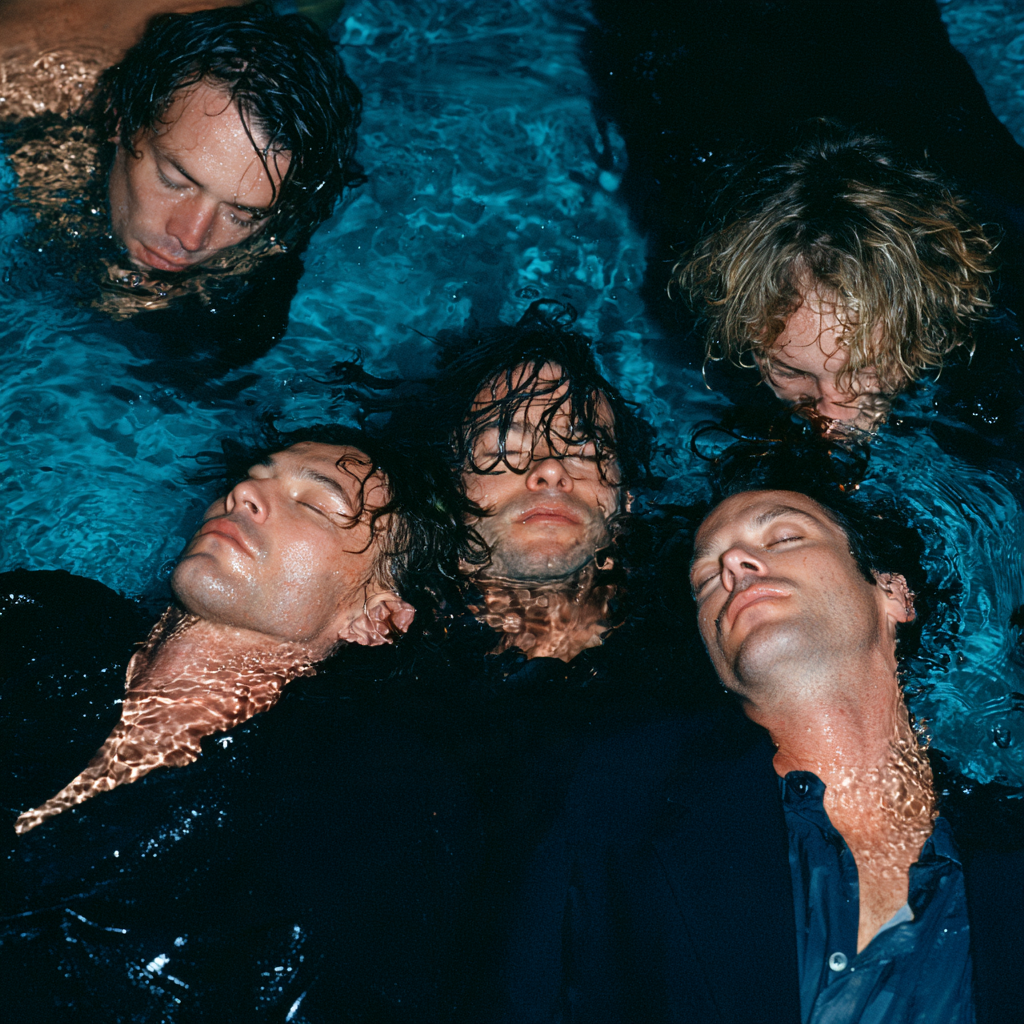
During their younger years, they would sometimes go swimming late at night after parties and visits to clubs.
Those experiences became part of the song’s emotional foundation.
But “Nightswimming” isn’t simply about swimming.
It’s about remembering a period of life that felt free, exciting and impossible to preserve.
Who wrote Nightswimming?
R.E.M., with Michael Stipe providing the lyrics.
Mike Mills developed the central piano music.
The song is particularly unusual within the band’s catalogue because the instrumental arrangement is restrained.
Rather than relying on the guitar-driven sound associated with many R.E.M. recordings, it places considerable emphasis on piano and voice.
That makes it one of the band’s most intimate songs.
Was the song inspired by real experiences?
Yes, at least partly.
Members of R.E.M. have discussed a period when they would spend evenings with friends around Athens, Georgia.
The social scene was relatively small.
People attended parties and clubs.
Afterwards, they sometimes went swimming.
Those experiences created memories that became increasingly important as the musicians grew older.
The song reflects that sense of looking backwards.
What does Nightswimming actually mean?
The difficulty of returning to an earlier period of life.
The narrator remembers an experience associated with youth.
The details seem ordinary.
Water.
Nighttime.
Friends.
But the emotional meaning becomes much larger.
The moment belongs to the past.
The people involved may have changed.
And the freedom associated with that experience cannot simply be recreated.
That’s what gives the recording its melancholy character.
Is the song literally about skinny dipping?
Partly.
Mike Mills and Peter Buck have discussed real experiences involving nighttime swimming without clothing.
Those memories helped establish the subject.
But Michael Stipe has described the song in broader emotional terms.
It’s about innocence, memory and the process of losing or attempting to preserve something associated with youth.
That makes the composition more than a literal description of one evening.
Who plays the piano?
Mike Mills.
He developed the musical idea while experimenting at a piano.
Stipe heard the melody and encouraged him to keep playing.
The arrangement became the foundation of the finished song.
Mills later described the composition as developing naturally from that moment.
It’s an interesting creative story because the music sounds so carefully constructed.
Sometimes a memorable melody begins with somebody simply playing an idea repeatedly.
Was the recording made on a famous piano?
Yes.
The recording was made using the same piano associated with Derek and the Dominos’ “Layla”.
Mills discussed that connection in a 2017 interview.
He noted that the instrument had an important musical history.
That makes “Nightswimming” part of an unexpected connection between two very different recordings.
One became famous through a dramatic rock arrangement.
The other through restrained piano-led songwriting.
Who arranged the strings?
John Paul Jones.
He became famous as the bassist and multi-instrumentalist of Led Zeppelin.
But he has also worked extensively as an arranger and producer.
His contribution gives “Nightswimming” additional emotional depth.
The strings don’t overwhelm the piano.
Instead, they expand the atmosphere around the vocal.
That makes the recording feel increasingly reflective as it develops.
Why does the song sound so sad?
Because the music creates a sense of emotional distance.
The piano melody repeats gently.
Stipe’s vocal is restrained.
And the arrangement leaves considerable space.
The lyrics describe experiences that may have been happy at the time.
But the narrator is remembering them from another stage of life.
That creates the sadness.
The original events weren’t necessarily tragic.
The melancholy comes from knowing they can’t happen in exactly the same way again.
Is Nightswimming about a relationship?
It can be interpreted through romantic memory.
But its meaning is broader.
The recording is also about friendship, youth and shared experiences.
That makes it particularly accessible.
Listeners don’t need to have experienced one specific kind of relationship.
They may connect it with school.
University.
Childhood friends.
Or any period of life they can no longer return to.
What album is Nightswimming on?
Automatic for the People, released in 1992.
The album became one of R.E.M.’s most acclaimed recordings.
It also includes “Everybody Hurts”, “Man on the Moon”, “Drive” and “Find the River”.
The songs explore different aspects of memory, mortality and emotional experience.
“Nightswimming” belongs naturally within that larger atmosphere.
It’s particularly effective when heard near the end of the album.
Why is the song different from other R.E.M. hits?
Because the arrangement is unusually intimate.
Listeners familiar with “Losing My Religion” or “The One I Love” may expect prominent guitar and rhythm.
“Nightswimming” uses a different approach.
The piano is central.
The vocal communicates the story.
And the strings add atmosphere.
That makes the recording closer to a restrained singer-songwriter ballad than a conventional alternative-rock single.
What genre is Nightswimming?
Alternative rock and chamber-pop-influenced balladry are useful descriptions.
Its arrangement also contains elements associated with orchestral pop.
The recording is unusually restrained compared with much of the alternative rock released during the early 1990s.
That helped distinguish it.
The music feels timeless because it doesn’t rely heavily on the production trends of one decade.
Songs like Nightswimming
Try:
- R.E.M. – Find the River
- R.E.M. – At My Most Beautiful
- The Smashing Pumpkins – Thirty-Three
- The Blue Nile – The Downtown Lights
- The National – About Today
- Bon Iver – Holocene
- Sufjan Stevens – Fourth of July
- Bruce Springsteen – The River
- Lorde – Ribs
- Fleetwood Mac – Landslide
These recordings explore different aspects of nostalgia, memory and emotional change.
For another R.E.M. song whose title is frequently misunderstood, Radar’s explanation of “Losing My Religion” is an ideal next read.
Why does Nightswimming become more emotional with age?
Because the listener’s relationship with nostalgia changes.
A teenager may hear it as a beautiful, quiet song.
Someone in their thirties may connect it with friends they no longer see regularly.
An older listener may remember an entire period of life that has disappeared.
The composition doesn’t need to change.
The listener brings new memories to it.
That’s one reason nostalgic songs can develop greater emotional power over time.
What does R.E.M.’s Nightswimming really mean?
The beauty of remembering something that can never happen in exactly the same way again.
The recording draws partly from real experiences involving members of R.E.M. and their friends in Athens.
But its emotional message is universal.
People grow older.
Friendships change.
And ordinary moments become extraordinary memories.
“Nightswimming” captures that experience through one of the most beautiful and restrained recordings in R.E.M.’s catalogue.