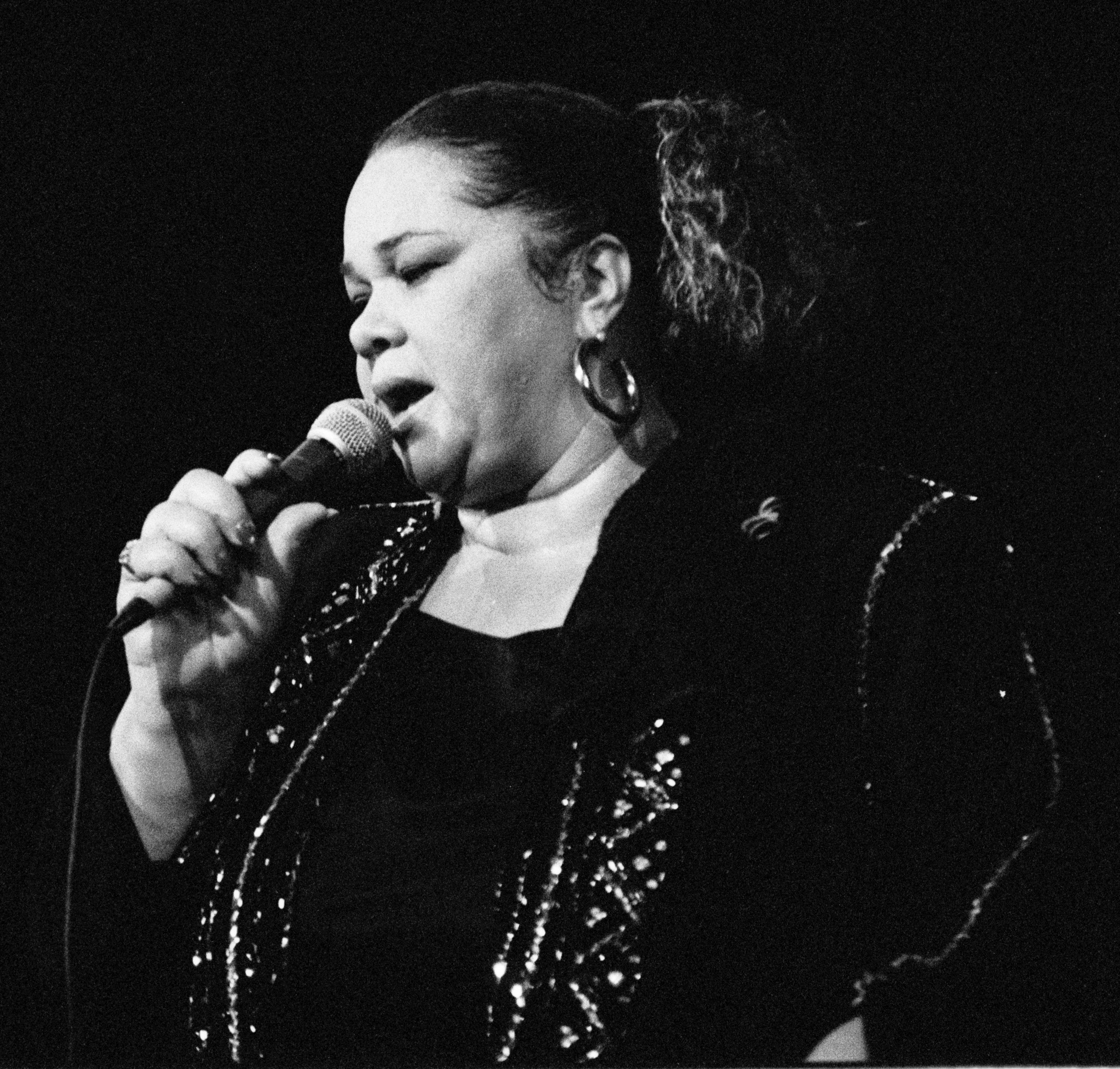
What Does Etta James’ “I’d Rather Go Blind” Really Mean?
“I’d Rather Go Blind” is about knowing the person you love is leaving you for somebody else and finding the reality so painful that you would rather not see it happen.
But the story behind the song is almost as remarkable as the recording.
Etta James began developing “I’d Rather Go Blind” after hearing her friend Ellington “Fugi” Jordan working on the song while she visited him in prison.
James helped complete it.
She then recorded it at the legendary FAME Studios in Muscle Shoals, Alabama, in 1967.
Nearly 60 years later, it is again finding younger listeners through social media. A September 2026 catalogue-trend roundup identified the recording as one of the older songs currently enjoying renewed attention.
Who wrote “I’d Rather Go Blind”?
The story is slightly complicated.
Ellington Jordan had begun developing the song.
James heard what he was working on while visiting him in prison and helped finish it.
However, James explained in her autobiography that she gave her writing credit to her then-partner Billy Foster for tax reasons.
The official songwriting history therefore doesn’t tell the entire creative story.
What is the song actually about?
The narrator realises her relationship is ending.
She can see that the person she loves has emotionally moved toward somebody else.
The devastating part isn’t simply:
You’re leaving me.
It’s:
I can see you leaving me.
That distinction explains the title.
She would rather lose her sight than witness the relationship disappearing in front of her.
Obviously, it isn’t a literal wish for blindness.
It’s emotional exaggeration.
And blues music is extremely good at emotional exaggeration.
Why does Etta James sound so convincing?
Because James rarely sounded like she was merely performing words.
Her voice could move between vulnerability and enormous power without warning.
On “I’d Rather Go Blind”, she doesn’t need to scream.
The restraint makes it hurt more.
The band gives her enormous space.
The organ sits underneath.
The rhythm barely pushes forward.
Everything exists to support the vocal.
Was it originally a huge hit?
Interestingly, “I’d Rather Go Blind” was originally the B-side of “Tell Mama”.
That feels almost absurd today.
The supposed secondary track eventually became one of the defining recordings of James’ career.
This happens surprisingly often in music.
The industry chooses the single.
Listeners choose the classic.
What genre is “I’d Rather Go Blind”?
Blues.
Soul.
Deep soul.
All three descriptions work.
It came from a period when blues, Southern soul and R&B constantly overlapped.
The Muscle Shoals recording environment is important here.
FAME Studios became one of the great centres of Southern soul, helping create recordings that sounded emotionally raw without becoming musically messy.
Who has covered “I’d Rather Go Blind”?
A lot of people.
The song became a standard rather than simply an Etta James recording.
Versions have been performed or recorded by artists including:
Rod Stewart
Beyoncé
Beth Hart
Dua Lipa
Christine McVie
Joe Bonamassa.
Beyoncé’s connection is particularly interesting because she portrayed James in the 2008 film Cadillac Records and performed “I’d Rather Go Blind” for the soundtrack.
Why is it trending again?
Because older emotionally powerful songs work extremely well on short-form video.
You don’t need to know the recording is from 1967.
You hear the voice.
You understand the emotion.
Then you search for the song.
Streaming has removed much of the psychological barrier between old and new music.
A teenager doesn’t have to walk into a record shop and deliberately browse the blues section.
An Etta James recording simply appears between two songs released last month.
Songs like “I’d Rather Go Blind”
If you’ve discovered Etta James through this song, try:
Etta James – At Last
Otis Redding – I’ve Been Loving You Too Long
Aretha Franklin – Ain’t No Way
Nina Simone – I Put a Spell on You
Sam Cooke – Bring It on Home to Me
Percy Sledge – When a Man Loves a Woman
Gladys Knight & The Pips – Neither One of Us
Al Green – How Can You Mend a Broken Heart?
Dusty Springfield – I Just Don’t Know What to Do with Myself
Amy Winehouse – Love Is a Losing Game
That last connection is particularly interesting.
A lot of what people loved about Amy Winehouse existed in conversation with this much older tradition of soul singers making heartbreak sound completely immediate.
What does “I’d Rather Go Blind” really mean?
Sometimes knowing a relationship has ended isn’t the worst part.
Watching it end is.
Etta James turned that feeling into a recording in 1967.
Nearly six decades later, people are still discovering it.
Heartbreak hasn’t changed very much.