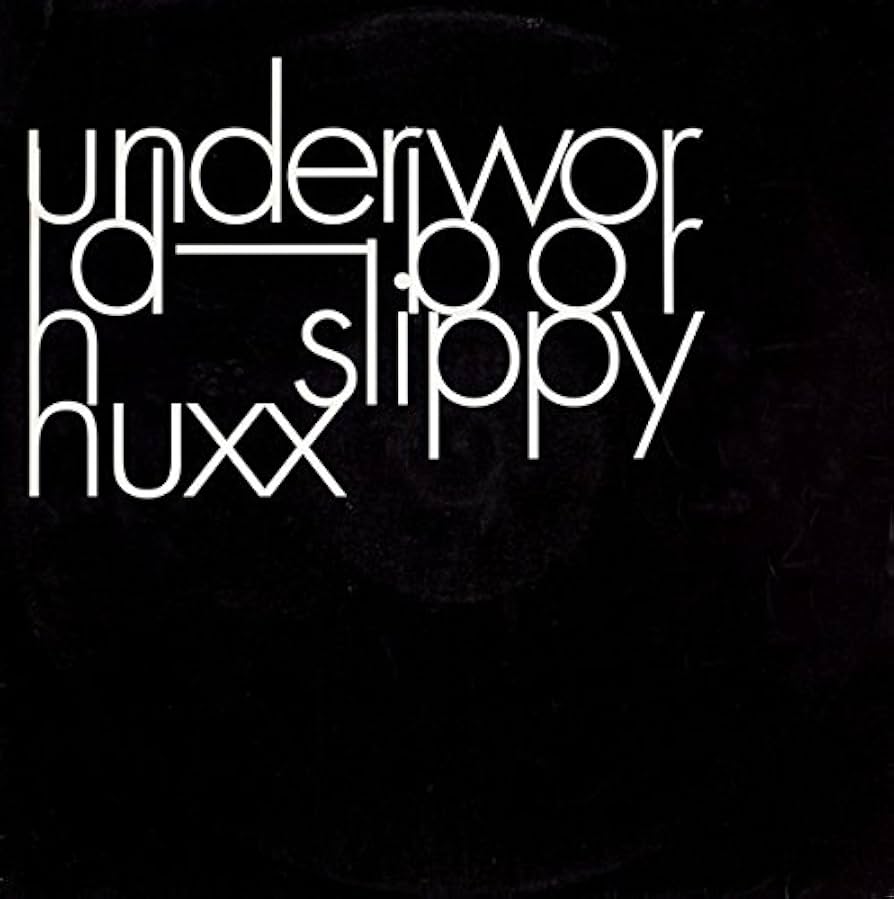
Underworld “Born Slippy .NUXX” Meaning: It Wasn’t a Drinking Anthem
Underworld’s “Born Slippy .NUXX” is not a celebration of getting drunk.
Almost the opposite.
Karl Hyde wrote its fragmented lyrics after a night of heavy drinking.
The famous repeated reference to lager reflected his own increasingly destructive relationship with alcohol.
Then something strange happened.
The song became one of Britain’s great drinking anthems.
People raised beer cans and shouted along.
Hyde was horrified.
The euphoric music had transformed a song about self-destruction into something audiences heard as celebration.
What is “Born Slippy .NUXX” actually about?
A drunken night.
Hyde wrote in fragments.
He observed people, streets and situations while drinking.
The lyrics behave like intoxicated memory.
Images appear.
Disappear.
Repeat.
There isn’t one clean narrative.
That was intentional.
Hyde has described trying to capture the way a drunk person experiences the world as disconnected moments rather than a clear sequence.
The recording therefore sounds chaotic because the narrator’s perspective is chaotic.
Why does he keep repeating “lager”?
Because the repetition emerged naturally from the performance.
Hyde’s vocal was recorded with a loose, improvisational character.
When he lost track, phrases could repeat.
The famous lager sequence became one of those moments.
Listeners heard it as a chant.
Hyde heard something darker.
He later described the song as connected with self-loathing around his alcohol use.
Is “Born Slippy” the actual title?
This gets confusing.
There was an instrumental track called “Born Slippy”.
“Born Slippy .NUXX” was a different recording.
It originally appeared as a B-side.
The vocal version became the famous one after Trainspotting.
People usually shorten its name to “Born Slippy”.
Technically, that can refer to the wrong track.
What does NUXX mean?
It functions as a version identifier rather than part of a lyrical concept.
Underworld often used unusual naming conventions for mixes and recordings.
The key point is simple.
If you want the famous vocal recording from Trainspotting, search for “Born Slippy .NUXX”.
Why is it associated with Trainspotting?
Danny Boyle used it during the film’s ending.
Underworld initially hesitated because they worried the movie might glorify drug use.
Friends had described Irvine Welsh’s novel through its hedonistic elements.
Hyde and Rick Smith did not want their music turned into a flag for intoxication.
Once they understood Boyle’s approach, the connection made more sense.
The film itself also contains the contradiction between exhilaration and damage.
Why is the song perfect for the ending?
Because it sounds euphoric while containing darkness.
Trainspotting operates the same way.
The characters can be:
funny
charismatic
exciting
and catastrophically self-destructive.
The music captures that emotional collision.
The enormous synthesizer chords suggest freedom.
Hyde’s words describe somebody losing control.
Neither cancels the other.
That ambiguity is exactly what the film needed.
Was the song already successful before the movie?
It had an underground following.
But Trainspotting transformed it into a mainstream phenomenon.
The recording eventually reached No. 2 in the UK.
For many people, the film and song became inseparable.
It’s difficult to hear the opening synthesizer without imagining the world of Trainspotting.
That is one of the strongest soundtrack associations of the 1990s.
What does the title “Born Slippy” mean?
Hyde has connected the title with a greyhound name.
That fits Underworld’s habit of collecting phrases from everyday environments.
The title itself is less important to the meaning than listeners often assume.
The emotional content comes from the performance and lyrics rather than one secret definition.
Is the song techno?
Broadly, yes.
It belongs to the British electronic dance-music world of the mid-1990s.
Underworld also draw from:
house
progressive electronic music
ambient music
and experimental pop.
The band’s music frequently ignores strict genre boundaries.
“Born Slippy .NUXX” works in clubs.
But it also functions as a dramatic song rather than simply a DJ tool.
Why did audiences interpret it as a party anthem?
Because the music is enormous.
Context can overpower lyrics.
A crowd hears:
massive synthesizers
four-to-the-floor rhythm
a repeated drinking word.
The easiest interpretation is:
party.
The fact that the songwriter was describing the emotional consequences of alcoholism can disappear completely.
That’s a fascinating example of music changing the meaning of words.
What happened to Karl Hyde?
Hyde eventually stopped drinking.
He has spoken openly about his problems with alcohol.
Over time, his relationship with the song changed too.
He became less frustrated by audiences celebrating it.
A song leaves the songwriter eventually.
People attach their own experiences.
For thousands of listeners, “Born Slippy” became associated with nights out, friendships and youth.
That meaning exists beside Hyde’s original one.
Songs like “Born Slippy .NUXX”
Try:
Underworld – Rez
Underworld – Cowgirl
Orbital – Belfast
The Chemical Brothers – Star Guitar
Leftfield – Open Up
Faithless – Insomnia
The Prodigy – No Good (Start the Dance)
New Order – Blue Monday
These recordings provide an introduction to different sides of British electronic music.
Why has it lasted?
Because it contains contradiction.
Sad lyrics.
Joyful music.
Underground electronic production.
Massive pop-cultural recognition.
A film about heroin.
A song about alcohol.
And crowds celebrating both.
The song doesn’t resolve those contradictions.
That’s why it still feels powerful.
What does “Born Slippy .NUXX” really mean?
Karl Hyde was documenting a destructive drinking experience.
The music turned that confession into euphoria.
Then Trainspotting transformed the recording into a generational anthem.
If you’ve always heard “lager, lager, lager” as a party chant, listen again.
The person singing it wasn’t celebrating.
He was asking himself what he was becoming.