Talking Heads “Once in a Lifetime” Meaning: What Does “How Did I Get Here?” Mean?
Talking Heads’ “Once in a Lifetime” is about waking up one day and wondering how you ended up living your own life.
A house.
A partner.
A job.
Possessions.
Responsibilities.
You may have acquired all of them gradually.
Then suddenly you look around and think:
Was this actually what I chose?
David Byrne has described the idea as people operating partly on autopilot.
Life happens.
Years pass.
Then you finally become conscious of where you ended up.
What does “How did I get here?” mean?
Exactly that moment of self-awareness.
Most life decisions don’t happen in one dramatic scene.
You accept a job.
Move house.
Begin a relationship.
Follow routines.
Months become years.
Eventually the accumulated decisions become a complete life.
The narrator suddenly observes that life almost like an outsider.
He recognises the possessions.
But not necessarily the process that produced them.
That creates the song’s strange mixture of comedy and existential anxiety.
What does “same as it ever was” mean?
Repetition.
Human beings develop routines.
Societies develop routines.
Life feels constantly different while also repeating the same patterns.
The phrase sounds comforting at first.
Then unsettling.
If everything remains the same, are we actively living?
Or simply repeating behaviour?
Byrne has connected the song with the idea of moving through life half-awake.
Is the song about a midlife crisis?
That’s one useful interpretation.
The narrator appears to examine the conventional signs of success and discover they haven’t necessarily provided meaning.
But the idea applies beyond middle age.
A university student can experience it.
Someone moving city can experience it.
Anybody can suddenly realise that the path they followed wasn’t consciously designed.
The song is really about awareness.
Why does David Byrne sound like a preacher?
Because he deliberately borrowed from sermon-like vocal patterns.
The delivery resembles a religious speaker addressing a congregation.
Talking Heads were exploring African and African-American musical influences during the Remain in Light period.
Repetition became central.
Byrne’s vocal works almost like another rhythmic instrument.
The result feels like a sermon about ordinary suburban life.
Which is wonderfully strange.
Who produced “Once in a Lifetime”?
Talking Heads worked with Brian Eno.
The Remain in Light sessions pushed the band towards layered rhythmic construction.
Rather than writing every song as a conventional guitar-band composition, they built music from repeated patterns.
Bass.
Percussion.
Guitar.
Keyboards.
Vocals.
Each element behaves almost independently.
Together they create a hypnotic groove.
Why does the song sound so repetitive?
Because repetition is the point musically as well as lyrically.
The narrator is trapped inside cycles.
The music is built from cycles.
Patterns repeat.
Small changes appear.
Then disappear.
That gives the recording a structural relationship with its meaning.
Life loops.
Music loops.
Same as it ever was.
What is the water imagery about?
Water appears repeatedly throughout the song.
Flowing water suggests forces larger than individual human control.
People can imagine themselves making deliberate choices.
But they are also carried by circumstances.
Culture.
Family.
Economics.
History.
Chance.
The water becomes a useful metaphor for movement that continues whether the narrator fully understands it or not.
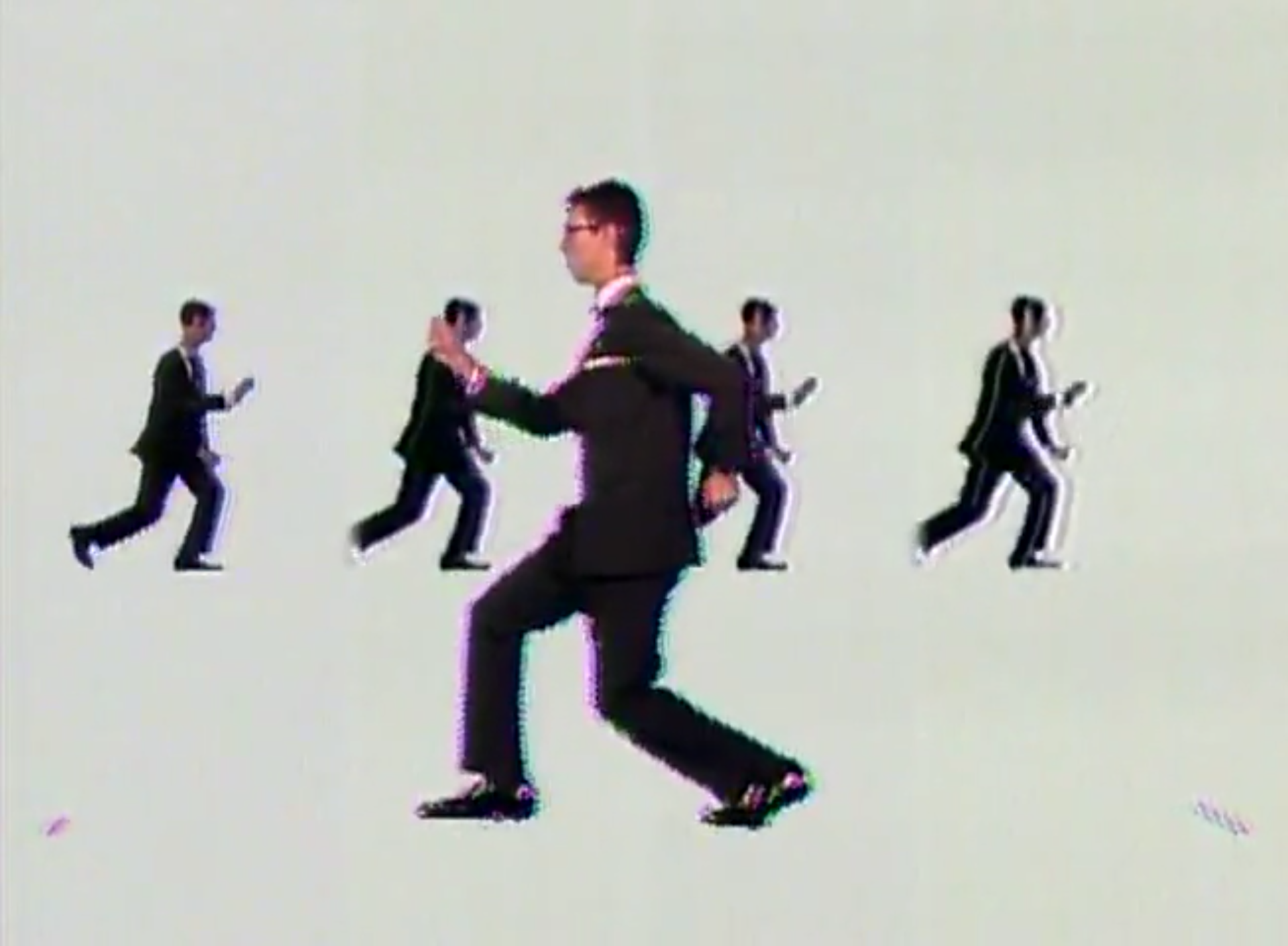
Why is the music video famous?
Because Byrne’s movement is unlike conventional pop choreography.
He jerks.
Shakes.
Gestures.
Almost behaves like somebody experiencing a strange revelation.
The video was influenced by different forms of physical performance and religious expression.
His body seems disconnected from ordinary social behaviour.
That perfectly matches the song’s narrator.
A person suddenly realising how weird ordinary life actually is.
What album is it on?
Remain in Light.
Released in 1980.
The album became one of Talking Heads’ most celebrated works.
It combines:
new wave
funk
African rhythmic influence
experimental rock
and studio technology.
“Once in a Lifetime” became its most recognisable song.
But the entire record rewards listening as one connected rhythmic project.
Was the song a huge hit immediately?
Not everywhere.
Its cultural reputation grew over time.
The video became especially influential through early MTV-era exposure.
Eventually the song became one of Talking Heads’ defining recordings.
That’s another reminder that a recording’s long-term importance isn’t always obvious from its original chart position.
What genre is “Once in a Lifetime”?
New wave.
Art rock.
Funk-influenced experimental pop.
There are also influences from Afrobeat and other African rhythmic traditions.
Talking Heads were increasingly moving beyond the narrow punk and new-wave scenes that had initially surrounded them.
The recording captures that expansion.
Songs like “Once in a Lifetime”
Try:
Talking Heads – Born Under Punches
David Bowie – Ashes to Ashes
Peter Gabriel – Sledgehammer
XTC – Making Plans for Nigel
Devo – Jocko Homo
Brian Eno – King’s Lead Hat
Paul Simon – You Can Call Me Al
LCD Soundsystem – All My Friends
These recordings combine intellectual ideas with unusual rhythmic or pop arrangements.
Why does the song feel more relevant as you get older?
Because the central question becomes easier to understand.
At seventeen, adulthood may feel like something you deliberately construct.
Later, you realise how much happened accidentally.
One decision led to another.
Opportunities appeared.
Relationships changed.
Then you looked around.
The house.
The car.
The job.
The routine.
How did I get here?
What does “Once in a Lifetime” really mean?
Pay attention.
Life can happen while you’re busy following the next expected step.
That doesn’t mean the life is bad.
The narrator’s house may be beautiful.
His partner may be wonderful.
The question is whether he consciously understands the life he’s living.
Talking Heads turned that existential crisis into an irresistible groove.
Same as it ever was.