Meta VR Glasses: Price, Release Date, Specs and Everything You Need to Know
Meta has unveiled what could be one of the biggest changes to virtual reality hardware in years: Meta VR Glasses.
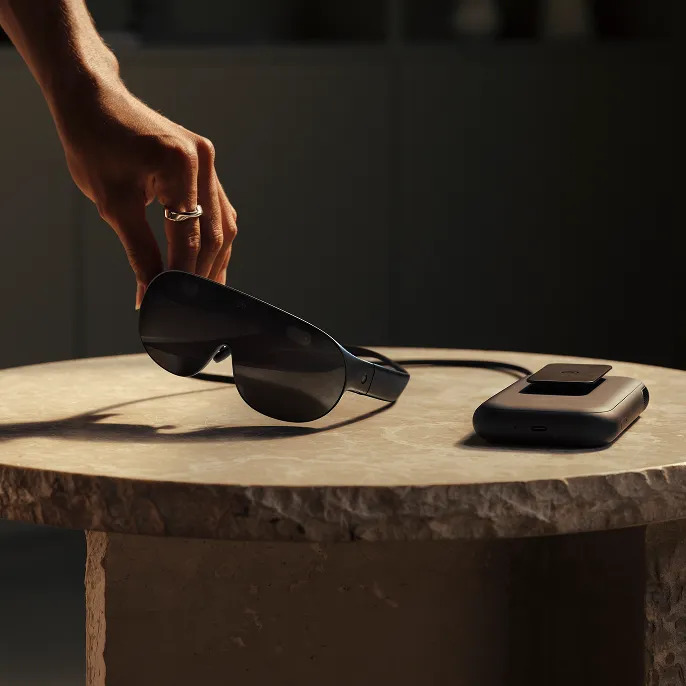
Instead of another large headset strapped to your face, Meta has squeezed much of the VR experience into something significantly closer to a pair of oversized glasses.
The new Meta VR Glasses weigh around 100 grams and feature 5K displays, spatial audio, hand and eye controls, Meta AI, support for thousands of Quest games and the ability to turn almost anywhere into a huge virtual cinema or computer workspace.
Meta announced the device at Meta Connect on September 23, 2026, with a launch planned for spring 2027.
And there is already a price.
Meta VR Glasses will cost $1,299.99 in the US.
What are Meta VR Glasses?
Meta VR Glasses are a new type of virtual reality device designed to provide many of the capabilities of a traditional VR headset without requiring a large headset and head strap.
Meta describes the device as capable of becoming a personal cinema, gaming console, workspace and virtual courtside seat.
The biggest change is how the hardware has been divided.
Instead of putting the processor, battery, displays and sensors entirely on your head, Meta has created a two-part system.
The glasses contain the screens and sensors, while a separate puck contains much of the computing hardware, battery and storage.
The puck connects to the glasses through an optical cable and can be placed in a pocket or clipped to a bag.
Moving these components away from your head has allowed Meta to dramatically reduce the weight of the device.
How much do Meta VR Glasses weigh?
Meta says its new VR Glasses weigh around 100 grams.
That makes them approximately five times lighter than the Meta Quest 3, according to the company.
The difference could be incredibly important.
Weight has always been one of the biggest compromises associated with VR headsets. Wearing several hundred grams of hardware on your face for an extended movie, work session or game can become uncomfortable.
At around 100 grams, Meta VR Glasses move considerably closer to conventional eyewear.
They aren’t exactly a normal pair of sunglasses yet, but the direction of travel is becoming clear.
Meta VR Glasses specs
The headline specifications announced by Meta include:
- Around 100g glasses weight
- 5K Infinite Display
- Micro-OLED display technology
- 37 pixels per degree
- Custom pancake lenses
- Dolby Vision
- Dolby Atmos spatial audio
- Snapdragon Reality Elite processor
- Up to three hours of continuous high-resolution media playback
- 45W fast charging
- Full-colour passthrough
- Eye tracking
- Hand tracking
- Meta AI integration
- External compute and battery puck
The frames themselves use a magnesium alloy that Meta says provides rigidity while helping manage heat.
Meta is turning VR into a portable cinema
One of the strongest parts of Meta’s pitch isn’t actually traditional VR gaming.
It’s watching movies.
Meta VR Glasses will become the first IMAX Enhanced-certified VR device, according to Meta, allowing viewers to watch selected films using IMAX’s expanded aspect ratio without needing an enormous physical cinema screen.
The combination of the 5K micro-OLED display, Dolby Vision and Dolby Atmos effectively allows the glasses to create an enormous private cinema wherever you happen to be sitting.
That could be particularly interesting for travelling.
Instead of watching Netflix or YouTube on a laptop screen during a flight, for example, you could theoretically put on the glasses and watch content on what appears to be an enormous cinema display.
Disney is bringing 3D movies to Meta VR
Meta has also formed a significant partnership with Disney.
Disney+ subscribers in selected countries will be able to stream films including Marvel’s The Avengers and Black Panther in 3D.
There will also be themed virtual environments including Avengers Tower and locations inspired by Star Wars.
Meta is taking the concept even further with what it calls VR Enhanced films.
Avengers: Infinity War and Star Wars: A New Hope are among the titles planned for the Disney Immersive Cinema by ILM app when the glasses launch.
Instead of simply displaying a movie on a virtual screen, parts of the environment around the viewer will become involved in the experience using 3D visuals, effects and spatial audio.
It starts to blur the distinction between watching a film and entering one.
Netflix-style streaming could become a major VR use case
Meta is also working with a large number of streaming platforms.
The company has announced support or partnerships involving services including:
- YouTube
- Prime Video
- HBO Max
- Paramount+
- Peacock
- Crunchyroll
- Plex
- AMC+
- Tubi
- DIRECTV
Meta says thousands of 2D and 3D films are expected to be available internationally by the launch of the VR Glasses.
If Meta can get the experience right, entertainment rather than gaming could become one of the strongest reasons to own the device.
Sports could be huge on Meta VR Glasses
Live sport is another area Meta is pushing heavily.
Apps including the NBA, MLB and ESPN will be available, while Meta is working on immersive sports broadcasts offering 8K streaming and 180-degree video.
The company says Meta VR Glasses will eventually offer more than 100 immersive live sporting events each year through partners including MLB, NBC Sports, TNT Sports and UFC.
Imagine watching an NBA game from what appears to be courtside, or viewing a UFC fight from a position that would normally cost thousands to experience in person.
That could ultimately become one of VR’s most interesting mainstream applications.
Meta VR Glasses will also be a computer
Meta isn’t positioning its new glasses purely as an entertainment device.
They are also designed for productivity.
Users can create one or several giant virtual screens and connect a Mac or Windows PC either wirelessly or through USB-C.
Full-colour passthrough means you can continue seeing your keyboard, phone and physical surroundings while working.
Meta has even developed the ability to turn a desk or table into a virtual keyboard and touchpad.
It is essentially Meta’s answer to the spatial-computing concept: instead of carrying multiple monitors around, the displays exist virtually inside the glasses.
Do Meta VR Glasses need controllers?
Not necessarily.
Meta says users will be able to control the glasses using their eyes, voice and natural hand gestures.
Meta AI is built directly into the operating system, meaning you can ask the glasses to launch applications, search for something or start playing a movie.
Meta says more than 75 games available at launch will work entirely with hand tracking.
Traditional Meta Quest Touch Plus controllers will still be supported for users who want them.
Can Meta VR Glasses play Quest games?
Yes.
Meta says the VR Glasses will have access to the existing Meta Quest catalogue, providing thousands of games and applications rather than requiring developers to create an entirely new software library.
Meta is also preparing new games specifically designed around hand tracking.
Titles announced around the platform include Tetris Effect: Mixed Realities, Phoenix Wright: Ace Attorney – Dual Destinies, Two Point Hospital, Cardmada and Dice Throne Digital.
Xbox Cloud Gaming is supported
Xbox Cloud Gaming is another major feature.
Players will be able to connect a Bluetooth controller and stream Xbox games onto a massive virtual screen.
The glasses can also connect to handheld gaming devices wirelessly or through USB-C, allowing devices that normally have relatively small screens to be played on a much larger virtual display.
Meta is bringing holograms to video calls
Possibly the most futuristic feature Meta demonstrated is holographic calling.
Meta says its technology can create a photorealistic digital representation of a person, including their facial expressions and movements.
Someone wearing Meta VR Glasses can then see the other person’s hologram positioned within the room.
Spatial audio places the person’s voice in the same location as their virtual representation.
Crucially, the other participant doesn’t necessarily need Meta VR Glasses.
Meta says your hologram can still appear on someone’s conventional phone or computer screen and the technology is designed to work with calling platforms including WhatsApp and Zoom.
How long does the Meta VR Glasses battery last?
Meta currently says the external puck can provide up to three hours of continuous high-resolution media playback.
It also supports 45W fast charging.
Three hours should be sufficient for many films and gaming sessions, although battery life could be one of the areas Meta will need to improve if this eventually becomes an all-day computing platform.
The advantage of moving the battery into an external puck is that future versions could potentially increase battery capacity without dramatically increasing the weight sitting on the user’s face.
How much do Meta VR Glasses cost?
Meta VR Glasses will start at $1,299.99 in the United States.
Meta has not provided a UK price in its main launch announcement.
The device will go on sale in spring 2027.
That makes the glasses significantly more expensive than Meta’s mainstream Quest products.
But Meta isn’t really positioning these as another affordable Quest headset.
This appears to be a new premium category sitting somewhere between a VR headset, personal cinema, gaming device and computer.
When are Meta VR Glasses released?
Meta has confirmed that the Meta VR Glasses release date will be sometime in spring 2027.
An exact launch date has not yet been announced.
That means there could still be additional software features, launch titles and partnerships announced before the device reaches consumers.
Are Meta VR Glasses the future of VR?
The most interesting thing about Meta VR Glasses isn’t necessarily the 5K displays or faster processor.
It’s the form factor.
VR has spent years trying to overcome essentially the same problem: people don’t necessarily want to strap a large computer to their face.
Meta’s solution is to move much of that hardware into your pocket.
It isn’t completely wireless, and at around 100 grams these still aren’t ordinary spectacles, but the device represents another significant step towards making immersive computing feel less like wearing a headset.
And Meta’s strategy is noticeably broader than simply creating another gaming machine.
Movies, music, sports, gaming, work, AI and communication are all converging into the same device.
If that direction continues, the long-term successor to today’s smartphone or laptop may not look like another rectangular screen at all.
It may simply look like a pair of glasses.