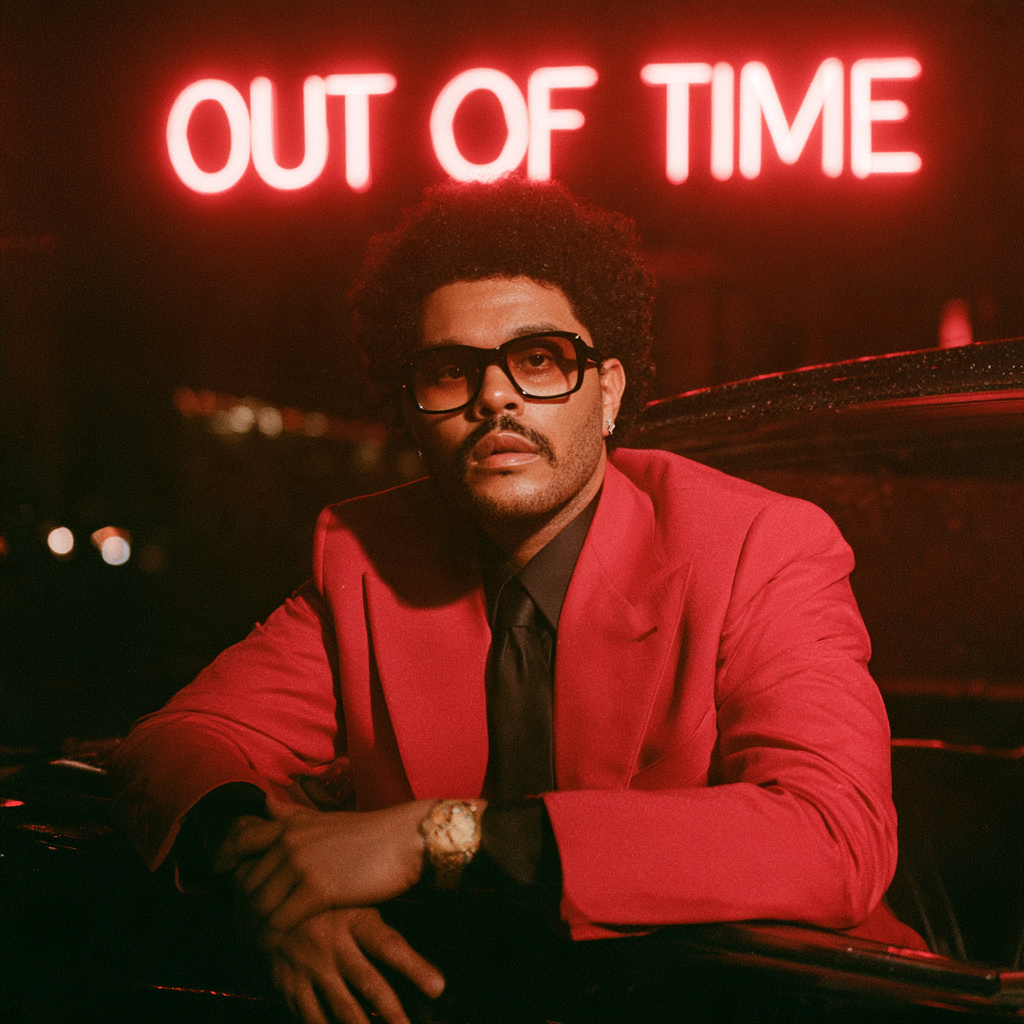
What Song Does The Weeknd’s “Out of Time” Sample? Japanese Original Explained
The Weeknd’s “Out of Time” samples “Midnight Pretenders” by Japanese singer Tomoko Aran.
The original recording was released in 1983.
It belongs to the musical tradition now widely associated with Japanese city pop.
The Weeknd incorporated its smooth instrumental arrangement into his 2022 song from Dawn FM.
The result introduced an older Japanese recording to an enormous international audience.
And there’s an interesting connection between the two songs.
Both create a late-night atmosphere, but their lyrics approach relationships from different emotional perspectives.
Who is Tomoko Aran?
A Japanese singer and songwriter whose career developed during the 1980s.
Her recordings combine sophisticated pop, electronic production and R&B influences.
“Midnight Pretenders” became one of her most internationally recognisable songs.
But much of that international popularity developed decades after its original release.
The recording became increasingly familiar through online music discovery and renewed interest in Japanese city pop.
The Weeknd’s use of the song accelerated that process.
When was “Midnight Pretenders” released?
1983.
It appeared on Aran’s album Fuyü-Kükan.
The album belongs to the sophisticated Japanese pop environment of the early 1980s.
Its production combines synthesizers with carefully arranged rhythm sections.
“Midnight Pretenders” has a particularly warm and atmospheric character.
The recording feels relaxed without becoming musically simple.
That made it an effective source for a contemporary R&B song.
What part does The Weeknd sample?
The recognisable instrumental foundation.
The original recording contains melodic and rhythmic elements that become central to “Out of Time”.
Rather than using only a tiny sound effect, the newer production draws heavily from the musical atmosphere of the Japanese recording.
That creates a clear connection.
Play “Midnight Pretenders” first.
Then listen to “Out of Time”.
The relationship becomes immediately recognisable.
Is Out of Time a cover?
No.
It’s a new composition incorporating sampled material from an older recording.
The Weeknd doesn’t simply perform Tomoko Aran’s lyrics in English.
His song has its own lyrical perspective and vocal melody.
The Japanese recording provides part of the musical foundation.
That’s the important distinction between a sample and a cover.
What does “Out of Time” mean?
Romantic regret.
The narrator recognises that he failed to treat somebody properly when he had the opportunity.
Now he wants another chance.
But circumstances may have changed.
The title communicates that sense of missed timing.
The musical arrangement is warm and elegant.
That creates an interesting contrast with the narrator’s emotional frustration.
The music sounds relaxed.
The lyrics describe somebody who isn’t.
How does this connect with Dawn FM?
Dawn FM is built around a fictional radio-station concept.
The album combines electronic pop, R&B and influences from earlier decades.
“Out of Time” fits naturally within that musical world.
Its sampled material creates a connection with 1980s pop production.
The song also helps establish the album’s reflective emotional character.
The Weeknd explores regret, memory and complicated personal relationships throughout the project.
Who appears in the music video?
The video features actress and model HoYeon Jung.
It also includes an appearance by Jim Carrey.
The story initially has a playful, romantic atmosphere.
But the visual presentation gradually becomes more unsettling.
That fits the wider Dawn FM concept.
The music sounds smooth and nostalgic.
The images suggest something more complicated.
Why did Japanese city pop become popular internationally?
Because online music discovery made older recordings accessible to audiences who had never encountered them originally.
YouTube recommendations and music communities helped introduce listeners to Japanese artists from the 1970s and 1980s.
City pop became particularly associated with warm production, sophisticated harmony and nostalgic imagery.
Some recordings were already successful in Japan.
Others developed much larger international audiences decades later.
“Midnight Pretenders” is an excellent example.
What exactly is city pop?
A broad label associated with sophisticated Japanese popular music from the late 1970s and 1980s.
The style frequently incorporates jazz, funk, disco, soul and electronic pop.
But city pop isn’t one rigid genre.
Some recordings are dance-oriented.
Others are gentle ballads.
The common connection is often polished musical production and a particular urban-pop atmosphere.
Tomoko Aran’s recording belongs comfortably within that world.
What other city-pop songs should you hear?
Start with Mariya Takeuchi’s “Plastic Love”.
Then try Miki Matsubara’s “Stay With Me”, Anri’s “Remember Summer Days”, Tatsuro Yamashita’s “Sparkle” and Junko Ohashi’s “Telephone Number”.
These songs explore different parts of city pop.
Some have strong disco rhythms.
Others emphasise sophisticated vocal arrangements.
All provide useful context for “Midnight Pretenders”.
Did The Weeknd make the original popular?
He helped introduce it to an additional audience.
But city pop had already developed a significant international following.
It’s more accurate to describe “Out of Time” as another major moment in that process.
Listeners who recognised the sample could appreciate the connection immediately.
Others discovered Tomoko Aran afterwards.
The newer recording became a gateway into older Japanese music.
Why is the sample so effective?
Because its emotional atmosphere works with the new song.
The original instrumental has a late-night character.
The Weeknd uses it to support a story about romantic regret.
The warm production makes the emotional message feel more complicated.
It creates nostalgia even for listeners who haven’t previously heard the original.
That’s one of the most interesting qualities of sampling.
A recording can carry an atmosphere across decades.
What should you listen to next?
Explore Tomoko Aran’s Fuyü-Kükan.
Then listen to other early-1980s Japanese pop recordings.
For a different internet-born style that also transforms older music through nostalgia, Radar’s guide to vaporwave and its essential recordings provides an interesting comparison.
The two genres aren’t identical, but both reward listeners interested in discovering older recordings through contemporary electronic music.
What does The Weeknd’s Out of Time sample?
“Midnight Pretenders” by Tomoko Aran, released in 1983.
The Weeknd incorporated the recording’s recognisable musical material into “Out of Time” in 2022.
The result connects contemporary R&B with Japanese city pop.
And it’s an excellent reminder that a modern hit can contain an entire earlier musical world waiting to be discovered.