What Song Plays When Emma Thompson Cries in Love Actually?
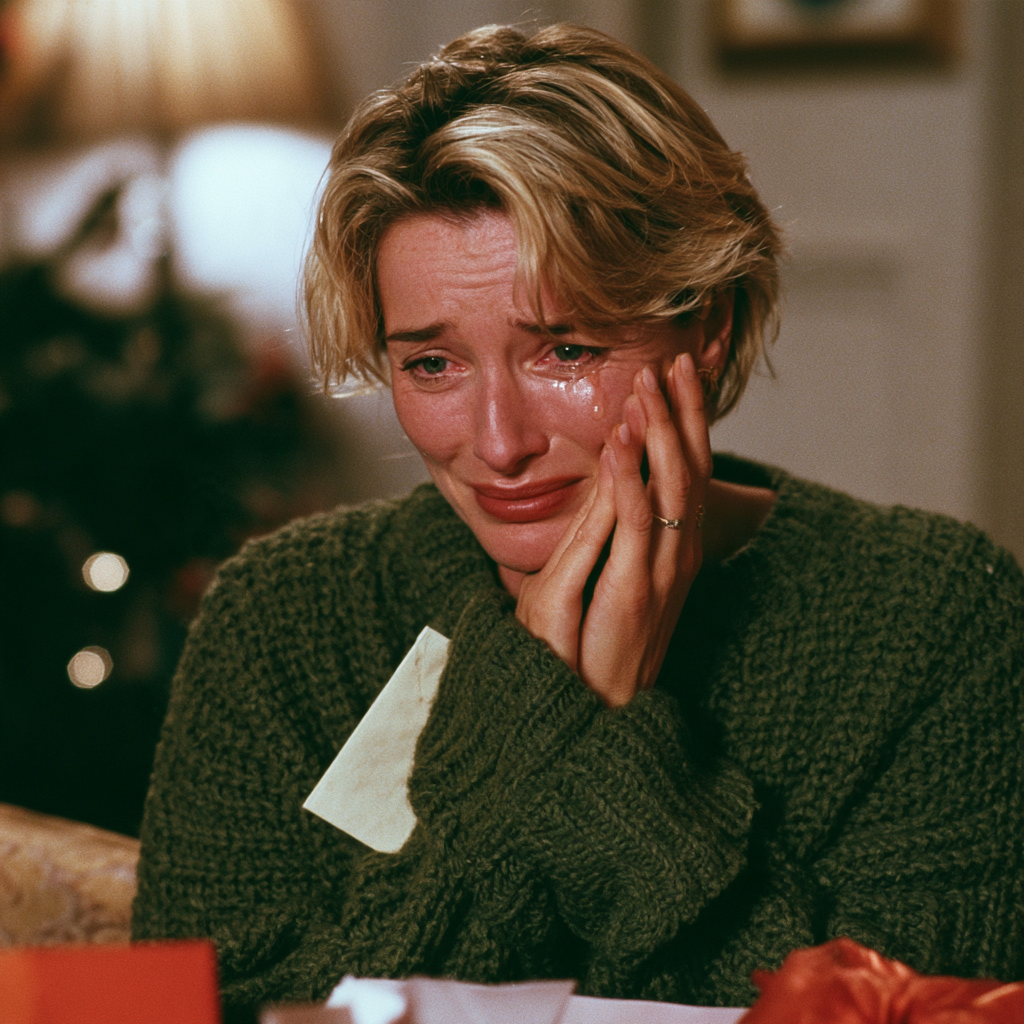
The song playing when Emma Thompson’s character cries alone in Love Actually is “Both Sides, Now” by Joni Mitchell.
But it’s not Mitchell’s original 1960s recording.
The film uses her much later orchestral interpretation, released in 2000.
That distinction is important.
The newer version has a deeper, more reflective vocal performance.
It creates a completely different emotional atmosphere from the earlier recording.
The scene occurs after Karen, played by Emma Thompson, discovers that the Christmas present she expected from her husband isn’t what she thought.
The music has become inseparable from one of the film’s most emotional moments.
What happens during the scene?
Karen has discovered an expensive necklace while shopping with her husband, Harry, played by Alan Rickman.
She believes the necklace is probably intended for her.
But when she opens her Christmas present, she discovers a Joni Mitchell album instead.
That reveals something painful.
The necklace appears to have been purchased for somebody else.
Karen retreats to her bedroom.
She plays the album and allows herself a private moment of grief.
Then she returns to her family and attempts to continue the Christmas celebrations.
Why is Joni Mitchell important to Karen?
Because Karen has an emotional relationship with Mitchell’s music.
Earlier in the film, she tells Harry how important the singer has been to her.
The album therefore isn’t a meaningless gift.
It represents something personal.
But the circumstances surrounding it make the present painful.
Karen expected an expression of romantic affection.
Instead, she receives something that confirms her growing suspicion about her marriage.
That contrast gives the scene its emotional power.
Who originally wrote “Both Sides, Now”?
Joni Mitchell.
She wrote the composition during the 1960s.
Judy Collins released an early famous recording before Mitchell’s own version appeared on her 1969 album Clouds.
That creates an interesting musical history.
The composition was already associated with more than one performer before the 1970s.
Mitchell subsequently returned to it decades later.
Why does the 2000 version sound different?
Because Mitchell’s voice and musical approach had changed.
The original recording has a lighter folk character.
The later performance uses a lush orchestral arrangement.
Mitchell sings with considerably more life experience behind her.
That makes the composition sound reflective rather than youthful.
The words are familiar.
But the emotional perspective has evolved.
For Love Actually, that difference is especially important.
Karen isn’t experiencing a first romantic disappointment.
She’s confronting a painful moment inside an established marriage.
What album is the recording on?
Both Sides Now, released in February 2000.
The album contains orchestral interpretations of several standards alongside Mitchell’s own compositions.
The recording was arranged by Vince Mendoza.
Its sophisticated instrumental setting provides an unusually cinematic atmosphere.
That’s part of why it works so effectively in the film.
What does “Both Sides, Now” mean?
The difficulty of understanding life and love completely.
The composition explores how experiences can appear different depending on perspective.
Something that once seemed beautiful may become complicated.
A relationship that appeared secure may contain uncertainty.
The song recognises that people can experience the same situation in very different ways.
That message is particularly relevant to Karen.
Her understanding of her marriage changes during the Christmas scene.
Did Emma Thompson improvise the crying?
The emotional performance developed beyond a detailed scripted instruction.
Director Richard Curtis later explained that he had written the basic action of Karen going upstairs and allowing her emotions to appear.
Thompson provided the emotional detail.
The scene required repeated takes.
That makes the final performance particularly impressive.
Karen doesn’t collapse into an enormous dramatic confrontation.
Instead, the emotion remains controlled and painfully private.
Why is the scene so effective?
Because it’s restrained.
The film doesn’t use elaborate dialogue.
Karen doesn’t explain every emotion to the audience.
The music communicates much of what she’s experiencing.
Thompson’s performance does the rest.
The audience understands the conflict.
She feels devastated.
But she still has children and family responsibilities waiting downstairs.
The scene captures the difficulty of continuing ordinary life during a moment of personal crisis.
Is the song a Christmas song?
Not originally.
“Both Sides, Now” wasn’t written specifically for Christmas.
Its association with the season comes largely through the film.
That’s a useful distinction.
A recording can become part of Christmas culture without mentioning Christmas in its lyrics.
The emotional meaning comes from the scene in which it’s used.
Why is Love Actually’s soundtrack so memorable?
Because the film combines older familiar recordings with contemporary pop.
The music helps connect several separate stories.
Different characters experience romance, disappointment, friendship and family relationships.
The songs create emotional continuity across those experiences.
For another example of an older recording becoming inseparable from an emotional film scene, Radar explains John Cale’s “Hallelujah” performance in Shrek.
The scenes are very different, but both use restrained performances to communicate vulnerability.
Songs like Joni Mitchell’s “Both Sides, Now”
Try Joni Mitchell’s “River”, “A Case of You” and “The Circle Game”.
Then explore Carole King’s “So Far Away”, Fleetwood Mac’s “Landslide”, Leonard Cohen’s “Famous Blue Raincoat” and Bonnie Raitt’s “I Can’t Make You Love Me”.
These recordings explore different aspects of memory, love and emotional uncertainty.
Which version of “Both Sides, Now” should you hear first?
Start with Judy Collins’ early interpretation.
Then Mitchell’s recording from Clouds.
Finish with the orchestral version from 2000.
The progression is particularly interesting because it demonstrates how much a song’s emotional meaning can change across different performances.
What song plays when Emma Thompson cries in Love Actually?
Joni Mitchell’s “Both Sides, Now”, specifically her orchestral recording from 2000.
The song’s themes of changing perspective and emotional uncertainty fit Karen’s experience.
Its placement has become one of the most memorable examples of existing music creating emotional meaning in a Christmas film.