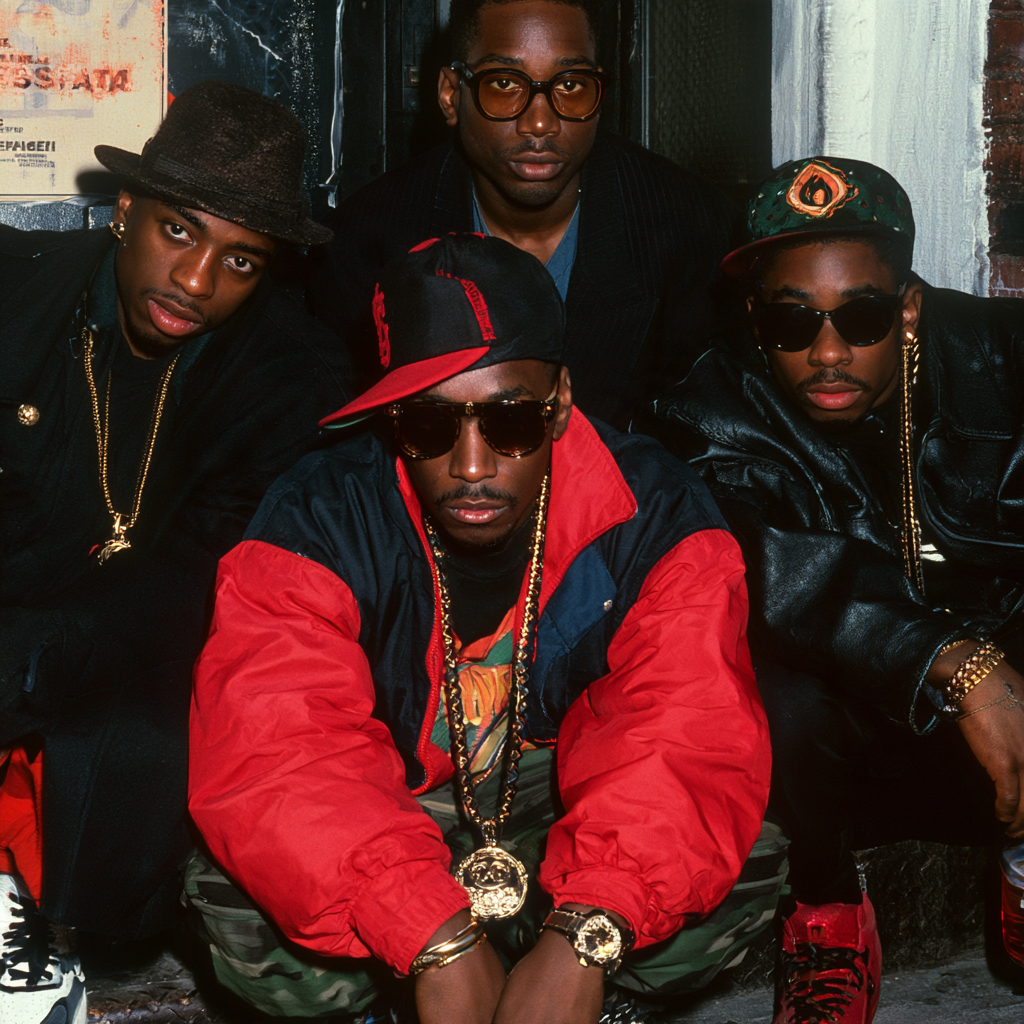
What Song Does A Tribe Called Quest’s “Can I Kick It?” Sample?
A Tribe Called Quest’s “Can I Kick It?” samples the bassline from Lou Reed’s “Walk on the Wild Side”.
Reed released the original recording in 1972.
A Tribe Called Quest used the familiar musical foundation in its 1990 hip-hop classic.
But there’s an extraordinary story behind the sample.
The group reportedly surrendered the song’s publishing royalties to Reed in order to use the material.
That means one of their most recognisable recordings became financially complicated.
And the original bassline has its own interesting history.
Who are A Tribe Called Quest?
An American hip-hop group formed in New York.
Its classic members included Q-Tip, Phife Dawg, Ali Shaheed Muhammad and Jarobi White.
The group became famous for combining hip-hop with jazz, soul and other musical influences.
Their recordings frequently used sophisticated samples and relaxed rhythms.
“Can I Kick It?” appeared on their debut album People’s Instinctive Travels and the Paths of Rhythm in 1990.
It became one of their most recognisable early songs.
Who is Lou Reed?
An American singer-songwriter who became famous as a member of The Velvet Underground.
He subsequently developed a successful solo career.
His music frequently explored complicated characters and unconventional subjects.
“Walk on the Wild Side” appeared on his 1972 album Transformer.
Produced by David Bowie and Mick Ronson, the recording became one of Reed’s defining solo hits.
Its unusual bassline was central to its musical identity.
What part of Walk on the Wild Side is sampled?
The distinctive bass figure.
It’s one of the most recognisable elements of Reed’s original recording.
The bassline was performed by session musician Herbie Flowers.
The arrangement uses a combination of bass sounds to create its unusual character.
When A Tribe Called Quest incorporated the material into “Can I Kick It?”, the connection became immediately recognisable.
The familiar musical phrase supports a completely different vocal and rhythmic environment.
Who was Herbie Flowers?
A British session musician known for his bass playing.
He contributed to numerous important recordings during his career.
His bass performance on “Walk on the Wild Side” became particularly famous.
The musical figure is relatively simple.
But its sound and rhythmic personality are distinctive.
That’s one reason it became such an effective sample.
A small musical idea can support an entirely new recording decades later.
Why did A Tribe Called Quest use the sample?
Because it provided a strong, relaxed musical foundation.
“Can I Kick It?” doesn’t rely on aggressive production.
Its appeal comes partly from the relaxed rhythm and playful vocal exchange.
The Lou Reed bassline is ideal for that approach.
It feels familiar and understated.
The group could introduce its own personalities without needing an enormous instrumental arrangement.
Did Lou Reed approve the sample?
The eventual arrangement involved permission to use the musical material.
But the financial terms were unusually significant.
Phife Dawg later discussed problems surrounding the sample clearance.
According to his account, Reed allowed the group to use it on the condition that he received the publishing royalties.
That’s different from a conventional arrangement where the original songwriter receives a portion of the income.
Did A Tribe Called Quest really make no money from the song?
Phife Dawg said that the group hadn’t received publishing royalties from the recording because of the agreement.
That doesn’t necessarily mean nobody involved in the record ever received any income connected with its distribution or performance.
Different music rights can generate separate payments.
But his account makes the central point clear.
The songwriting royalty arrangement strongly favoured Reed.
Phife also acknowledged that the alternative might have been losing the opportunity to use the sample entirely.
Was the sample worth it?
Culturally, the recording became enormously important.
It introduced A Tribe Called Quest to many new listeners.
The song helped establish the group’s musical identity.
Its relaxed production and memorable vocal exchange became influential within alternative hip-hop.
Financially, the group had reason to regret the arrangement.
That creates an interesting contradiction.
The same sample that helped make the song famous also limited the group’s participation in its publishing income.
What does Can I Kick It actually mean?
It’s a playful statement of confidence and belonging.
The repeated question asks for permission to participate.
But the recording has an energetic, self-assured character.
The group’s members are effectively introducing their musical personality.
The track reflects the positive, conversational approach associated with the Native Tongues collective.
It’s less confrontational than some other hip-hop recordings of the period.
What other songs does Can I Kick It sample?
The track incorporates additional musical references and sampled material.
Sources associated with its production include recordings by Dr. Lonnie Smith and other performers.
That makes it more complex than a single borrowed bassline.
But Lou Reed’s “Walk on the Wild Side” remains by far the most recognisable connection.
It’s the musical element casual listeners are most likely to identify.
What genre is Can I Kick It?
Alternative hip-hop and jazz rap.
The recording combines sampled instrumentation with relaxed vocal performances.
Its production reflects the early-1990s movement towards more varied musical influences in hip-hop.
The group didn’t rely exclusively on funk breaks or aggressive electronic drums.
Jazz, rock and soul all became useful sources.
Songs like Can I Kick It
Try A Tribe Called Quest’s “Electric Relaxation”, “Award Tour” and “Check the Rhime”.
Then explore De La Soul’s “Eye Know”, Digable Planets’ “Rebirth of Slick (Cool Like Dat)”, The Pharcyde’s “Passin’ Me By”, Gang Starr’s “Mass Appeal” and Souls of Mischief’s “93 ’til Infinity”.
Those recordings capture different parts of the jazz-rap and alternative-hip-hop movement.
Radar’s explanation of the sample behind M.I.A.’s “Paper Planes” explores another major example of hip-hop-related production incorporating material from an older rock recording.
Why are sample histories interesting?
Because they connect different generations of music.
A listener discovers a hip-hop recording.
Then recognises that its musical foundation existed decades earlier.
That creates an opportunity to explore artists they might never otherwise encounter.
The original recording provides another musical context.
The newer artist demonstrates how familiar material can become something completely different.
What song does Can I Kick It sample?
“Walk on the Wild Side” by Lou Reed, originally released in 1972.
The sample’s distinctive bassline became central to A Tribe Called Quest’s 1990 recording.
Its use also produced a famous royalty arrangement that Phife Dawg later discussed publicly.
It’s one of hip-hop’s clearest examples of a sample becoming both a creative breakthrough and a complicated financial decision.