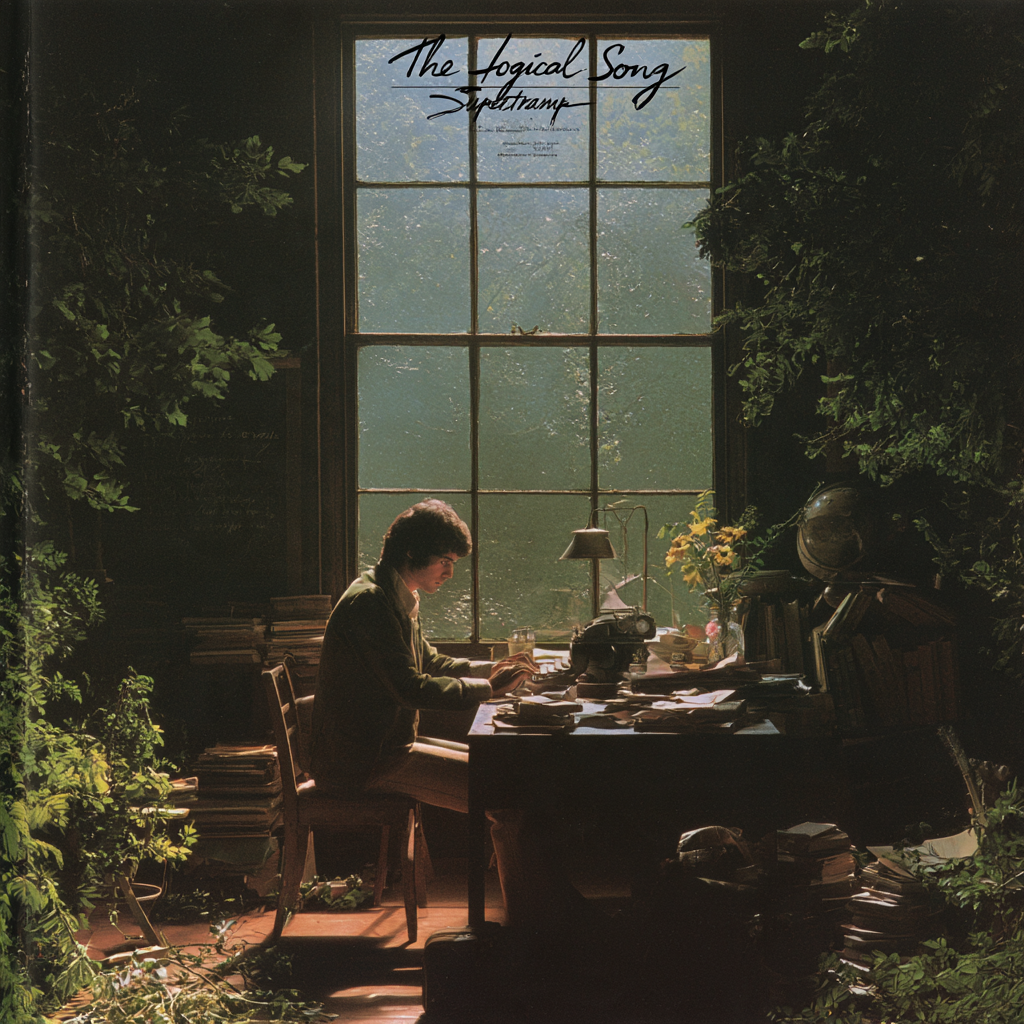
What Does Supertramp’s “The Logical Song” Mean? The School Story Explained
Supertramp’s “The Logical Song” is about losing the wonder and individuality of childhood while learning to become a responsible adult.
Its writer, Roger Hodgson, drew from his own experience of attending boarding school in Britain.
The song questions a particular idea.
Children spend years learning how to behave, follow rules and succeed.
But are they also taught how to understand themselves?
That became the central subject of one of Supertramp’s biggest hits.
Released in 1979 on Breakfast in America, “The Logical Song” combines a bright, intricate musical arrangement with a surprisingly serious emotional message.
Who wrote “The Logical Song”?
Roger Hodgson.
He was one of Supertramp’s principal songwriters and singers.
The band became internationally successful through a combination of progressive rock, pop and sophisticated studio production.
Hodgson developed the central musical idea on electric piano.
The lyrics emerged from his personal questions about education and growing up.
He has repeatedly described the song as autobiographical.
That makes it particularly interesting.
The recording isn’t simply a fictional criticism of modern society.
It reflects experiences that affected its writer directly.
What happened to Roger Hodgson at school?
He was sent to boarding school.
Hodgson has discussed how difficult that experience became during his childhood.
His parents’ divorce also affected him deeply.
He felt uncertain about his place in the world.
School introduced expectations about responsibility, discipline and achievement.
But those lessons didn’t necessarily answer the questions that mattered most to him.
Who was he?
What was life supposed to mean?
And how should he understand his own feelings?
Those questions eventually became central to “The Logical Song”.
What does the song actually mean?
The difference between learning information and understanding yourself.
The narrator remembers childhood as a period when the world felt extraordinary.
Then adults begin imposing expectations.
Be responsible.
Be sensible.
Be practical.
Those qualities aren’t necessarily bad.
But the song asks whether something important can disappear during that process.
Curiosity.
Wonder.
And a person’s individual identity.
The central frustration is that growing up can teach somebody how to function without explaining who they really are.
Is the song against education?
Not exactly.
Hodgson isn’t arguing that knowledge or responsibility are worthless.
His criticism is more specific.
He believes education can focus so strongly on external performance that it neglects internal development.
Students learn how to complete tasks and satisfy expectations.
But they may struggle to understand their own emotions and values.
That makes the song particularly relevant beyond one historical period.
The subject remains familiar to students and adults today.
Why does the music sound so happy?
Because the arrangement is energetic and playful.
The electric piano creates a distinctive rhythmic foundation.
The drums and bass provide movement.
And the vocal melody is immediately accessible.
That contrasts with the lyrical subject.
The narrator is confused and frustrated.
The music sounds bright and exciting.
That emotional contradiction helps make the recording memorable.
It’s also one reason casual listeners may enjoy the song without initially understanding its deeper message.
What instrument creates the famous introduction?
A Wurlitzer electric piano.
Hodgson used the instrument to develop the song’s rhythmic character.
The sound is distinctive.
Bright.
Percussive.
And immediately recognisable.
It’s particularly important because Supertramp frequently used keyboards as central rhythmic instruments rather than relying entirely on conventional rock guitar.
The arrangement combines sophistication with an accessible pop melody.
Who plays the saxophone?
John Helliwell.
He was an important member of Supertramp’s classic lineup.
His saxophone playing became central to the band’s sound.
The recording sessions also produced an unusual story.
Helliwell performed some saxophone parts in a studio bathroom to improve acoustic separation from other instruments.
The unusual recording environment became part of the song’s production history.
It’s a reminder that familiar studio sounds can emerge through quite practical experimentation.
What album is The Logical Song on?
Breakfast in America.
Released in 1979, the album became Supertramp’s biggest commercial success.
It also includes “Goodbye Stranger”, “Take the Long Way Home” and the title track.
The album combines sophisticated arrangements with accessible songwriting.
That made it particularly effective for audiences who enjoyed both progressive rock and conventional pop.
“The Logical Song” became one of its defining singles.
How successful was the song?
It reached No. 7 in Britain and No. 6 on the Billboard Hot 100 in America.
The recording helped establish Supertramp as an internationally successful band.
It also received songwriting recognition.
Hodgson was awarded an Ivor Novello Award for the composition.
Its success is particularly notable because the subject is far more complicated than an ordinary romantic pop song.
Did Scooter cover The Logical Song?
Yes.
The German electronic group released a version in 2001.
Their interpretation transformed the familiar melodic material into a much faster dance recording.
That created another cultural identity.
For younger European listeners during the early 2000s, Scooter may have provided their first introduction to the song.
The two versions sound very different.
But the melodic connection is immediate.
Why is the song still relevant?
Because the transition from childhood to adulthood remains complicated.
People learn to meet expectations.
They develop careers.
They become responsible for others.
But those achievements don’t automatically answer questions about identity or purpose.
Hodgson expressed that uncertainty through accessible pop songwriting.
It’s a useful reminder that important questions don’t necessarily disappear when somebody becomes successful.
Songs like “The Logical Song”
Try Supertramp’s “School”, “Dreamer” and “Take the Long Way Home”.
Then explore Gerry Rafferty’s “Baker Street”, Steely Dan’s “Deacon Blues”, 10cc’s “I’m Not in Love” and Billy Joel’s “Vienna”.
For another example of sophisticated late-1970s songwriting with a memorable instrumental hook, Radar explains who played the saxophone on “Baker Street”.
What does “The Logical Song” really mean?
Growing up can teach you how to behave without teaching you how to understand yourself.
Roger Hodgson developed the composition from his boarding-school experience.
The result became one of Supertramp’s most famous recordings.
Its musical arrangement is bright and energetic.
But the question at the centre remains serious.
After learning how to be everything other people expect, how do you discover who you actually are?