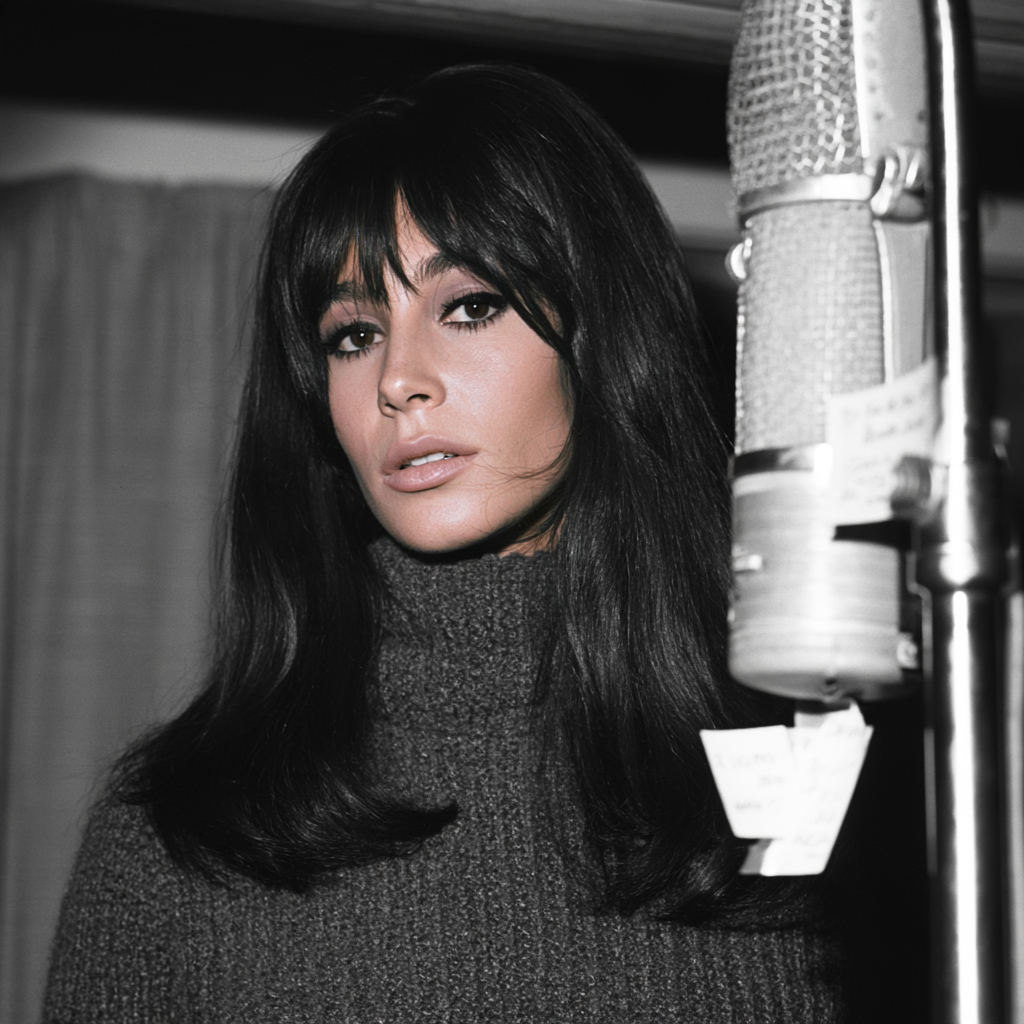
Who Originally Sang “The Shoop Shoop Song”? Before Cher’s Hit
“The Shoop Shoop Song (It’s in His Kiss)” was originally recorded and released by Merry Clayton in 1963.
Not Cher.
And not Betty Everett.
Everett turned the composition into a major American hit in 1964.
Then Cher recorded her famous version for the 1990 film Mermaids.
That recording became an enormous UK success.
For many British listeners, Cher’s interpretation remains the definitive version.
But its musical story began almost thirty years earlier.
Who wrote “The Shoop Shoop Song”?
Rudy Clark.
He was an American songwriter associated with the pop and soul music of the 1960s.
The composition was originally titled “It’s in His Kiss”.
Its subject is romantic attraction.
The narrator is explaining how somebody can recognise genuine affection.
The song is playful rather than deeply philosophical.
That makes it particularly suitable for catchy pop arrangements.
Who is Merry Clayton?
An American singer with a remarkable career in soul and rock music.
She became particularly famous for her extraordinary vocal contribution to The Rolling Stones’ “Gimme Shelter”.
But her recording career began before that famous collaboration.
Clayton recorded “It’s in His Kiss” as an early solo single.
It was released in June 1963.
The recording didn’t become a commercial hit.
Nevertheless, it established the composition before later performers developed more successful versions.
Why wasn’t Merry Clayton’s version famous?
Commercial success depends on several factors.
Radio exposure.
Promotion.
Timing.
And the musical environment surrounding the release.
Clayton’s recording didn’t reach a wide mainstream audience.
But the composition remained available to other performers.
That became important when Betty Everett recorded her interpretation.
Who is Betty Everett?
An American soul singer associated with Vee-Jay Records.
Her recordings combined rhythm and blues with accessible pop songwriting.
She became famous for songs including “You’re No Good” and “The Shoop Shoop Song”.
Everett’s vocal has a confident, expressive personality.
That made her particularly suitable for the playful romantic subject.
Her version gave the composition its first major commercial success.
When did Betty Everett release it?
1964.
The recording reached No. 6 on the Billboard Hot 100.
It also became a major rhythm-and-blues hit.
Everett’s performance helped establish the song as a familiar part of 1960s pop culture.
The arrangement includes prominent backing vocals.
Those vocals became part of the recording’s recognisable identity.
Why is it called “The Shoop Shoop Song”?
Because of the backing-vocal sounds.
The repeated vocal phrase became one of the most memorable parts of Everett’s recording.
That created an alternative title.
The composition’s original title was “It’s in His Kiss”.
But many listeners remembered the vocal hook instead.
The longer combined title eventually became standard.
What does “It’s in His Kiss” actually mean?
The narrator is offering romantic advice.
She suggests that genuine affection is revealed through a person’s kiss.
The recording takes the form of a playful conversation about identifying love.
It’s deliberately simple.
That makes the song particularly easy to recognise and enjoy.
The message isn’t intended as a serious psychological theory about relationships.
It’s a catchy pop concept.
Why did Cher record it?
For the 1990 film Mermaids.
Cher starred in the film alongside Winona Ryder and Christina Ricci.
The story focuses on a complicated family relationship.
Its soundtrack draws from music associated with earlier decades.
“The Shoop Shoop Song” was an excellent choice because it had the bright, playful character of classic 1960s pop.
Cher’s recording introduced the composition to another generation.
Was Cher’s version successful?
Extremely.
It became a No. 1 hit in the UK in 1991.
The recording remained at the top for five weeks.
It also became successful across Europe and other international markets.
Interestingly, Cher’s version was less commercially dominant in America than Britain.
That demonstrates how differently a recording can perform across countries.
What happens in the music video?
The video connects Cher’s performance with the film.
Winona Ryder and Christina Ricci also appear.
The visual style draws from the film’s period setting.
That creates a strong relationship between the soundtrack and the characters.
The recording isn’t simply an unrelated pop single used to promote a movie.
It becomes part of the film’s broader nostalgic atmosphere.
What genre is the song?
Merry Clayton’s original is rhythm and blues and soul-pop.
Betty Everett’s version belongs to 1960s soul and pop.
Cher’s recording is polished pop-rock with retro influences.
The melody remains recognisable throughout.
That’s one of the reasons the composition has lasted.
Which version should you hear first?
Start with Merry Clayton’s 1963 original.
Then Betty Everett’s 1964 hit.
Finally, Cher’s version from Mermaids.
The progression demonstrates how much the arrangement and performer can change a song’s public identity.
The central melody survives all three.
For another example of a famous cover overshadowing the original, Radar’s history of “Torn” before Natalie Imbruglia explores a similar story from the 1990s.
Why do old songs keep becoming famous again?
Because good songwriting can survive different production styles.
A composition may attract limited attention during its first release.
Then another performer finds a more effective arrangement.
Or a film introduces it to an enormous audience.
That’s exactly what happened with “The Shoop Shoop Song”.
Merry Clayton recorded it first.
Betty Everett made it successful.
Cher introduced it to a new generation through cinema.
Who originally sang “The Shoop Shoop Song”?
Merry Clayton in 1963.
Betty Everett made the first major hit version in 1964.
Cher recorded her famous interpretation for Mermaids in 1990, with the single becoming a UK No. 1 in 1991.
Three performers.
Three different musical periods.
And one simple romantic composition that has remained familiar for more than sixty years.