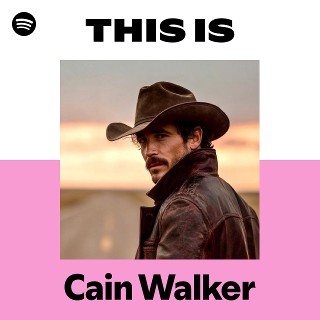
Who Is Dallas Little? The Creator Behind AI Country Singer Cain Walker
Cain Walker has accumulated millions of streams while appearing to be a rugged modern country singer.
But Cain Walker isn’t actually the person behind the music.
That trail leads to Dallas Little.
Apple Music identifies Cain Walker as an AI music project credited to Dallas Little, while music credits repeatedly list Little as songwriter and producer.
And Cain Walker isn’t the only fictional artist connected to him.
Who is Dallas Little?
Dallas Little is a music creator who has become associated with a growing group of AI-powered or fictional artists.
His name initially attracted attention through Cain Walker before becoming considerably more visible through another project: Eddie Dalton.
Eddie Dalton presents as an older soul and blues singer, but AllMusic identifies Dalton as an AI-generated artist created by Dallas Little. Tracks including Cheap Red Wine and Running To You subsequently generated millions of Spotify streams.
Little told Showbiz411 in March 2026 that he writes the songs behind his AI project and disputed suggestions that listeners were deliberately being misled.
That makes Little an interesting example of a new kind of music creator.
The human creator remains largely behind the scenes while fictional artists become the public-facing brands.
Did Dallas Little create Cain Walker?
The available evidence says yes.
Apple Music directly says Cain Walker is an AI music project “credited to Dallas Little.”
The songwriting trail provides further evidence.
Apple Music identifies Dallas Little as songwriter or producer across Cain Walker releases including:
- Walk My Way
- Won’t Back Down
- Rust On My Halo
- Whiskey & Water
- Loyalty
There is also a more formal connection.
A January 2026 US trademark application for CAIN WALKER names Dallas Little as the applicant and covers downloadable music files and sound recordings.
Taken together, the evidence connecting Little and Cain Walker is unusually strong for an AI artist.
How successful is Cain Walker?
Very.
Cain Walker became one of the first AI country projects to achieve significant mainstream chart visibility.
Don’t Tread On Me peaked at number three on Billboard’s Country Digital Song Sales chart, while Ain’t My Problem reached number nine.
Spotify has also shown individual Cain Walker songs with millions of streams.
That means Little has effectively created a fictional artist capable of competing for attention alongside conventional country musicians.
Dallas Little and Eddie Dalton
The story becomes even more interesting when Eddie Dalton is added.
Dalton is presented as a vintage soul singer, but no such performer exists.
AllMusic describes Eddie Dalton as an AI-generated soul artist created by Dallas Little. The project arrived in 2026 and quickly built substantial streaming and download activity.
Little told Showbiz411 that he writes his songs and argued that AI is the production method rather than proof that there is no human creativity involved.
This distinction is important.
It would be easy to describe creators such as Little as simply asking an AI system to make random songs.
The public credits suggest something more structured.
There is songwriting, branding, visual identity, release strategy and the creation of separate artist personas.
Are AI artists becoming the new record labels?
Dallas Little’s projects point towards an interesting possibility.
Traditionally, a music entrepreneur might:
- Find a singer.
- Develop their image.
- Hire producers.
- Record an album.
- Market the artist.
AI allows one creator to compress much of that process.
A single person can potentially develop multiple artist identities across different genres while remaining behind every one of them.
Cain Walker can make country.
Eddie Dalton can make soul.
Another fictional artist can occupy another genre entirely.
The creator effectively starts behaving less like an individual musician and more like a tiny record company.
Why Dallas Little matters
The interesting thing about Dallas Little isn’t simply that he uses AI.
Thousands of people now make AI music.
What makes the story notable is that some of the resulting artist brands have achieved meaningful commercial audiences.
Cain Walker has charted on Billboard.
Eddie Dalton has generated millions of streams.
And listeners are now actively searching to discover who — or what — is behind the voices they are hearing.
That is likely to become an increasingly common question in music.
The artist on the artwork may be fictional.
But there is still usually a human somewhere behind the machine.
For Cain Walker, that human appears to be Dallas Little.