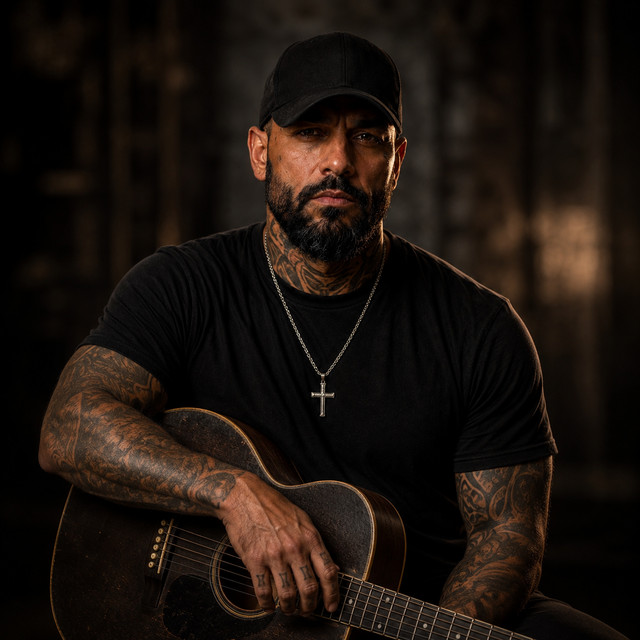
Is Dust & Harmony AI? Who Is Behind “You Problem”?
One of the biggest AI country songs of 2026 comes from an artist that isn’t really an artist in the traditional sense.
Dust & Harmony’s You Problem has accumulated millions of streams and reached number one on the SIQA AI Country chart.
And yes: Dust & Harmony is an AI music project.
AllMusic describes Dust & Harmony as an “AI-generated music project” combining country, swamp rock, Southern rock, Americana and rap.
But there is still a human name hidden inside the credits.
Nick Hahn.
What is Dust & Harmony?
Dust & Harmony emerged in 2025 with an increasingly large catalogue of rebellious country and country-rap tracks.
The titles tell you almost everything about the brand:
- Hold My Beer and Watch This
- Say It to My Face
- Shit Happens
- Baptized In Diesel
- The Fuck Samp Hop
- Ain’t Mine To Fix
- You Problem
The music combines exaggerated outlaw-country themes with humour, profanity, heavy rhythms and extremely direct hooks.
It is basically country music designed for the social-media age.
Is Dust & Harmony AI?
Yes.
Unlike some mysterious Spotify artists where the evidence is largely circumstantial, Dust & Harmony has been openly classified as an AI-generated music project by established music database AllMusic.
AI-music reporting has also described the project as using human lyrics with AI orchestration and synthetic vocals.
That means Dust & Harmony isn’t necessarily a case of a machine doing absolutely everything.
Humans remain involved in the creative process.
Who created You Problem?
Public music credits consistently point towards Nick Hahn.
Qobuz lists Nick Hahn as lyricist, composer and producer of You Problem. The same credit appears across numerous other Dust & Harmony releases.
Apple Music also credits Hahn as songwriter and producer on Ain’t Mine To Fix.
So while Dust & Harmony is the artist name listeners see, Nick Hahn appears to be a major human creative force behind the music.
It is worth adding one caveat.
Public credits prove that Hahn is a songwriter and producer attached to the project. They don’t necessarily prove every detail about who owns, operates or controls Dust & Harmony.
How popular is You Problem?
Very.
You Problem was released on 1 May 2026.
By the week of 22 September 2026, the track remained number one on SIQA’s Top 20 AI Country Songs chart.
More impressively, it was number five on SIQA’s overall Top 100 AI Songs chart.
That puts an AI-generated country project alongside some of the most successful AI-assisted music of any genre.
Why is You Problem working?
The title alone probably helps.
“You Problem” instantly communicates the entire attitude of the song.
It belongs to a type of music that performs particularly well in short-form content because the central message can be understood without knowing anything about the artist.
The same formula appears throughout Dust & Harmony’s catalogue.
Shit Happens.
Ain’t Mine To Fix.
Say It to My Face.
Hold My Beer and Watch This.
You could almost imagine each title printed on a T-shirt before hearing the song.
That makes them highly shareable concepts as well as songs.
Is Dust & Harmony a real band?
There is no indication that Dust & Harmony is a conventional band with named human members performing the recordings.
It is better described as an AI music project.
Human creators including Nick Hahn appear in the songwriting and production metadata, while the public-facing artist identity remains Dust & Harmony.
That distinction is becoming increasingly common.
There is a human behind the creative process.
But the performer itself can be digital.
AI country is becoming a real category
Dust & Harmony isn’t alone.
Breaking Rust became a Billboard Country Digital Song Sales number-one artist.
Cain Walker reached number three on the same chart.
Broken Trails has generated millions of streams.
Now Dust & Harmony is leading dedicated AI-country rankings.
What once looked like a handful of strange experiments is beginning to look more like an actual genre ecosystem.
And You Problem may be one of the clearest examples yet.
The artist might be artificial.
The audience isn’t.