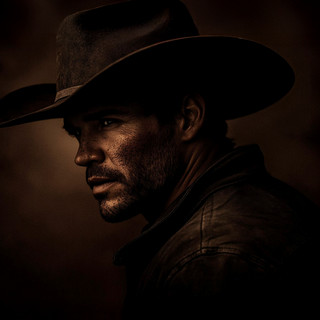
Why Is AI Country Music Becoming So Popular?
AI music is appearing everywhere.
But one genre seems particularly suited to the current wave of virtual artists: country.
Breaking Rust has generated tens of millions of Spotify streams.
Cain Walker has achieved millions more.
Dust & Harmony is topping dedicated AI country charts.
Broken Trails, Vowless, JD Steel and numerous other projects are building substantial audiences.
So why is AI country music taking off?
AI country has already reached Billboard
The moment many people noticed the trend came in late 2025.
Breaking Rust’s Walk My Walk reached number one on Billboard’s Country Digital Song Sales chart.
Cain Walker’s Don’t Tread On Me reached number three, while Ain’t My Problem reached number nine.
It is important not to exaggerate those achievements.
Country Digital Song Sales measures paid downloads rather than the entire US country market.
But AI-generated country music had nevertheless reached a Billboard chart.
The experiment had moved into the mainstream.
1. Country music has an extremely recognisable language
Country songs frequently revolve around strong, easily understood themes:
work.
Heartbreak.
Family.
Faith.
Alcohol.
Trucks.
Independence.
Resilience.
Small towns.
Relationships.
Standing your ground.
These aren’t limitations of country music — countless brilliant human songwriters have built extraordinarily nuanced songs around them.
But they also give generative models a substantial structural framework.
Ask an AI system for an outlaw-country song about refusing to give up and it already has a huge amount of musical and lyrical precedent from which to model the concept.
2. AI voices are getting convincing
The technology no longer has to produce obviously robotic singing.
Many listeners discover an AI country track without initially realising anything unusual is happening.
That happened with Breaking Rust.
The project’s two biggest Spotify tracks have since accumulated more than 28 million streams each.
The novelty may get people talking.
The sound still has to persuade them to keep listening.
3. One creator can produce enormous amounts of music
Traditional recording has friction.
Musicians rehearse.
Studios need booking.
Songs require recording and mixing.
Vocals need multiple takes.
AI dramatically reduces that friction.
A creator can potentially make several versions of a song in the time a conventional recording session might take to produce one.
That creates a huge advantage in experimentation.
If nine songs fail and the tenth becomes viral, generating the first nine can be extremely cheap.
The sheer volume of AI music being created shows how dramatic the change has become.
Deezer said in July 2026 that it was receiving around 90,000 fully AI-generated tracks every day. On peak days, they represented more than half of all music being delivered to the service.
4. AI country is perfect for short-form hooks
Look at some of the successful song titles:
You Problem.
I Don’t Care.
Walk My Walk.
Don’t Tread On Me.
I’ll Burn This Bitch Down.
No Chains On Me.
Tell The Devil I’m Busy.
The titles function almost like captions.
You don’t need to understand a complicated story before using the track in a TikTok, Reel or YouTube Short.
The message is immediately obvious.
That is useful in an internet economy where a song often gets seconds to communicate its identity.
5. Listeners may care more about songs than artists
This could be the biggest point.
People often assume music fans will automatically reject AI artists once they discover the truth.
Reality appears more complicated.
Some listeners undoubtedly care deeply about whether a human actually performed a song.
Others simply like the recording.
Deezer’s own data shows fully AI-generated music still represents only around 1–3% of listening on its platform despite the enormous volume being uploaded.
So AI isn’t replacing conventional music.
But individual AI songs can still break through.
6. Mystery creates search demand
There is another advantage AI artists have that ordinary musicians don’t.
People want to know whether they are real.
“Is Cain Walker AI?”
“Who is behind Broken Trails?”
“Is Dust & Harmony a real band?”
That curiosity creates content, conversations and Google searches around the artist.
The strange origin story becomes part of the marketing.
7. AI country is becoming its own ecosystem
By September 2026, SIQA was maintaining an entire Top 20 AI Country Songs chart.
Its September 22 ranking included Dust & Harmony at number one with You Problem, Cain Walker at number ten with I Don’t Care and numerous other AI-country projects including Vowless and JD Steel.
That is quite a transformation from a year earlier.
AI country is no longer one strange song.
There are artists, charts, playlists, fans and competitors.
What happens next?
Streaming platforms are starting to respond.
Spotify has introduced AI Persona labels for artist profiles presenting AI-generated photorealistic identities. It also says these personas are excluded from passive algorithmic and editorial recommendation by default unless listeners intentionally engage with them.
That could make it harder for some fictional artists to grow purely through recommendation algorithms.
But it probably won’t make AI country disappear.
The tools are getting better.
The cost of creating music keeps falling.
And some listeners have already demonstrated that they are perfectly willing to stream a good song even when the singer has never existed.
Country music may simply be one of the first genres showing us what that future looks like.