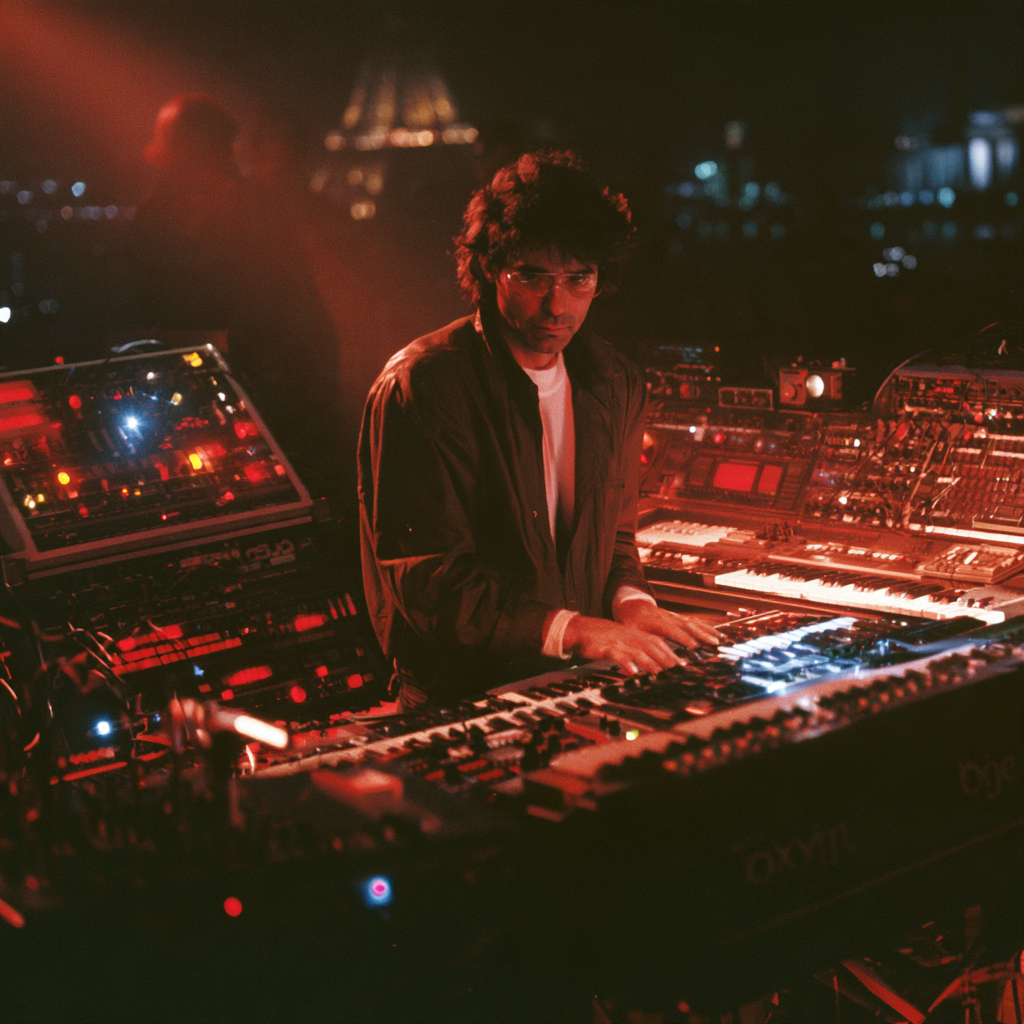
12 Songs Like Jean-Michel Jarre’s “Oxygène Part IV”
If you love Jean-Michel Jarre’s “Oxygène Part IV”, start with Vangelis, Tangerine Dream, Kraftwerk, Klaus Schulze and Mike Oldfield.
These musicians helped establish the atmospheric, synthesizer-driven music that transformed electronic composition during the 1970s and 1980s.
“Oxygène Part IV” appeared on Jarre’s breakthrough 1976 album, Oxygène.
The fiftieth anniversary edition arrived in November 2026, introducing the original recordings to another generation of listeners.
Its distinctive combination of electronic melody, repeating rhythms and spacious production remains surprisingly modern.
Here are twelve essential recordings to discover next.
1. Jean-Michel Jarre – Équinoxe Part IV
The most natural starting point.
Jarre’s 1978 album Équinoxe continues exploring the melodic electronic environment established by Oxygène.
Part IV combines repeating synthesizer patterns with an increasingly expansive arrangement.
Its atmosphere is slightly different, but the relationship between melody and electronic rhythm is immediately recognisable.
If you only know one Jarre recording, this should be your next listen.
2. Vangelis – Pulstar
An essential electronic composition from Vangelis’ 1976 album Albedo 0.39.
“Pulstar” combines dramatic synthesizer melodies with a strong rhythmic foundation.
The recording feels particularly cinematic despite being created independently of a major film soundtrack.
It captures the excitement surrounding electronic instruments during the same period as Jarre’s original album.
3. Tangerine Dream – Love on a Real Train
One of Tangerine Dream’s most recognisable compositions.
Created for the 1983 film Risky Business, the recording combines repeating synthesizer patterns with a gradually developing melody.
The arrangement feels simultaneously intimate and expansive.
It’s particularly suitable for listeners who enjoy the hypnotic qualities of “Oxygène Part IV”.
4. Kraftwerk – Neon Lights
A warmer, more reflective recording from Kraftwerk’s 1978 album The Man-Machine.
The composition combines carefully arranged electronic melodies with repetitive instrumental patterns.
Its subject concerns the artificial beauty of an illuminated city.
Like Jarre, Kraftwerk demonstrate how electronic instruments can create atmosphere and emotion rather than simply sounding technological.
5. Klaus Schulze – Floating
An extended composition from Schulze’s 1976 album Moondawn.
Rather than providing a conventional radio-length recording, “Floating” develops through gradual changes in synthesizer patterns and instrumental textures.
It’s particularly rewarding for listeners who want to explore electronic music as an immersive experience.
The music encourages patience and attention.
6. Mike Oldfield – Tubular Bells, Part One
Released in 1973, this composition combines repeating musical ideas with an elaborate multi-instrumental arrangement.
Although Oldfield’s music isn’t exclusively electronic, it shares Jarre’s interest in extended instrumental storytelling.
The famous opening melody became associated with The Exorcist.
The complete recording, however, reveals considerably more musical variety than that famous excerpt.
7. Vangelis – Alpha
Another essential selection from Albedo 0.39.
“Alpha” develops gradually through a simple melodic foundation.
The electronic arrangement becomes increasingly expansive as the recording progresses.
Its atmosphere feels particularly suitable for space-related imagery, scientific documentaries and reflective listening.
8. Jean-Michel Jarre – Magnetic Fields Part II
An energetic recording from Jarre’s 1981 album Magnetic Fields.
The composition provides an opportunity to hear how his sound developed as electronic instruments became increasingly sophisticated.
The rhythm is more pronounced than on several earlier recordings.
It’s particularly suitable for listeners who enjoy the accessible melodic side of instrumental electronic music.
9. Tangerine Dream – Phaedra
A defining recording from the German electronic-music tradition.
Released in 1974, Phaedra places greater emphasis on atmosphere and extended synthesizer development than conventional pop structures.
The title track can feel unfamiliar at first because it doesn’t behave like a traditional song.
However, its evolving textures provide an important introduction to electronic music history.
10. Yellow Magic Orchestra – Rydeen
A brighter, more rhythmic recommendation.
Yellow Magic Orchestra combined electronic instruments with melodic songwriting and a playful sense of technological possibility.
“Rydeen” appeared on their 1979 album Solid State Survivor.
The recording is especially rewarding for listeners interested in the relationship between early electronic pop and Japanese video-game music.
11. Vangelis – Blade Runner Blues
For something quieter.
This composition from the Blade Runner soundtrack combines atmospheric electronic production with a deeply reflective melodic character.
Its musical world feels futuristic without becoming emotionally distant.
If you enjoy the spacious quality of Jarre’s recordings, Vangelis’ film music provides an excellent next step.
12. Isao Tomita – Clair de Lune
An electronic interpretation of Claude Debussy’s famous composition.
Tomita used synthesizers to create an entirely different instrumental atmosphere from the familiar piano original.
The recording appeared on his 1974 album Snowflakes Are Dancing.
It demonstrates how electronic instruments can reinterpret classical music while creating something with its own distinctive emotional identity.
What genre is “Oxygène Part IV”?
Instrumental electronic music, with connections to progressive electronic music and space music.
Jarre’s approach differs from conventional electronic dance music because atmosphere and melodic development are central.
The recording can be enjoyed without needing a nightclub or dancefloor context.
Where was Oxygène recorded?
Jarre created the original album in a home studio in his Paris apartment during 1976.
He used a relatively modest collection of analogue synthesizers, electronic instruments and recording equipment.
The finished project contained six interconnected compositions.
Its success helped demonstrate that instrumental electronic music could reach an enormous mainstream audience.
What is different about the 2026 version?
The anniversary edition includes a new remaster created from the original tapes.
The intention is to preserve the warmth and character of the earlier recording rather than replace it with newly recorded music.
That makes it particularly interesting for listeners who want to experience the original album in greater audio detail.
Which album should you hear next?
Start with Jarre’s Équinoxe, followed by Vangelis’ Albedo 0.39 and Tangerine Dream’s Phaedra.
Then explore Kraftwerk’s The Man-Machine.
These albums provide an excellent introduction to the period when electronic instruments began transforming the possibilities of popular music.