Yoto revenue jumps 43% as screen-free kids’ audio continues to boom
Yoto’s rapid expansion is continuing, with the children’s audio company reportedly increasing its revenues by 43% during 2025.
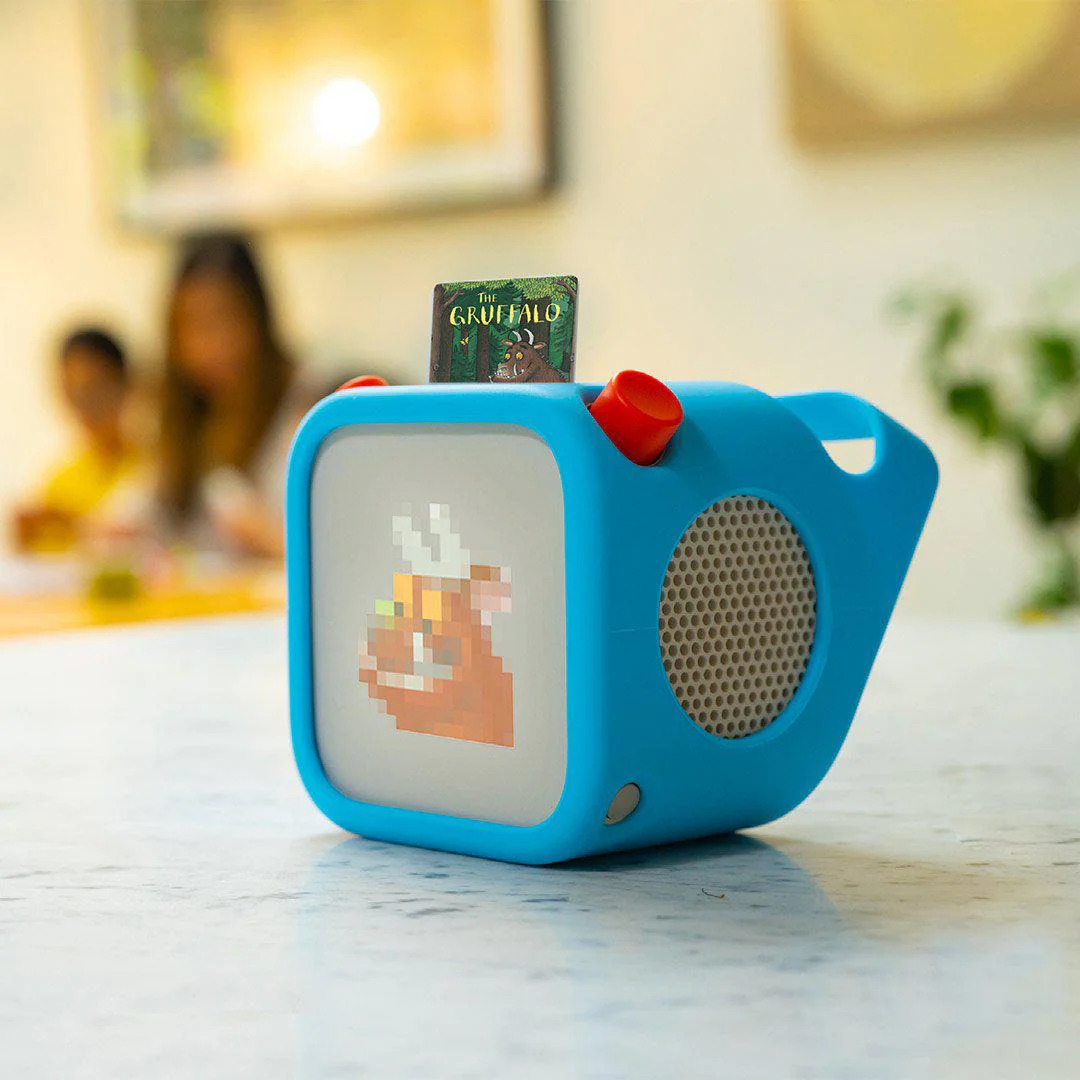
The London-based company makes the Yoto Player and portable Yoto Mini, screen-free audio devices that allow children to play music, audiobooks, stories and other audio content using physical cards.
According to Music Ally, Yoto’s latest financial figures show another significant year of growth for the company.
Yoto generated £94.8 million in revenue during 2024, up 86% from £50.9 million in 2023. A further 43% increase would put its 2025 revenue at roughly £135 million.
That makes Yoto an increasingly significant audio platform in its own right – and one that operates very differently from Spotify, Apple Music, YouTube Music and other traditional streaming services.
What is Yoto?
Yoto was founded by Ben Drury and Filip Denker and has built its business around a deliberately simple idea: giving children control over what they listen to without giving them another screen.
Instead of browsing through an app, children insert physical Yoto Cards into a Yoto Player. These cards can contain audiobooks, music albums, educational content, podcasts and original programming.
The devices don’t include cameras or microphones and are positioned as an alternative to smartphones, tablets and other screen-based entertainment.
That relatively simple concept has developed into a much larger content ecosystem.
Yoto co-founder Ben Drury said in late 2025 that its catalogue contained around 2,000 titles globally, while the company has worked with some of the biggest names in publishing and entertainment.
Its current platform includes everything from children’s stories to major music releases.
Music is becoming an important part of Yoto
While audiobooks and children’s stories remain central to Yoto, music is becoming an increasingly visible part of the platform.
Yoto has previously released cards featuring music from The Beatles, while more recent additions include artists and soundtracks such as David Bowie, Wicked, KPop Demon Hunters and Olivia Dean.
In March 2026, for example, Yoto announced a dedicated David Bowie card designed to introduce his music to a new generation of listeners.
This gives Yoto an unusual position in the music market.
The company isn’t attempting to provide children with access to tens of millions of songs. Instead, it offers a heavily curated catalogue where individual albums and collections are presented as physical products.
In some ways, this brings music consumption closer to buying CDs or records than modern on-demand streaming.
Children choose a card, put it into the player and listen to that specific release.
For artists and rightsholders, that creates another potential format through which music can reach younger listeners.
22 billion minutes were listened to on Yoto in 2025
Yoto’s revenue growth also appears to be accompanied by significant listening activity.
The company says that users listened to 22 billion minutes of content through Yoto during 2025.
That works out at more than 41,000 years of audio consumed in a single year.
More importantly, Yoto isn’t simply selling a hardware product that is used once.
Every Yoto Player placed in a home creates another customer for cards, subscriptions, accessories and potentially years of future audio consumption.
This is one of the most interesting parts of the company’s business model.
The player effectively acts as the entry point into an ecosystem. Once a family owns the hardware, Yoto can continue selling additional audio content throughout a child’s early years.
The company has also found that children are staying with the platform for longer than it originally expected.
Drury said in 2025 that Yoto initially thought children would grow out of the platform at around eight years old. The company subsequently extended its focus to age 12 and has now published content aimed at audiences aged 14 and above.
That potentially increases the lifetime value of every device sold.
Yoto is continuing to invest in its hardware
Yoto isn’t relying entirely on its existing devices either.
In September 2026, the company announced fourth-generation versions of both the Yoto Player and Yoto Mini.
The updated devices include 64GB of storage, enough for more than 1,000 hours of offline listening, alongside faster processors, updated connectivity and a new Green Button that gives children direct access to personalised audio playlists without needing a card.
The Yoto Player 4th Gen is priced at £119.99 in the UK, while the Yoto Mini 4th Gen costs £89.99.
The addition of cardless personalised playlists is particularly interesting.
Yoto’s physical cards remain an important part of the product’s identity, but giving users easier access to their existing digital library moves the platform slightly closer to the convenience offered by mainstream streaming services.
Screen-free audio is becoming a serious market
Yoto is not alone in recognising the demand for children’s audio.
German company Tonies has built another large business around its Toniebox devices, which use physical figurines rather than cards to trigger audio.
The success of both companies suggests there is significant demand from parents for entertainment products that sit somewhere between traditional toys and digital streaming services.
That creates an interesting new category for the music industry.
Spotify, Apple Music and YouTube have traditionally dominated conversations around digital music listening, but products such as Yoto provide artists and labels with a completely different way of reaching children.
Instead of competing for attention inside an endless catalogue, an album can become a physical object that a child owns, chooses and repeatedly interacts with.
That could be particularly valuable for catalogue music.
The Beatles and David Bowie are good examples. These are artists whose original audiences may now be parents or grandparents, while platforms such as Yoto provide another route for introducing their music to children.
Yoto’s growth shows audio doesn’t have to be screen-based
Perhaps the biggest lesson from Yoto’s continued growth is that digital audio doesn’t necessarily need to look like traditional streaming.
Modern music services have spent years making it possible to access almost every song instantly.
Yoto has gone in almost the opposite direction.
It has built an experience around limited choice, physical interaction and carefully curated content – and parents appear increasingly willing to pay for it.
With revenue reportedly increasing another 43% in 2025 and billions of minutes of content now being consumed through its devices each year, Yoto is becoming much more than a children’s speaker company.
It is developing into a sizeable audio platform.
And as its installed base continues to grow, Yoto could become an increasingly important place for labels, publishers and artists looking to introduce music to the next generation of listeners.