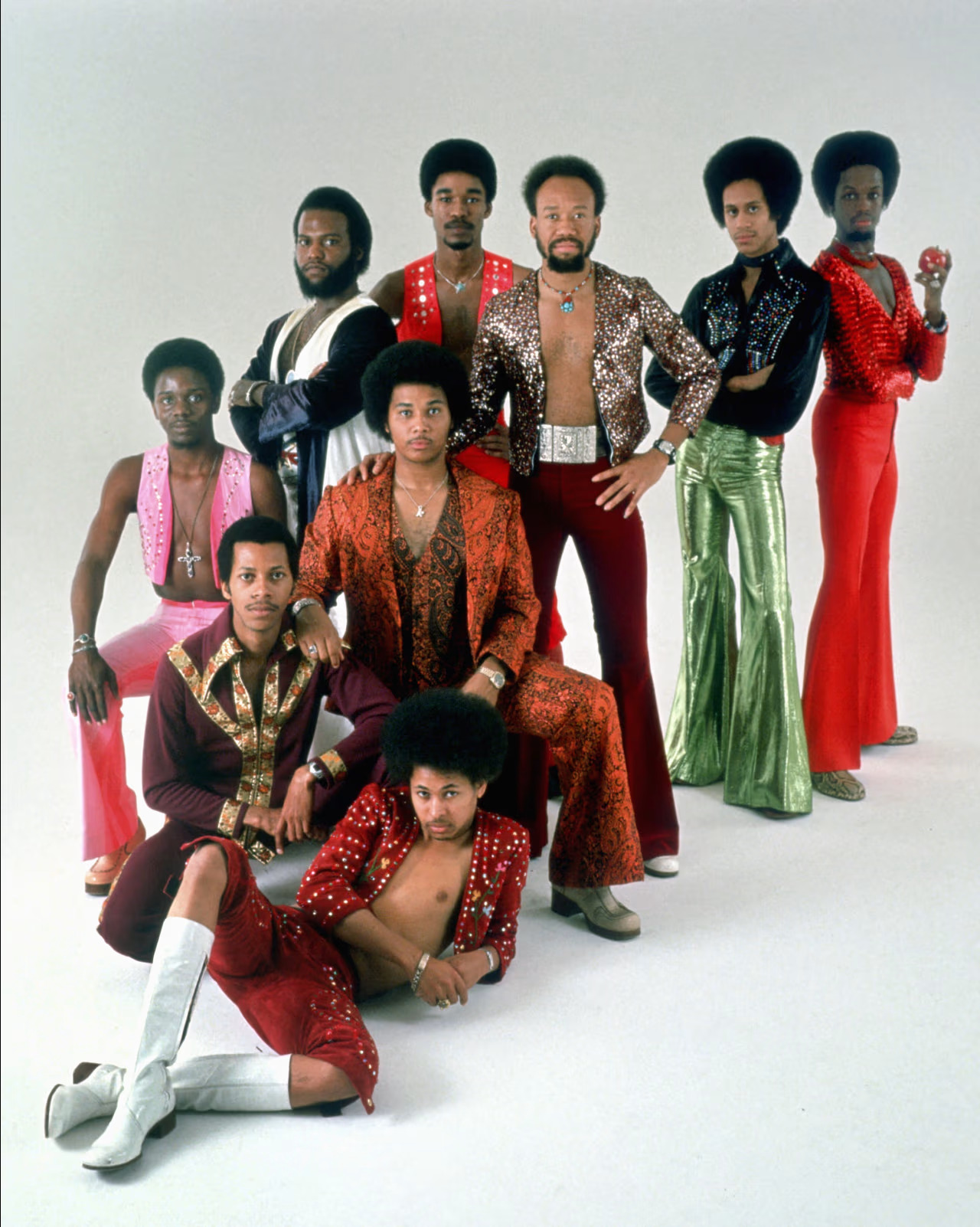
Why Is September 21 in Earth, Wind & Fire’s “September”?
For decades, the standard answer was:
Because September 21 sounded good.
Now there is another answer.
And it’s considerably more interesting.
A revelation highlighted in Questlove’s 2026 documentary about Earth, Wind & Fire suggests September 21 was the expected birth date of bandleader Maurice White’s son, Kahbran.
Kahbran actually arrived early on August 1.
But the original due date remained September 21.
Which means one of pop music’s most famous dates may have had personal significance after all.
Why did everyone previously think September 21 was random?
Because songwriter Allee Willis said so.
Willis co-wrote “September” with Maurice White and Al McKay.
She explained that they experimented with different dates until discovering that “the 21st” fitted the music particularly well.
Willis also learned an important lesson from White during the process:
the sound and groove of a lyric could matter more than whether every word carried a complicated meaning.
For years, that appeared to settle the question.
So was Allee Willis wrong?
Not necessarily.
This is where the story becomes fascinating.
From Willis’s perspective, they may genuinely have chosen the date because it sounded best.
But Maurice White may have had another association with September 21 that he never explained during the songwriting sessions.
According to the story shared by White’s family and highlighted by Questlove in 2026, the date had been the due date of White’s son.
Both explanations can therefore be true.
It sounded right.
And it meant something to Maurice.
When was “September” released?
November 1978.
Which is another funny detail.
One of the most famous songs ever written about September wasn’t actually released in September.
It appeared as a new track on The Best of Earth, Wind & Fire, Vol. 1.
The song quickly became much bigger than the compilation it was created to support.
Today it is probably the first recording many listeners associate with the band.
What is “September” actually about?
Happiness.
Memory.
Dancing.
Love.
The song looks backwards at an apparently perfect night.
There isn’t really a complicated narrative.
That is part of its genius.
“September” feels like remembering the best party you’ve ever attended, even if that party never happened.
The details are deliberately vague enough for listeners to insert their own memories.
What does “ba-dee-ya” mean?
Essentially:
nothing.
And that was intentional.
Willis initially struggled with some of Maurice White’s nonsense syllables because she came from a songwriting tradition where lyrics were expected to mean something.
White’s approach was different.
If the sound worked, it worked.
Eventually Willis understood.
Decades later, those supposedly meaningless syllables are among the most recognisable vocal hooks in popular music.
Sometimes phonetics beat poetry.
Why does the song feel so happy?
Because almost every component is pushing upward.
The horn arrangements.
The bass.
The rhythm guitar.
The vocal harmonies.
The percussion.
The melody.
Nothing sits still.
Earth, Wind & Fire were extraordinary at making sophisticated musicianship sound effortless.
You don’t need to understand the arrangement.
Your body understands it.
Why does September 21 become a huge internet event every year?
Because the lyric created an annual appointment.
Every September 21, social media fills with:
memes
videos
dancing
references to the song
and people asking whether everybody remembers.
It’s effectively an unofficial Earth, Wind & Fire holiday.
Streaming gave the ritual even more power because listeners can now deliberately return to the song on the exact date.
Is September 21 actually special astronomically?
Not particularly in relation to the song.
It sits close to the September equinox, which normally falls around September 22 or 23.
That has encouraged theories that the date relates to seasons or celestial events.
But there has never been good evidence that this drove the lyric.
The newly revealed family connection is considerably more compelling.
Why does the song still work nearly 50 years later?
Because happiness doesn’t date very quickly.
A song about a specific political issue may remain historically important but become attached to its era.
“September” asks considerably less of you.
Remember being happy?
Remember dancing?
Great.
Let’s do that again.
That idea works in 1978.
It works in 2026.
It will probably work in 2078.
The answer
Why the 21st night of September?
For decades, we thought the answer was simply:
because it sounded best.
Now it appears there may have been another reason hiding behind the lyric all along.
September 21 was reportedly the expected birth date of Maurice White’s son.
That makes an already joyful song slightly better.
The date wasn’t simply about remembering a good night.
It may also have represented a day Maurice White was once waiting for.