Who Sings “Come Little Children” in Hocus Pocus? The Real Song Story
The haunting song sung by Sarah Sanderson in Hocus Pocus is “Come Little Children”, also known as “Sarah’s Theme”.
It’s performed by Sarah Jessica Parker in the 1993 Disney film.
The music was written by James Horner, with lyrics by Brock Walsh. And despite a popular internet claim, the words weren’t originally written by Edgar Allan Poe.
That last detail is particularly interesting because the song sounds exactly like something that might have come from an old Gothic poem.
Its melody is gentle, almost like a lullaby. But inside the film, Sarah Sanderson is using it to lure children towards danger.
That contrast has made it one of the most memorable pieces of music in Hocus Pocus.
What is the song Sarah sings in Hocus Pocus?
“Come Little Children”.
Sarah Sanderson sings it while using her supernatural abilities to attract children.
Her voice drifts through the nighttime setting, drawing the children towards the Sanderson sisters.
The music sounds inviting rather than threatening. That’s precisely what makes it effective.
A conventional horror soundtrack would use frightening sounds to warn the audience. This recording does the opposite.
It presents danger as something beautiful.
The melody resembles a traditional children’s lullaby, which makes the scene feel more disturbing once viewers understand what Sarah intends.
Who actually performs the song?
Sarah Jessica Parker.
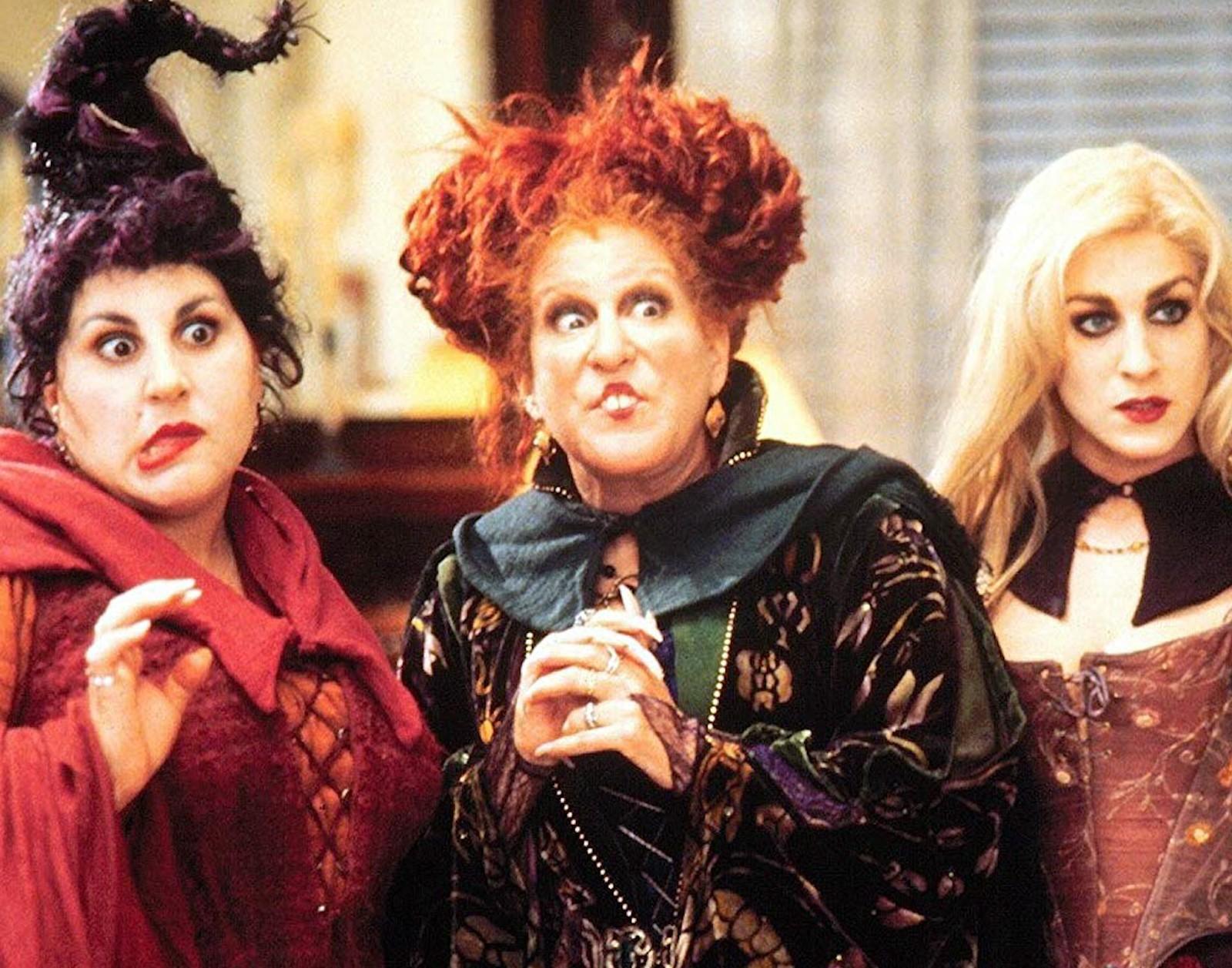
She plays Sarah Sanderson, the youngest of the three Sanderson sisters.
Bette Midler plays Winifred, while Kathy Najimy portrays Mary.
Each sister has a distinctive personality and supernatural abilities. Sarah’s singing is particularly important because it allows her to attract children.
Parker’s performance is deliberately soft and enchanting. She doesn’t sound like somebody delivering an aggressive villain’s song.
Instead, she sounds almost comforting.
That vocal choice helps establish why the children follow her.
Who wrote “Come Little Children”?
James Horner composed the music, and Brock Walsh wrote the lyrics.
Horner became one of Hollywood’s most celebrated film composers. His wider catalogue includes music for Titanic, Braveheart, Aliens and Avatar.
Walsh worked as a songwriter and lyricist.
Their collaboration produced a short musical sequence with an unusually enduring cultural identity.
An interesting production detail is that John Debney composed the main score for Hocus Pocus, while Horner’s earlier contribution to Sarah’s song remained in the finished film.
That explains why the song’s composer differs from the main film-score credit.
Did Edgar Allan Poe write the lyrics?
No.
This is one of the most persistent misconceptions surrounding the recording.
Online versions of “Come Little Children” have circulated with additional verses attributed to Edgar Allan Poe.
The connection sounds plausible because the language has a deliberately old-fashioned Gothic character.
But the song isn’t a lost Poe poem.
Writer D. Melhoff investigated the claim and contacted Brock Walsh directly.
Walsh confirmed that he wrote the lyrics in collaboration with James Horner.
He also expressed amusement at being mistaken for Poe, explaining that he had been fascinated by the poet as a child.
The attribution is therefore an internet myth, not established literary history.
Why do the lyrics sound so old-fashioned?
Because they’re written to resemble an enchanted invitation.
The language isn’t conversational modern English. It uses a deliberately theatrical style to create a timeless feeling.
That suits the film’s setting.
The Sanderson sisters originated in seventeenth-century Salem and returned to the modern world through magic.
Their language and behaviour frequently contrast with ordinary contemporary life.
“Come Little Children” feels connected with that older world.
Its unfamiliar phrasing makes the invitation sound more mysterious.
Why is the song so creepy?
Because the emotional signals conflict.
The singer sounds gentle. The melody is beautiful. The arrangement is restrained.
But the audience knows the character is dangerous.
That creates dramatic irony: viewers understand something the children inside the scene don’t.
The music becomes unsettling because it works exactly as Sarah intends.
It makes danger attractive.
That technique appears throughout horror cinema, where apparently innocent music accompanies disturbing imagery.
Tiny Tim’s “Tiptoe Through the Tulips” in Insidious is another famous example.
Is “Come Little Children” a real traditional lullaby?
No.
It was written for Hocus Pocus.
However, the composition draws from qualities associated with lullabies.
The melody is simple and repetitive. The vocal delivery is soft. The atmosphere is intimate.
Those characteristics make the song feel older than it really is.
That’s one reason people sometimes assume it must have existed before the film.
The recording successfully imitates the emotional personality of a traditional song without actually being one.
What does “Come Little Children” mean?
Inside the film, it is a magical invitation.
Sarah uses the music to manipulate children and lead them towards the Sanderson sisters.
The apparent promise is enchantment and adventure.
The underlying intention is much darker.
That creates a useful distinction between what the words suggest and what the scene means.
On the surface, the song sounds welcoming.
In context, it’s a warning.
Is the song in Hocus Pocus 2?
The musical identity of Sarah Sanderson and her enchanting voice remains connected with the franchise.
The 2022 sequel revisits the Sanderson sisters and their supernatural abilities.
However, the original 1993 performance remains the version most listeners recognise.
That recording is the best starting point for anyone searching for Sarah’s haunting lullaby.
Why has it become popular at Halloween?
Because Hocus Pocus has become an annual Halloween favourite.
Every October, people return to the film.
They revisit the costumes, the Sanderson sisters and the memorable musical sequences.
“Come Little Children” is particularly useful for Halloween because it’s atmospheric without requiring aggressive horror effects.
It works in spooky playlists, theatrical performances and costume videos.
Its short length also makes it convenient for scenes and edits.
Other songs like “Come Little Children”
For similarly haunting music, try:
- Danny Elfman – Sally’s Song
- James Horner – Sarah’s Theme
- Lana Del Rey – Season of the Witch
- Q Lazzarus – Goodbye Horses
- Florence + the Machine – Seven Devils
- Dead Can Dance – The Host of Seraphim
- John Debney – Hocus Pocus Main Title
These recordings explore different combinations of supernatural atmosphere, expressive vocals and cinematic music.
Why is the song still so effective?
Because it does something very simple extremely well.
It makes the listener feel safe while the story tells them they shouldn’t.
The music doesn’t need a complicated arrangement or enormous orchestra.
Parker’s voice and the short melody create the entire emotional effect.
The result remains memorable more than three decades after the film’s release.
Who sings “Come Little Children” in Hocus Pocus?
Sarah Jessica Parker, performing as Sarah Sanderson.
James Horner composed the music, and Brock Walsh wrote the lyrics.
The song wasn’t taken from Edgar Allan Poe, and it isn’t a traditional lullaby.
It was created for the 1993 film.
Its greatest trick is making a dangerous magical invitation sound like a beautiful bedtime song.