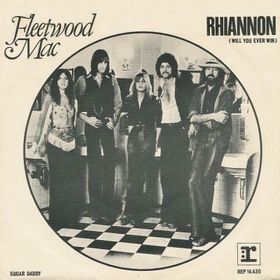
What Does Fleetwood Mac’s “Rhiannon” Really Mean?
Stevie Nicks didn’t originally write “Rhiannon” about a Welsh goddess.
She didn’t even know the mythology.
She found the name in a novel.
Loved it.
Wrote a song around a mysterious woman.
Then discovered afterwards that the real Rhiannon from Welsh mythology contained uncanny similarities to the character she had imagined.
No wonder the song helped establish Stevie Nicks as rock music’s resident mystical icon.
Where did Stevie Nicks find the name Rhiannon?
A novel called Triad by Mary Leader.
Nicks encountered a character named Rhiannon and became fascinated by the name.
She began writing around the idea of a mysterious, almost supernatural woman.
The song predates Nicks and Lindsey Buckingham officially joining Fleetwood Mac.
It was among the material they brought into the band.
Is Rhiannon really a Welsh goddess?
The mythological Rhiannon is a major figure in the Mabinogion, a collection of medieval Welsh stories.
Nicks later researched the mythology and discovered associations with horses and birds that fascinated her.
The strange part was that she had written her song before understanding any of this.
That coincidence deepened her fascination.
Rhiannon eventually became much more than one song for Nicks.
Is “Rhiannon” about a witch?
Nicks famously introduced live performances by describing it as a song about a Welsh witch.
Strictly speaking, the mythological description is more complicated than that.
But “witch” became part of the song’s popular identity.
It certainly fits the music.
The performance.
Nicks’ clothing.
The stage persona.
Everything around “Rhiannon” feels supernatural.
Why did the song become so connected with Stevie Nicks?
Because it gave audiences a character that seemed to overlap with the singer.
Nicks’ visual identity included:
flowing clothes
shawls
dark colours
mystical imagery
moon and star symbolism.
Eventually listeners stopped seeing a clear boundary between Stevie and Rhiannon.
That wasn’t necessarily intentional at the beginning.
But it became incredibly powerful branding before musicians talked about “personal brands”.
Was “Rhiannon” written for Fleetwood Mac?
No.
Nicks wrote it before joining.
When she and Buckingham joined Fleetwood Mac in late 1974, they brought songs that had been intended for another Buckingham Nicks project.
Those included “Rhiannon” and “Landslide”.
Think about that.
Two songs that would become inseparable from Fleetwood Mac already existed outside Fleetwood Mac.
Sometimes changing the environment around a songwriter changes everything.
How successful was “Rhiannon”?
It reached No. 11 in the United States in 1976.
But its cultural importance is considerably larger than its chart peak.
“Rhiannon” helped establish the identity of the new Fleetwood Mac.
The band had existed for years before Buckingham and Nicks joined.
Their arrival transformed it.
Why are the live versions so famous?
Because Nicks frequently turned “Rhiannon” into something much wilder onstage.
The studio recording is controlled.
Live performances could become almost theatrical rituals.
Her voice became rougher.
The band became heavier.
The ending expanded.
Watch a great 1970s live performance after hearing the studio version.
Same composition.
Different creature.
What genre is “Rhiannon”?
Rock.
Soft rock.
Folk rock.
There is also something difficult to classify about it.
The guitar isn’t especially heavy.
The rhythm isn’t folk in a conventional sense.
The atmosphere does much of the work.
That atmospheric quality is one reason it continues to connect with younger listeners interested in witchy, gothic and mystical aesthetics.
Songs like “Rhiannon”
Try:
Fleetwood Mac – Gold Dust Woman
Stevie Nicks – Edge of Seventeen
Eagles – Witchy Woman
Donovan – Season of the Witch
Heart – Magic Man
Kate Bush – Wuthering Heights
Florence + the Machine – Seven Devils
Jefferson Airplane – White Rabbit
Blue Öyster Cult – Don’t Fear the Reaper
Cliff Richard – Devil Woman
Radar has also explored the unexpectedly supernatural story behind “Devil Woman”.
What does “Rhiannon” really mean?
Originally, it was Stevie Nicks imagining a mysterious woman after discovering a name in a novel.
Then mythology caught up with her.
Nicks learned about the Welsh Rhiannon and discovered connections she hadn’t consciously written.
Whether you call that coincidence or something more mystical depends on how Stevie Nicks you are.
Either way, it makes a brilliant story.