Sony Music Japan Is Buying Into GungHo – and It Could Bring Music and Gaming Even Closer Together
Sony Music Japan is making an interesting move outside traditional music.
The company has agreed to acquire around 23% of GungHo Online Entertainment, the Japanese games company behind Puzzle & Dragons.
The deal is worth approximately ¥28.6 billion, around $180 million, and will make Sony Music Entertainment Japan GungHo’s largest shareholder once the transaction is completed.
At first glance, this might sound like another corporate investment story.
But for music listeners, there is a much more interesting question:
What happens when one of the world’s biggest music companies gets much closer to a major games developer?
The answer could eventually involve artists appearing inside games, exclusive music, soundtracks, virtual performances and completely new ways of discovering songs.
What is GungHo Online Entertainment?
If you’re not heavily into gaming, you might not immediately recognise the GungHo name.
You may recognise some of its games.
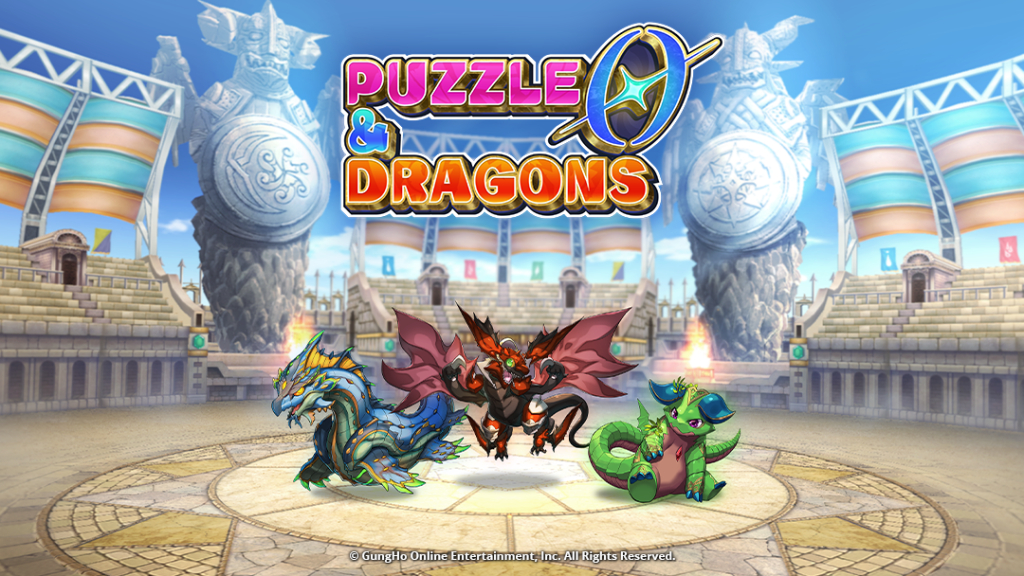
GungHo is the company behind Puzzle & Dragons, the hugely successful puzzle RPG first released in Japan in 2012.
The game passed 60 million downloads in 2022 and had reached 62 million cumulative downloads by 2024. GungHo has also developed or published titles including Ninjala, Ragnarok Origin, LET IT DIE and TEPPEN.
Puzzle & Dragons has become particularly well known for collaborations.
Over the years the franchise has worked with entertainment properties including Super Mario, Final Fantasy, Monster Hunter and Dragon Ball.
It has even already crossed directly into music culture.
In 2024, Puzzle & Dragons ran a collaboration featuring virtual music superstar Hatsune Miku alongside characters including Megurine Luka, KAITO, MEIKO, Kagamine Rin and Kagamine Len.
That history makes Sony Music’s investment particularly interesting.
Sony Music wants to explore new games using its entertainment IP
This isn’t simply Sony Music buying shares and sitting on the sidelines.
Sony Music Japan and GungHo have also agreed to a wider business partnership.
The companies say they will explore jointly developing and operating games across smartphones, consoles and PCs.
They also plan to work together on collaborations involving GungHo games and, perhaps most interestingly, explore new game projects that could use intellectual property controlled by Sony Music Japan and its affiliated companies.
That’s where things could become interesting for music fans.
Sony Music doesn’t just have access to music.
It operates across a much wider entertainment ecosystem involving artists, characters, animation and other intellectual property.
Put that together with a company experienced in building games and running major collaborations, and there are plenty of possibilities.
Could your favourite artists start appearing inside games?
Nothing specific has been announced yet.
But gaming has increasingly become another place for musicians to reach audiences.
We’ve already seen artists performing inside games, songs premiering in virtual worlds and musicians appearing as playable characters or special events.
Fortnite has probably provided the clearest example of where this is heading.
The game has hosted or worked with artists including Travis Scott, Ariana Grande, Eminem, Billie Eilish, Lady Gaga, Metallica and The Weeknd.
For younger audiences in particular, games are becoming another media platform alongside TikTok, YouTube, Spotify and Netflix.
Sony Music’s relationship with GungHo potentially gives it another route into that world.
Imagine opening a game and discovering:
A limited-edition event based around an artist.
Exclusive songs.
Artist characters.
Virtual concerts.
Music-themed levels.
Soundtrack releases.
Special digital merchandise.
Or even completely new games built around music-related intellectual property.
None of those specific ideas have been announced by Sony or GungHo, but they’re examples of what becomes possible when music companies and game developers start working more closely together.
Gaming is becoming a music discovery platform
There is also a bigger trend here.
Music discovery used to be dominated by radio.
Then came MTV.
Then YouTube.
Then Spotify playlists and TikTok.
Gaming could increasingly become another major discovery channel.
There are hundreds of millions of people spending hours every week inside games.
If a player hears a song repeatedly while playing their favourite game, that track can quickly become associated with the experience.
The song then moves beyond the game.
People search for it on Spotify.
They add it to playlists.
They use it on TikTok.
They watch the artist on YouTube.
Suddenly a video game has become a music marketing channel.
We’ve already seen this happen with songs featured in games such as FIFA, Grand Theft Auto and Fortnite.
The Sony Music and GungHo partnership could create more opportunities for that type of crossover.
Video game soundtracks are becoming increasingly important
There is another part of gaming that music listeners shouldn’t overlook: soundtracks.
Video game music has developed into a major music category of its own.
People increasingly listen to game soundtracks outside the games themselves, whether that’s through Spotify, YouTube, Apple Music or live orchestral performances.
GungHo already takes game music seriously.
The credits for Puzzle & Dragons include composers such as Kenji Ito, Yukio Nakajima and Akira Yamaoka.
Closer cooperation with Sony Music could potentially open the door to even more ambitious soundtrack projects involving recording artists, composers and producers.
Again, no specific soundtrack projects have been announced.
But it’s easy to understand why a music company might see games as more than simply another entertainment industry.
Games need music.
Music needs audiences.
Putting the two together makes a lot of sense.
This isn’t PlayStation buying GungHo
There is one important distinction.
This deal is being led by Sony Music Entertainment Japan rather than Sony Interactive Entertainment, the division responsible for PlayStation.
Sony Music Japan has agreed to purchase approximately 12 million GungHo shares from SON Financial for ¥2,385 per share.
That will give Sony Music around 22.9% of GungHo’s outstanding shares excluding treasury stock, representing around 23.3% of voting rights.
The transaction is currently expected to complete on December 30, 2026, subject to regulatory approvals.
GungHo will also remain independently managed and continue as a publicly listed company.
So this isn’t a full takeover.
It’s a strategic investment combined with a business partnership.
Music companies are becoming entertainment companies
Perhaps the biggest takeaway from the Sony Music and GungHo deal is how much the definition of a “music company” is changing.
Music companies used to primarily:
Sign artists.
Record albums.
Sell music.
Promote releases.
Collect royalties.
Today the opportunity is much larger.
An artist can exist across Spotify, TikTok, YouTube, games, films, merchandise, virtual worlds and social platforms simultaneously.
The music itself remains at the centre of that ecosystem, but the ways fans interact with artists are expanding.
That makes gaming increasingly attractive.
Instead of simply advertising a new song to someone, an artist could become part of the entertainment experience itself.
And that potentially creates a much stronger connection between the listener and the artist.
The line between listening and playing is disappearing
The most interesting part of Sony Music Japan’s investment in GungHo might not be what happens immediately.
It could be what it tells us about where entertainment is heading.
Music, games, films, anime and social media are becoming increasingly interconnected.
A fan might discover a character through an anime.
Hear the soundtrack on Spotify.
See the artist on TikTok.
Then encounter the same artist inside a game.
There isn’t necessarily a clear separation between those experiences anymore.
Sony clearly understands that.
And by becoming GungHo’s largest shareholder, Sony Music Japan is putting itself in a stronger position to experiment with what comes next.
For music listeners, that could mean discovering more of your favourite artists somewhere you might not expect:
inside the games you play.